
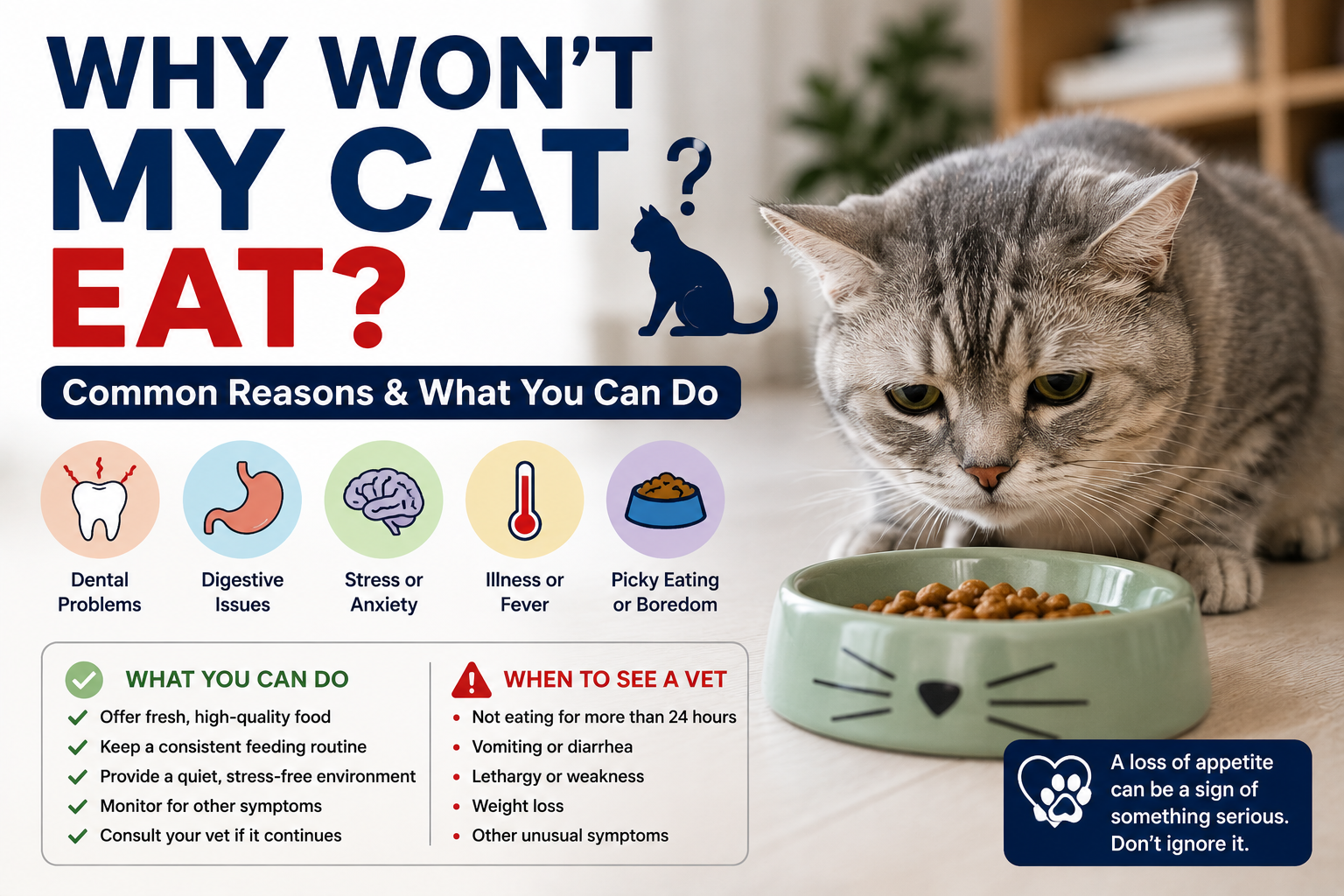
Why Won’t My Cat Eat?
If your cat is not eating, the cause could be something minor, such as stress, a recent food change, or hot weather. However, appetite loss in cats can also be an early sign of illness, dental pain, digestive problems, or other medical conditions. Because cats can become seriously ill if they stop eating for too long, a loss of appetite lasting more than 24 hours—or sooner in kittens—should be evaluated by a veterinarian.
What Does It Mean When a Cat Is Not Eating?
A healthy cat usually has a fairly consistent appetite. If your cat suddenly refuses food or starts eating much less than usual, it is considered a loss of appetite, also known as anorexia (complete loss of appetite) or hyporexia (reduced appetite).
Cat not eating is not a disease on its own. Instead, it’s a symptom that can have many possible causes, ranging from temporary stress to serious medical conditions.
Since cats are particularly sensitive to prolonged fasting, even a short period without food deserves close attention.
Common Reasons Why Your Cat Is Not Eating
Many pet owners ask, “Why is my cat not eating?” The answer depends on your cat’s overall health, behavior, and recent changes in their environment.
1. Stress or Anxiety
Cats are creatures of habit. Even small changes can affect their appetite.
Common stressors include:
- Moving to a new home
- Introducing a new pet
- Visitors or loud noises
- Changes in routine
- Boarding or travel
- Rearranging furniture
Some cats resume eating once they feel safe again.
2. A New Food
Cats can be very selective about food.
A sudden change in:
- Flavor
- Texture
- Brand
- Temperature
may cause them to refuse meals.
Transition to a new food gradually over several days whenever possible.
3. Dental Problems
Pain inside the mouth is a common reason for cats not eating.
Possible dental issues include:
- Gingivitis
- Tooth resorption
- Broken teeth
- Gum disease
- Oral infections
A cat with dental pain may approach food but stop after taking a bite or two.
4. Hairballs
Hairballs occasionally reduce appetite, especially if they cause stomach irritation.
Most hairballs pass naturally, but persistent vomiting or inability to pass a hairball requires veterinary attention.
5. Digestive Problems
Stomach or intestinal disorders may cause appetite loss.
Examples include:
- Gastroenteritis
- Food intolerance
- Constipation
- Inflammatory bowel disease
These conditions may also cause vomiting or diarrhea.
6. Illness
Many illnesses reduce appetite.
Examples include:
- Kidney disease
- Liver disease
- Diabetes
- Hyperthyroidism
- Viral infections
- Cancer
Loss of appetite is often one of the earliest signs that something is wrong.
7. Medication Side Effects
Certain medications may temporarily reduce appetite or cause nausea.
If your cat recently started a new medication and stopped eating, contact your veterinarian before changing the treatment.
8. Pain
Cats are experts at hiding discomfort.
Pain from arthritis, injury, or other medical conditions can reduce their desire to eat.
One of the most common concerns is:
“Why is my cat not eating but acting normal?”
If your cat:
- Is alert
- Drinks water
- Uses the litter box normally
- Continues grooming
- Plays occasionally
…the appetite loss may be temporary.
Possible explanations include:
- Mild stress
- Hot weather
- Eating too many treats
- A recent food change
- Temporary stomach upset
Monitor your cat closely for the next 24 hours.
If they continue refusing food or develop additional symptoms, contact your veterinarian.
Cat Not Eating as Much
Sometimes a cat doesn’t completely stop eating but eats much less than usual.
Possible reasons include:
- Aging
- Dental discomfort
- Mild illness
- Weight management changes
- Stress
- Less activity during warm weather
Even if your cat is not eating much, a noticeable drop in appetite that continues for more than a day or two deserves veterinary evaluation.
Cat Not Eating and Throwing Up
If your cat is not eating and throwing up, don’t assume it’s just a hairball.
Possible causes include:
- Gastroenteritis
- Hairball obstruction
- Foreign object ingestion
- Pancreatitis
- Kidney disease
- Toxin exposure
- Intestinal blockage
Vomiting combined with appetite loss increases the risk of dehydration and should be assessed by a veterinarian, especially if it continues or becomes severe.
Warning Signs That Need Immediate Veterinary Care
Seek veterinary care promptly if your cat has:
- Vomiting repeatedly
- Severe diarrhea
- Difficulty breathing
- Blood in vomit or stool
- Extreme lethargy
- Collapse
- Difficulty swallowing
- Signs of pain
- Weight loss
- Refusal to drink water
- Not eaten for more than 24 hours
Kittens, senior cats, and cats with existing medical conditions should be examined sooner because they are more vulnerable to complications.
What You Can Do at Home
If your cat misses one meal but otherwise seems healthy, you can try a few simple steps.
1. Offer Fresh Food
Cats often refuse stale or dried-out food.
Replace uneaten food with a fresh portion.
2. Check the Food
Make sure the food:
- Is within its expiration date
- Has been stored properly
- Smells normal
Cats have a highly developed sense of smell and may reject spoiled food before humans notice anything unusual.
3. Reduce Stress
Provide a quiet place to eat away from:
- Loud noises
- Other pets
- Busy household traffic
4. Encourage Hydration
Fresh water should always be available.
Hydration is especially important if your cat has been vomiting.
5. Monitor Carefully
Watch for:
- Vomiting
- Diarrhea
- Weight loss
- Hiding
- Changes in grooming
- Reduced activity
These details help your veterinarian determine the underlying cause.
Foods You Should Never Force Your Cat to Eat
Never try to encourage eating by offering foods that are toxic to cats.
Avoid:
- Onions
- Garlic
- Chocolate
- Grapes
- Raisins
- Alcohol
- Caffeine
- Xylitol-containing products
- Raw dough
Also avoid force-feeding unless specifically instructed by your veterinarian.
Common Mistakes Cat Owners Make
Waiting Too Long
Cats are different from many other animals.
Going without food for an extended period can increase the risk of a serious liver condition called hepatic lipidosis, particularly in overweight cats.
Constantly Switching Foods
Changing foods repeatedly may make some cats even more reluctant to eat.
Assuming It’s Just Picky Eating
Cats can hide illness remarkably well.
Even subtle appetite changes can be an early warning sign.
Ignoring Dental Care
Routine dental checkups help prevent painful oral conditions that interfere with eating.
Offering Too Many Treats
Excessive treats can reduce appetite for balanced meals.
How to Help Prevent Appetite Problems
Healthy habits support a healthy appetite.
- Feed a balanced diet.
- Introduce new foods gradually.
- Maintain a consistent feeding routine.
- Keep food and water bowls clean.
- Schedule regular veterinary checkups.
- Brush your cat regularly to reduce hairballs.
- Monitor body weight and eating habits.
Frequently Asked Questions
Why is my cat not eating?
Cats may stop eating because of stress, dental disease, digestive problems, illness, medication side effects, or environmental changes.
Why is my cat not eating but acting normal?
Temporary stress, hot weather, food preferences, or mild digestive upset can reduce appetite without affecting behavior. If appetite doesn’t return within 24 hours, contact your veterinarian.
How long can a cat go without eating?
Cats should not go long without food. A healthy adult cat that refuses food for more than 24 hours should be examined by a veterinarian. Kittens require even more urgent evaluation.
Why is my cat not eating and throwing up?
This combination may indicate digestive disease, hairballs, infection, pancreatitis, kidney disease, or intestinal obstruction. Persistent vomiting requires veterinary care.
Why is my cat not eating much?
Reduced appetite may result from dental pain, stress, aging, mild illness, or changes in diet. Continued appetite loss should not be ignored.
Can stress make cats stop eating?
Yes. Moving, new pets, travel, loud noises, and routine changes commonly affect appetite in sensitive cats.
Should I change my cat’s food immediately?
Not usually. Frequent food changes may worsen the problem. If you need to switch foods, do so gradually unless your veterinarian recommends otherwise.
Can dental disease cause appetite loss?
Yes. Painful teeth and gums often make chewing uncomfortable, leading to reduced food intake.
When should I take my cat to the veterinarian?
Seek veterinary care immediately if your cat refuses food for more than 24 hours, repeatedly vomits, becomes lethargic, has difficulty breathing, shows signs of pain, or refuses to drink water.
Why is my senior cat not eating?
Older cats are more likely to develop dental disease, kidney disease, arthritis, hyperthyroidism, and other conditions that affect appetite. Any ongoing appetite change in a senior cat deserves veterinary evaluation.
Key Takeaways
- Cat not eating is a symptom rather than a diagnosis.
- Stress, food changes, dental disease, digestive problems, and illness are common causes.
- Cats should not go without food for extended periods because prolonged fasting can lead to serious health complications.
- Vomiting, weight loss, lethargy, or refusal to drink water alongside appetite loss requires prompt veterinary attention.
- Monitor your cat’s eating habits closely and seek veterinary advice if the loss of appetite persists.
Final Thoughts
A cat refusing food is never something to overlook. While a temporary loss of appetite may result from stress or a simple change in routine, cats can become ill quickly if they don’t eat for an extended period. Paying attention to your cat’s normal eating habits makes it easier to recognize when something isn’t right.
If your cat misses a meal but otherwise seems comfortable, monitor them closely and keep fresh food and water available. However, if the appetite loss continues, worsens, or is accompanied by vomiting, lethargy, weight loss, or other unusual symptoms, contact your veterinarian without delay. Early diagnosis and treatment often lead to better outcomes and can help your cat return to normal eating habits as quickly as possible.