Why Is My Cat Always Hungry?
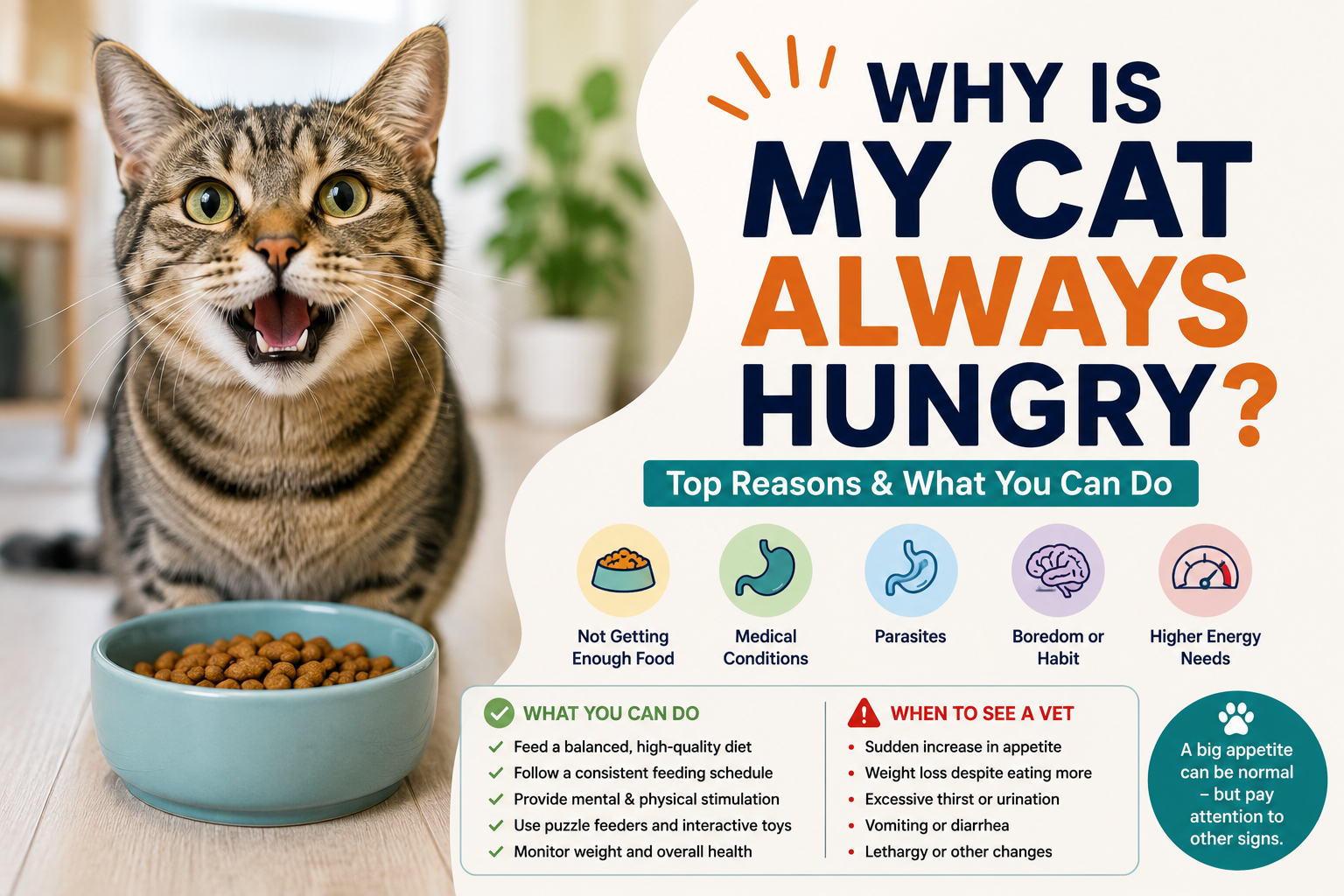
If your cat is always hungry, the reason may be perfectly normal, such as growth, increased activity, or an inadequate diet. However, constant hunger can also be linked to medical conditions like hyperthyroidism, diabetes, intestinal parasites, or certain medications. If your cat’s appetite suddenly increases, especially with weight loss, vomiting, excessive thirst, or behavioral changes, it’s important to have them examined by a veterinarian.
What Does It Mean When a Cat Is Always Hungry?
Cats naturally enjoy routine feeding times, but there’s a difference between eagerly anticipating meals and constantly acting hungry.
A cat always hungry may:
- Meow persistently for food
- Follow you into the kitchen
- Beg between meals
- Eat very quickly
- Search countertops or trash bins
- Wake you early for breakfast
Occasional begging isn’t unusual. However, if your cat suddenly develops an unusually large appetite or seems hungry all the time, it’s worth looking for an underlying reason.
Common Reasons Why Your Cat Is Always Hungry
If you’re asking, “Why is my cat always hungry?”, several factors could be responsible.
1. Your Cat Isn’t Eating Enough Calories
The simplest explanation is that your cat isn’t getting enough calories to meet their daily energy needs.
This may happen if:
- Portions are too small.
- The food is lower in calories than expected.
- Your cat has become more active.
Rather than increasing food immediately, review your feeding plan with your veterinarian.
2. Your Kitten Is Growing
Kittens require significantly more energy than adult cats because they’re growing rapidly.
Healthy kittens often:
- Eat several small meals daily.
- Seem hungry frequently.
- Grow quickly during the first year.
A strong appetite is usually normal during this stage.
3. Increased Activity
Indoor cats that suddenly become more active—or outdoor cats that spend more time exploring—burn more calories and may naturally need more food.
4. Boredom
Some cats ask for food simply because they’re bored.
Without enough:
- Playtime
- Climbing opportunities
- Puzzle feeders
- Environmental enrichment
they may begin associating food with entertainment.
5. Learned Behavior
Cats are excellent at training their humans.
If meowing consistently results in treats or extra meals, your cat quickly learns that begging works.
6. Competition With Other Pets
In multi-cat households, some cats may eat quickly because they’re worried another pet will finish the food first.
Others may beg because they aren’t getting their fair share.
Medical Conditions That Can Cause Constant Hunger
A dramatic increase in appetite shouldn’t be ignored.
Several medical conditions may cause a cat to feel hungry more often.
Hyperthyroidism
Hyperthyroidism is one of the most common causes of increased appetite in older cats.
Other signs include:
- Weight loss
- Increased activity
- Restlessness
- Vomiting
- Increased thirst
Even though affected cats eat more, they often continue losing weight.
Diabetes Mellitus
Cats with diabetes may develop:
- Increased appetite
- Excessive thirst
- Frequent urination
- Weight loss
Because their bodies struggle to use glucose properly, they may seem constantly hungry.
Intestinal Parasites
Parasites such as roundworms are more common in kittens but can affect adult cats as well.
Possible signs include:
- Increased appetite
- Weight loss
- Diarrhea
- Poor coat condition
Routine parasite prevention helps reduce this risk.
Malabsorption Disorders
Certain digestive diseases prevent nutrients from being absorbed efficiently.
As a result, your cat may continue eating but still feel hungry.
Medication Side Effects
Some medications, including corticosteroids, can increase appetite.
Never stop prescribed medication without consulting your veterinarian.
Why Is My Cat Always Hungry and Meowing?
Many owners say, “My cat is always hungry and meowing.”
Meowing around meal times isn’t unusual, but constant vocalization may happen because your cat:
- Has learned that meowing gets attention.
- Is bored.
- Wants interaction rather than food.
- Is experiencing increased hunger due to illness.
- Is anxious or stressed.
If the meowing is new, unusually intense, or accompanied by other symptoms, it’s worth discussing with your veterinarian.
Why Are Cats Always Hungry?
Some breeds and individual cats are naturally more food-motivated than others.
A healthy cat may seem eager for every meal simply because:
- Cats are opportunistic eaters.
- They enjoy predictable routines.
- Food is highly rewarding.
That doesn’t necessarily mean they need larger meals.
Body condition and overall health are better indicators than appetite alone.
How to Tell if Your Cat Is Truly Hungry
Not every request for food reflects genuine hunger.
Signs your cat may truly need more nutrition include:
- Finishing meals immediately
- Weight loss
- Increased appetite over several days
- Searching for food constantly
- Reduced body condition
By contrast, a cat that only begs while you’re eating may simply want attention or treats.
How to Manage a Cat That Is Always Hungry
If my cat is always hungry, these practical tips may help.
1. Feed Measured Meals
Avoid guessing portion sizes.
Use a measuring cup or kitchen scale for consistent feeding.
2. Feed on a Regular Schedule
Predictable meal times help reduce anxiety around food.
Many adult cats do well with two or more meals per day.
3. Use Puzzle Feeders
Food puzzles slow eating and provide mental stimulation.
This helps some cats feel more satisfied after meals.
4. Reduce Unnecessary Treats
Frequent treats may encourage begging rather than satisfy genuine hunger.
5. Encourage Daily Play
Interactive toys and short play sessions can reduce boredom-related food seeking.
Aim for multiple brief sessions throughout the day.
6. Monitor Body Weight
Keep track of your cat’s:
- Weight
- Appetite
- Water intake
- Activity level
Sudden changes should be discussed with your veterinarian.
When to Contact a Veterinarian
Arrange a veterinary examination if your cat:
- Suddenly becomes much hungrier than usual
- Eats constantly but loses weight
- Drinks significantly more water
- Urinates more frequently
- Vomits repeatedly
- Has persistent diarrhea
- Becomes lethargic
- Shows noticeable behavioral changes
Older cats with increased appetite should always be evaluated because hyperthyroidism is relatively common in senior cats.
Common Mistakes Cat Owners Make
Feeding Every Time the Cat Meows
This often reinforces begging behavior.
Ignoring Weight Loss
A cat that’s eating more while losing weight needs veterinary attention.
Offering Too Many Treats
Extra treats add calories without necessarily improving nutrition.
Assuming It’s Just a Personality Trait
A sudden change in appetite deserves investigation.
Overlooking Mental Enrichment
Cats need stimulation as well as food.
Climbing, hunting-style play, and puzzle feeders help satisfy natural instincts.
Frequently Asked Questions
Why is my cat always hungry?
A constantly hungry cat may simply need more calories, especially if it’s a growing kitten or highly active. However, hyperthyroidism, diabetes, intestinal parasites, and digestive disorders can also increase appetite.
Why is my cat always hungry and meowing?
Cats often meow because they’ve learned it gets attention or food. Persistent meowing combined with increased appetite may also indicate an underlying medical condition.
Why does my cat always seem hungry but isn’t losing weight?
Your cat may simply be food-motivated, bored, or accustomed to receiving treats. If body weight and overall health remain stable, the behavior may not indicate a medical problem.
Can stress make a cat seem hungry?
Stress affects cats differently. Some lose their appetite, while others seek food or treats more often as a coping behavior.
Can worms make my cat constantly hungry?
Yes. Intestinal parasites can interfere with nutrient absorption, leading to increased appetite despite normal food intake.
Is it normal for kittens to always be hungry?
Yes. Growing kittens have higher energy requirements and usually eat more frequently than adult cats.
How can I stop my cat from begging for food?
Feed measured meals on a consistent schedule, avoid giving treats every time your cat meows, and provide enrichment through toys and puzzle feeders.
Should I feed my cat more if it’s always hungry?
Not necessarily. Before increasing portions, consider your cat’s weight, body condition, activity level, and overall health. Consult your veterinarian if the increased appetite is new or persistent.
When should I worry about my cat’s increased appetite?
Seek veterinary care if increased hunger is accompanied by weight loss, excessive thirst, frequent urination, vomiting, diarrhea, lethargy, or other unusual symptoms.
Can older cats become hungrier?
Yes. Senior cats are more likely to develop conditions such as hyperthyroidism or diabetes, both of which can increase appetite.
Key Takeaways
- Cat always hungry doesn’t automatically mean your cat needs more food.
- Growth, activity, boredom, and learned begging are common non-medical causes.
- Hyperthyroidism, diabetes, intestinal parasites, and digestive disorders can also increase appetite.
- Monitor your cat’s body weight, water intake, and overall behavior—not just their appetite.
- Sudden increases in hunger or appetite changes accompanied by weight loss or illness should be evaluated by a veterinarian.
Final Thoughts
A healthy appetite is normal, but a cat that suddenly seems hungry all the time deserves closer attention. Sometimes the explanation is simple, such as a growing kitten or a cat that’s become more active. In other cases, persistent hunger can be one of the earliest signs of an underlying medical condition.
Pay attention to changes in your cat’s eating habits, weight, and overall behavior rather than focusing only on how often they ask for food. If the increased appetite continues, especially alongside weight loss, excessive thirst, vomiting, or other unusual symptoms, consult your veterinarian promptly. Early diagnosis can make a significant difference in your cat’s long-term health and well-being.