Complete Dog Feeding Guide: How Much, How Often, and What to Feed Your Dog
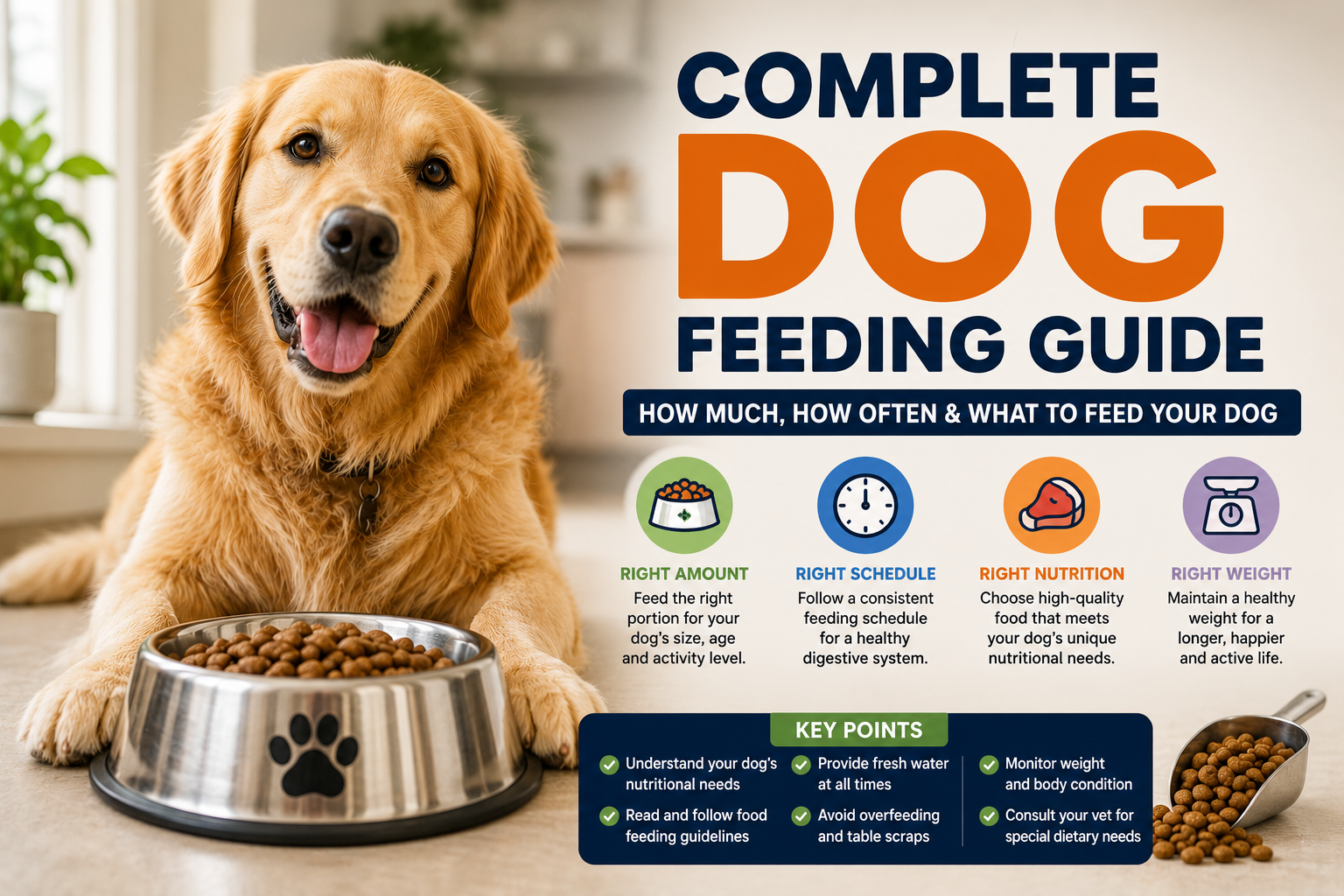
A proper dog feeding guide depends on your dog’s age, weight, activity level, body condition, and overall health. Most healthy adult dogs thrive on two balanced meals per day, while puppies need more frequent feeding. The right portion isn’t based solely on the feeding chart printed on the bag—it’s important to adjust meals according to your dog’s individual needs and maintain a healthy body weight.
What Is a Dog Feeding Guide?
A dog feeding guide provides recommendations on how much food and how often to feed your dog based on factors such as age, size, activity level, and health.
No single feeding guide works for every dog. Two dogs of the same breed and weight can have different calorie needs depending on their lifestyle and metabolism.
A feeding guide is meant to be a starting point, not an absolute rule.
Why Proper Feeding Matters
Good nutrition supports nearly every aspect of your dog’s health.
A balanced diet helps:
- Maintain a healthy weight
- Build and preserve muscle
- Support the immune system
- Keep skin and coat healthy
- Promote healthy digestion
- Provide energy for daily activities
- Support healthy growth in puppies
Overfeeding can lead to obesity, while underfeeding may result in nutrient deficiencies and weight loss.
Factors That Affect How Much Your Dog Should Eat
Several factors influence your dog’s daily food requirements.
Age
Puppies require more calories per pound of body weight than adult dogs because they’re growing rapidly.
Senior dogs often need fewer calories due to reduced activity.
Body Weight
Larger dogs generally require more food than smaller dogs, although calorie needs don’t increase in direct proportion to size.
Activity Level
Highly active dogs, working dogs, and sporting breeds usually need more calories than dogs that spend most of the day indoors.
Reproductive Status
Pregnant and nursing dogs have significantly higher energy requirements than most adult dogs.
Health Conditions
Medical conditions such as diabetes, kidney disease, gastrointestinal disorders, or obesity may require special diets recommended by a veterinarian.
Food Type
Dry kibble, canned food, fresh food, and homemade diets all contain different calorie densities.
Two cups of different dog foods may provide very different amounts of energy.
Dog Feeding Schedule by Age
Puppies (Up to 6 Months)
Growing puppies need frequent meals to support healthy development.
General guideline:
- 8–12 weeks: 4 meals per day
- 3–6 months: 3 meals per day
Feed a complete puppy formula designed for growth.
Young Dogs (6–12 Months)
Most dogs transition to:
- 2–3 meals daily
The exact timing depends on breed size and your veterinarian’s recommendations.
Adult Dogs
Healthy adult dogs typically do well with:
- Two meals each day
Splitting meals helps maintain consistent energy levels and may reduce hunger between feedings.
Senior Dogs
Older dogs usually continue eating:
- Two meals daily
Portion sizes may need adjustment if activity levels decline.
How Much Should You Feed Your Dog?
There’s no universal answer because calorie needs vary between individual dogs.
A good starting point is to:
- Read the feeding guide on your dog’s food package.
- Measure portions accurately.
- Monitor body weight and body condition.
- Adjust feeding amounts gradually if your dog gains or loses weight.
Remember that feeding charts are estimates rather than exact requirements.
Feeding Guide by Dog Size
| Dog Size | General Feeding Frequency |
|---|---|
| Small breeds | 2 meals daily |
| Medium breeds | 2 meals daily |
| Large breeds | 2 meals daily |
| Giant breeds | 2 meals daily (or veterinarian recommendation) |
| Puppies | 3–4 meals daily |
Portion sizes vary depending on the specific food and its calorie content.
Wet Food vs. Dry Food
Both can be part of a healthy diet.
Dry Food
Advantages:
- Convenient
- Easy to measure
- Usually more calorie-dense
- Longer shelf life after opening
Wet Food
Advantages:
- Higher moisture content
- Often more appealing to picky eaters
- May help increase water intake
Many owners successfully feed a combination of both.
Homemade and Fresh Dog Food
Fresh or homemade diets can work when they’re nutritionally balanced.
However, homemade recipes found online may not provide all essential nutrients.
If preparing food at home, work with your veterinarian or a board-certified veterinary nutritionist to ensure the diet meets your dog’s needs.
It’s important to understand that every commercial dog food has its own feeding chart because calorie density differs from one product to another.
For example:
- A fresh food diet may recommend different serving sizes than dry kibble.
- Prescription gastrointestinal diets often have feeding instructions tailored to dogs with digestive conditions.
- Therapeutic diets should be fed according to your veterinarian’s guidance and the manufacturer’s recommendations.
Always use the feeding guide for the specific product you’re feeding rather than comparing serving sizes between different brands.
Treats Count Too
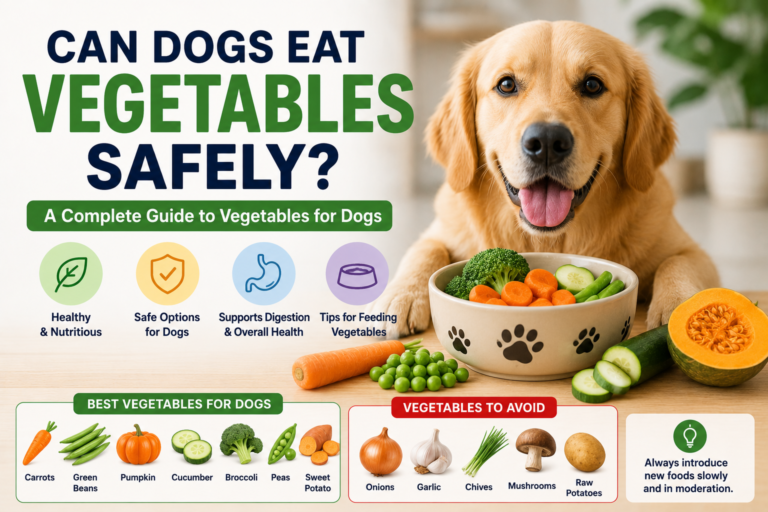
Treats should be included in your dog’s daily calorie intake.
As a general guideline, treats should make up no more than about 10% of your dog’s daily calories, with the rest coming from a complete and balanced diet.
Healthy treat options include:
- Small pieces of carrot
- Green beans
- Plain pumpkin
- Cucumber slices
Offer treats in moderation and avoid foods that are toxic to dogs.
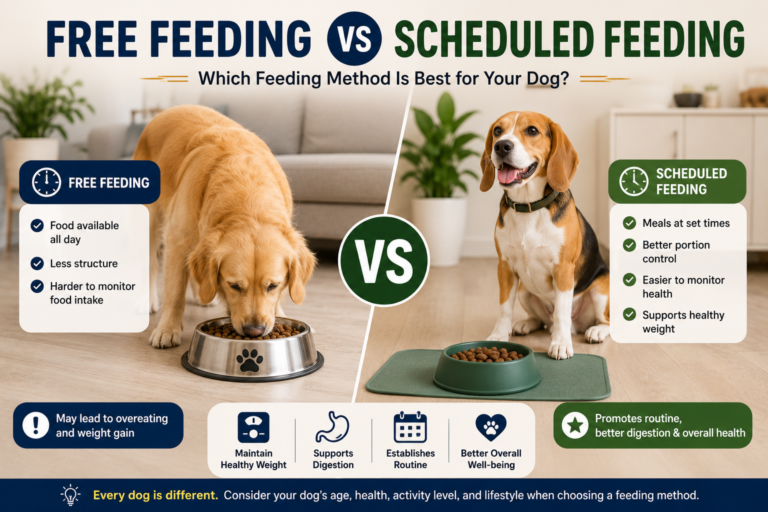
Should Dogs Have Free Access to Food?
Free-feeding (leaving food available all day) works for some dogs but isn’t ideal for many.
Scheduled meals make it easier to:
- Monitor appetite
- Prevent overeating
- Track changes in eating habits
- Maintain a healthy weight
Your veterinarian can advise if free-feeding is appropriate for your dog.
Signs Your Dog Is Eating the Right Amount
A well-fed dog should:
- Maintain a healthy body weight
- Have steady energy levels
- Produce normal stools
- Have a shiny coat
- Show consistent appetite
If your dog is consistently gaining or losing weight, review their feeding plan.
Common Dog Feeding Mistakes
Guessing Portion Sizes
Always use a measuring cup or kitchen scale.
Feeding Too Many Treats
Treats can quickly add extra calories.
Changing Foods Too Quickly
Gradually transition to a new food over several days to help reduce digestive upset.
Ignoring Body Condition
The feeding chart is only a guide.
Your dog’s body condition provides better feedback than the package alone.
Feeding Human Foods Without Checking Safety
Some foods that are safe for people can be harmful to dogs.
Always confirm before offering something new.
Expert Feeding Tips
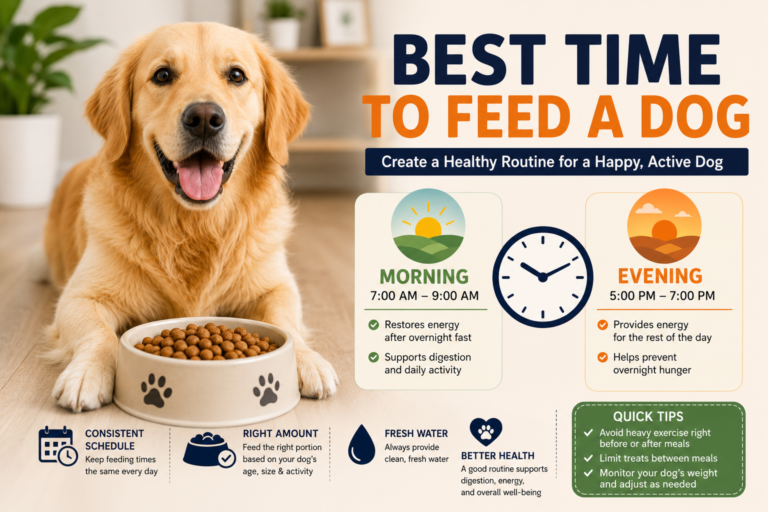
- Feed at consistent times every day.
- Keep fresh water available at all times.
- Store dog food properly to maintain freshness.
- Monitor your dog’s weight monthly.
- Increase exercise instead of drastically reducing food when appropriate.
- Schedule regular veterinary wellness exams to review nutrition.
Frequently Asked Questions
How often should I feed my dog?
Most healthy adult dogs do well with two meals each day. Puppies usually require three to four meals daily.
How do I know if I’m feeding my dog enough?
Monitor body weight, body condition, energy level, and overall health. Your veterinarian can help determine whether your current feeding plan is appropriate.
Should I follow the feeding guide on the dog food bag?
Yes, but treat it as a starting point. Adjust portions based on your dog’s individual needs and veterinary advice.
Is wet food better than dry food?
Neither is universally better. Both can provide complete nutrition when formulated appropriately. The best choice depends on your dog’s needs and preferences.
Can I mix wet and dry food?
Yes. Many dogs eat a combination of wet and dry food successfully. Adjust portions so you don’t exceed your dog’s daily calorie needs.
What is the best feeding schedule for puppies?
Young puppies generally need three to four meals each day before gradually transitioning to fewer meals as they mature.
Can I leave food out all day?
Some dogs do well with free-feeding, but scheduled meals usually make it easier to manage weight and monitor appetite.
What if my dog always seems hungry?
Review portion sizes, activity level, and treat intake. Persistent hunger or appetite changes should be discussed with your veterinarian.
How often should I change my dog’s food?
There’s no need to change foods regularly if your dog is healthy and thriving on their current diet. If a change is necessary, transition gradually over several days.
When should I consult a veterinarian about feeding?
Speak with your veterinarian if your dog has unexplained weight changes, poor appetite, digestive problems, chronic medical conditions, or if you’re unsure how much to feed.
Key Takeaways
- A dog feeding guide should be tailored to your dog’s age, weight, activity level, and health.
- Puppies need more frequent meals than adult dogs.
- Feeding charts on dog food packages are starting points, not exact rules.
- Measure food accurately and monitor your dog’s body condition regularly.
- Treats should be limited and included in your dog’s total daily calorie intake.
- Consult your veterinarian for personalized feeding advice, especially if your dog has health concerns or requires a prescription diet.
Final Thoughts
Feeding your dog isn’t just about filling a bowl—it’s about providing the right amount of balanced nutrition to support a healthy, active life. While commercial dog food feeding guides offer a useful starting point, every dog is unique. Age, lifestyle, body condition, and medical history all influence how much food your dog truly needs.
By following a consistent feeding schedule, measuring portions carefully, and monitoring your dog’s overall health, you can make informed decisions that support long-term well-being. When in doubt, your veterinarian is the best source of advice for creating a feeding plan that’s tailored to your dog’s individual needs.