How Much Water Should a Cat Drink Daily?
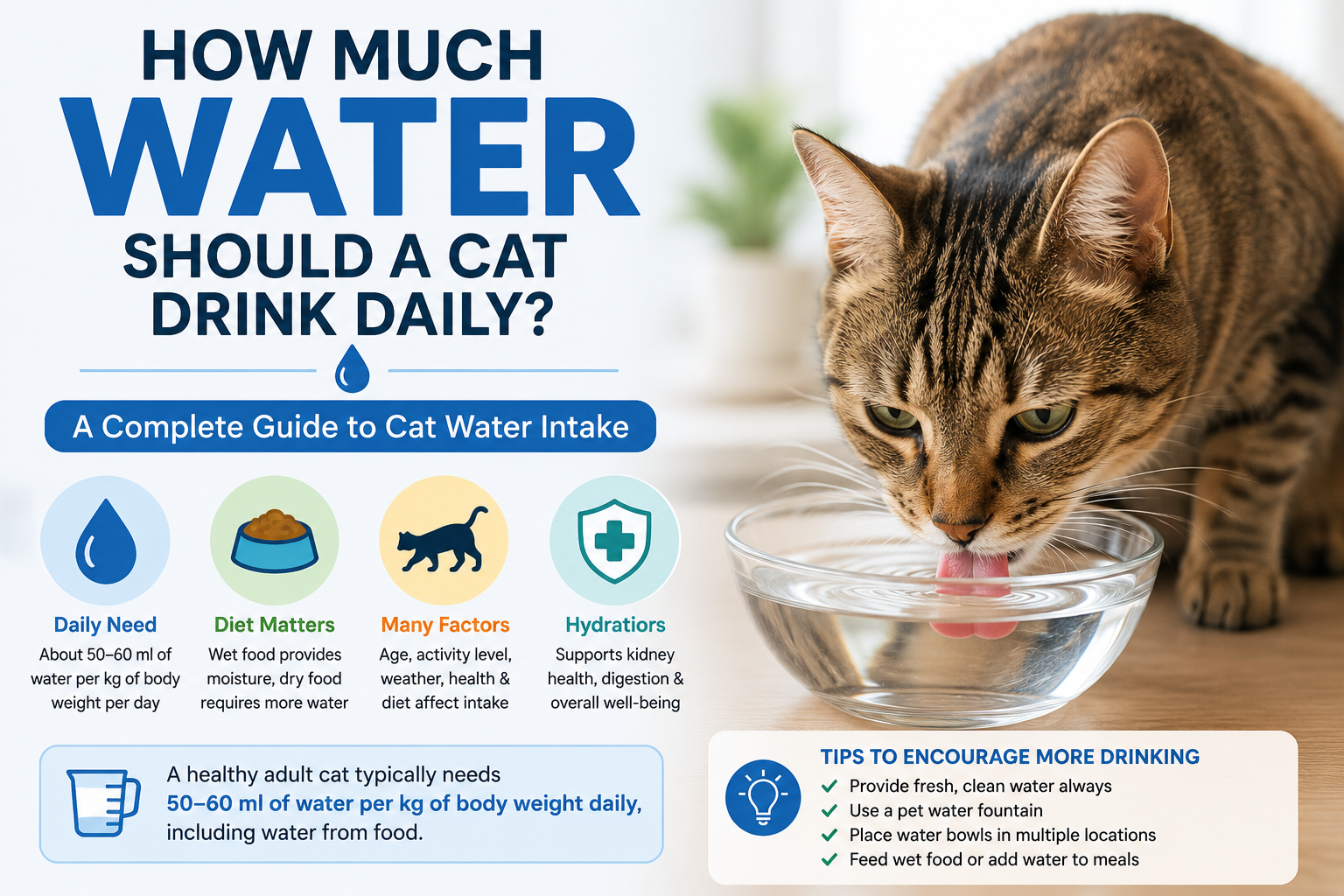
A healthy adult cat typically needs about 50–60 milliliters (mL) of water per kilogram (kg) of body weight each day from all sources, including drinking water and moisture in food. Cats eating dry food usually drink more water than those eating wet food because canned food contains significantly more moisture. Individual needs vary based on diet, activity level, climate, age, and overall health.
What Is Cat Water Intake?
Cat water intake refers to the total amount of water a cat consumes over a 24-hour period. This includes:
- Water from a bowl or fountain
- Moisture contained in wet food
- Small amounts of water naturally present in treats or fresh foods
Cats evolved from desert-dwelling ancestors, which means they naturally have a lower thirst drive than many other animals. As a result, some cats may not drink much water even when they need more hydration, especially if they’re fed only dry food.
How Much Water Should a Cat Drink Daily?
For most healthy adult cats, the average cat water intake is approximately:
- 50–60 mL per kilogram of body weight per day
- Around 23–27 mL per pound of body weight daily
Keep in mind that this recommendation includes water obtained from food.
Cat Daily Water Intake (Estimated)
| Cat Weight | Daily Water Requirement |
|---|---|
| 2 kg (4.4 lb) | 100–120 mL |
| 3 kg (6.6 lb) | 150–180 mL |
| 4 kg (8.8 lb) | 200–240 mL |
| 5 kg (11 lb) | 250–300 mL |
| 6 kg (13.2 lb) | 300–360 mL |
| 7 kg (15.4 lb) | 350–420 mL |
These estimates provide a useful guide for cat daily water intake ml, but individual cats may need more or less depending on several factors.
Why Water Is Essential for Cats
Water plays a vital role in keeping your cat healthy.
It helps:
- Regulate body temperature
- Support kidney function
- Aid digestion
- Transport nutrients throughout the body
- Lubricate joints
- Maintain healthy blood circulation
- Remove waste through urine
- Support overall organ function
Proper hydration is especially important because cats are prone to urinary tract and kidney problems as they age.
Factors That Affect Cat Daily Water Intake
No two cats drink exactly the same amount. Several factors influence cat daily water intake.
Diet
Diet has one of the biggest impacts on water consumption.
Dry Food
Dry kibble usually contains about 8–10% moisture. Cats eating mostly dry food often need to drink considerably more water.
Wet Food
Canned food commonly contains 70–80% moisture. Cats fed wet food often drink much less from their water bowl because much of their hydration comes from their meals.
Body Size
Larger cats generally require more water than smaller cats because they have greater body mass.
Weather
Cats usually drink more during hot or humid weather to replace fluids lost through normal body functions.
Activity Level
Active, playful cats may need slightly more water than less active indoor cats.
Age
Kittens often require adequate hydration to support growth. Senior cats may experience changes in thirst due to aging or underlying medical conditions.
Pregnancy and Nursing
Pregnant and nursing cats have increased fluid requirements to support both themselves and their kittens.
Health Conditions
Several medical conditions can increase thirst, including:
- Chronic kidney disease
- Diabetes mellitus
- Hyperthyroidism
- Urinary tract disorders
- Fever
Certain medications may also increase water consumption.
How to Tell if Your Cat Is Drinking Enough
Instead of focusing only on the water bowl, monitor your cat’s overall condition.
Signs of good hydration include:
- Bright, alert eyes
- Moist gums
- Normal appetite
- Healthy energy levels
- Regular urination
- Elastic skin
If you’re concerned, your veterinarian can evaluate your cat’s hydration status during an examination.
Signs of Dehydration in Cats
Cats often hide illness well, so dehydration can sometimes go unnoticed.
Watch for:
- Dry or sticky gums
- Lethargy
- Loss of appetite
- Sunken eyes
- Reduced urination
- Skin that doesn’t quickly return to normal when gently lifted at the back of the neck
- Weakness
Severe dehydration requires immediate veterinary attention.
Signs Your Cat May Be Drinking Too Much Water
Drinking more water occasionally isn’t always a problem, especially during hot weather.
However, persistent excessive thirst can indicate an underlying illness.
Warning signs include:
- Frequently emptying the water bowl
- Increased urination
- Weight loss
- Increased appetite
- Poor coat condition
- Reduced activity
A noticeable and ongoing increase in water consumption should be discussed with your veterinarian.
How to Measure Your Cat’s Water Intake
If your veterinarian recommends monitoring water consumption, follow these steps:
- Measure the amount of water placed in the bowl.
- Refill the bowl using measured amounts throughout the day.
- Record the total amount added over 24 hours.
- Estimate how much moisture your cat receives from wet food if applicable.
If you have multiple cats sharing bowls, measuring individual intake becomes much more difficult.
How to Encourage Your Cat to Drink More Water
Some cats naturally drink less than others. These tips may help increase water intake.
Provide Fresh Water Daily
Replace water at least once or twice each day.
Keep Bowls Clean
Cats can be sensitive to odors and may avoid dirty bowls.
Place Multiple Water Stations Around the House
Some cats prefer drinking in quiet locations away from food or litter boxes.
Try a Cat Water Fountain
Many cats are attracted to moving water because it tends to stay fresher and cooler.
Feed Wet Food
If appropriate for your cat, incorporating wet food can significantly increase daily moisture intake.
Choose the Right Bowl
Some cats dislike bowls that touch their whiskers while drinking. A wider, shallow bowl may encourage better drinking habits.
Common Mistakes Cat Owners Make
Avoid these common mistakes.
Assuming Every Cat Drinks the Same Amount
Water needs vary based on age, diet, activity, and health.
Ignoring Small Changes
Gradual increases or decreases in water consumption may be early signs of illness.
Only Offering One Water Bowl
Some cats drink more when water is available in several locations.
Placing Water Next to the Litter Box
Many cats prefer drinking away from areas associated with waste.
Forgetting That Wet Food Counts
Cats eating canned food naturally consume a large portion of their daily water requirement through their meals.
When to See a Veterinarian
Contact your veterinarian if your cat:
- Stops drinking for an extended period
- Shows signs of dehydration
- Drinks significantly more than usual for several days
- Has frequent urination along with increased thirst
- Vomits repeatedly or has severe diarrhea
- Appears weak or unusually tired
- Experiences sudden changes in appetite or weight
- Shows any unexplained change in drinking behavior
Changes in water intake are often one of the earliest signs of health problems.
Frequently Asked Questions
How much water should a cat drink per day?
Most healthy cats require approximately 50–60 mL of water per kilogram of body weight daily, including moisture from food.
How much water should a 4 kg cat drink?
A 4 kg cat typically needs about 200–240 mL of water per day from all sources.
Does wet food reduce a cat’s water intake?
Yes. Wet food contains a high percentage of moisture, so cats eating canned food usually drink less water separately.
Why doesn’t my cat seem to drink much water?
Cats naturally have a lower thirst drive than many animals. If your cat eats wet food and appears healthy, low drinking from the bowl may be perfectly normal.
Is it normal for cats to drink more in summer?
Yes. Hot weather often increases a cat’s hydration needs.
Can cats drink too much water?
Yes. Persistent excessive drinking may be associated with medical conditions such as kidney disease, diabetes, or hyperthyroidism and should be evaluated by a veterinarian.
Should I leave water out all day?
Absolutely. Cats should always have access to fresh, clean water.
Do kittens need more water than adult cats?
Kittens need adequate hydration to support growth, but their total water requirement depends on body weight, diet, and activity level.
Is a water fountain better than a bowl?
Many cats prefer moving water and may drink more from a fountain, although individual preferences vary.
How can I tell if my cat is dehydrated?
Common signs include dry gums, lethargy, reduced appetite, sunken eyes, decreased urination, and reduced skin elasticity. Severe dehydration requires prompt veterinary care.
Key Takeaways
- Healthy adult cats generally require 50–60 mL of water per kilogram of body weight each day.
- Cat daily water intake includes both drinking water and moisture from food.
- Cats eating dry food usually drink more water than cats eating wet food.
- Fresh, clean water should always be available.
- Both reduced and excessive drinking can signal underlying health problems.
- Monitoring your cat’s usual drinking habits helps identify potential issues early.
Final Thoughts
Understanding your cat’s normal hydration habits is an important part of responsible pet care. While general guidelines for cat water intake provide a helpful benchmark, every cat is different. Diet, body size, activity level, weather, and health all influence how much water a cat needs each day.
Rather than focusing solely on how much your cat drinks from the bowl, consider the bigger picture—including moisture from food and any changes in behavior. A cat that suddenly drinks much more or much less than usual deserves attention, as shifts in water intake are often among the earliest signs of illness. Keeping fresh water available at all times and staying familiar with your cat’s normal routine can help support their long-term health and well-being.