
Can Cats Eat Vegetables Safely?
Yes, cats can eat certain vegetables safely, but they should only be an occasional treat—not a replacement for a meat-based diet. Cats are obligate carnivores, meaning they need nutrients found in animal protein to stay healthy. Some vegetables can provide fiber, vitamins, and hydration, while others may upset your cat’s stomach or even be toxic.
If you’re wondering which vegetables for cats are safe and how to serve them, this guide covers everything you need to know.
Cats can safely eat small amounts of certain cooked or raw vegetables, including:
- Pumpkin
- Carrots
- Green beans
- Peas
- Broccoli
- Zucchini
- Cucumber
- Spinach (for healthy cats in moderation)
Avoid feeding cats:
- Onions
- Garlic
- Chives
- Leeks
- Shallots
- Raw potatoes
- Rhubarb
Vegetables should make up only a tiny part of a cat’s diet. Most healthy adult cats don’t need vegetables if they’re already eating a complete and balanced cat food.
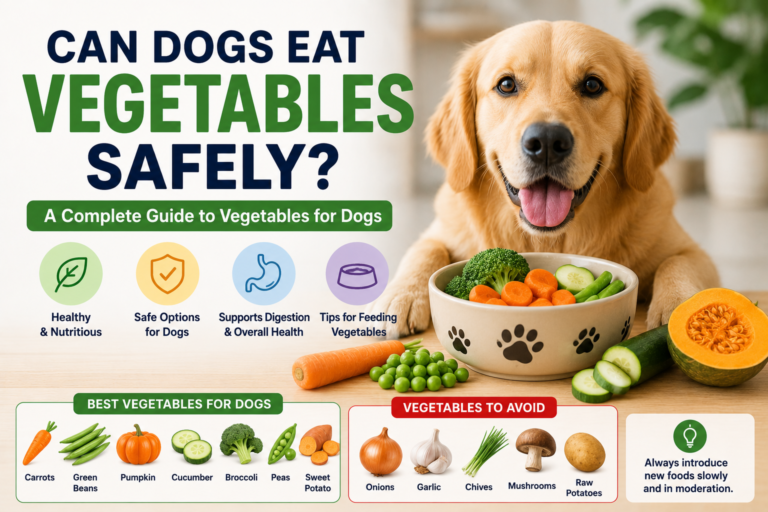
learn about Can Dogs Eat Vegetables Safely?
Why Cats Can Eat Some Vegetables but Don’t Need Them
Cats evolved as hunters. Unlike humans or dogs, they depend on nutrients found almost exclusively in animal tissues.
Essential nutrients such as taurine, arachidonic acid, and preformed vitamin A come from meat—not vegetables.
That said, certain vegetables can still offer benefits when served appropriately, including:
- Extra dietary fiber
- Additional moisture
- Low-calorie treats
- Mental enrichment from trying new textures
Think of vegetables as an occasional snack rather than a nutritional requirement.
Best Vegetables for Cats
Many vegetables safe for cats are easy to prepare and are already found in some commercial cat foods.
Pumpkin
Pumpkin is one of the best vegetables for cats.
Benefits include:
- Supports healthy digestion
- May help with mild constipation
- Can help firm loose stools
- Rich in fiber
Serve plain cooked pumpkin with no sugar, spices, or pie filling.
Carrots
Cooked carrots are soft, mildly sweet, and easy to digest.
Benefits:
- Beta-carotene
- Fiber
- Low in calories
Because raw carrots are hard, steam or boil them before serving.
Green Beans
Green beans make an excellent low-calorie snack.
They’re often recommended by veterinarians for overweight cats because they:
- Add bulk
- Increase fullness
- Provide fiber
Serve plain, cooked green beans cut into small pieces.
Peas
Peas appear in many commercial cat foods.
They contain:
- Fiber
- Plant protein
- Vitamins
- Minerals
Offer only a few cooked peas occasionally.
Broccoli
Broccoli is safe when cooked and served in small amounts.
It provides:
- Fiber
- Vitamin C
- Antioxidants
Too much broccoli may cause gas or digestive upset.
Zucchini
Zucchini is soft, easy to digest, and low in calories.
Many cats tolerate steamed zucchini well.
Cucumber
Cucumber contains mostly water, making it a refreshing snack during warm weather.
Cut it into very small pieces to reduce choking risk.
Spinach
Spinach contains vitamins and antioxidants.
However, it isn’t suitable for every cat.
Avoid spinach if your cat has:
- Kidney disease
- Urinary tract issues
- Calcium oxalate bladder stones
If your cat is healthy, small amounts occasionally are generally acceptable.
Vegetables That Are Dangerous for Cats
Not every vegetable is safe.
These foods should never be offered.
| Vegetable | Why It’s Unsafe |
|---|---|
| Onions | Can damage red blood cells and cause anemia |
| Garlic | More toxic than onions, even in small amounts |
| Chives | Toxic to cats |
| Leeks | Belong to the onion family and are poisonous |
| Shallots | Can cause serious illness |
| Raw potatoes | Contain solanine, a toxic compound |
| Rhubarb | Leaves contain oxalates that can be dangerous |
If your cat accidentally eats any of these foods, contact your veterinarian promptly.
Are Cooked Vegetables Better for Cats?
In most cases, yes.
Cooked vegetables for cats are generally easier to chew and digest.
Steaming or boiling also softens vegetables without adding unnecessary fat.
Avoid cooking vegetables with:
- Butter
- Salt
- Garlic
- Onion
- Oils
- Heavy seasonings
- Sauces
Plain is always best.
Can Cats Eat Raw Vegetables?
Some cats enjoy crunchy vegetables.
Safe raw options include:
- Small cucumber pieces
- Tiny amounts of lettuce
- Very thin slices of zucchini
Hard vegetables like carrots should usually be cooked because they can be difficult to chew.
Always cut vegetables into bite-sized pieces.
What Vegetables Are Good for Cats?
If you’re asking what vegetables are good for cats, these are among the safest choices:
- Pumpkin
- Carrots
- Green beans
- Peas
- Broccoli
- Zucchini
- Cucumber
- Small amounts of spinach (for healthy cats)
Each should be fed occasionally rather than daily.
Are Vegetables Good for Cats?
Are vegetables good for cats?
They can be—but only in moderation.
Potential benefits include:
- Improved digestive health
- Extra fiber
- Additional hydration
- Low-calorie treats
- Environmental enrichment
However, vegetables cannot replace the nutrients cats obtain from animal protein.
A nutritionally complete cat food should always remain the foundation of your cat’s diet.
Fruits and Vegetables for Cats
Many owners wonder about fruits and vegetables for cats together.
Some safe fruits include:
- Blueberries
- Watermelon (seedless)
- Apples (without seeds)
- Bananas (small amounts)
Like vegetables, fruit should only be an occasional treat because of its natural sugar content.
How to Introduce Vegetables to Your Cat
Introduce new foods slowly.
Step 1: Choose one vegetable
Start with something gentle like pumpkin or cooked carrot.
Step 2: Cook it plainly
Steam or boil without seasoning.
Step 3: Cut into tiny pieces
Small bites reduce choking risk.
Step 4: Offer a small amount
A teaspoon is plenty for most cats.
Step 5: Watch for reactions
Monitor for:
- Vomiting
- Diarrhea
- Excessive gas
- Refusal to eat
Stop feeding the vegetable if any digestive problems occur.
How Much Vegetable Can a Cat Eat?
Vegetables should remain a small treat.
A good rule is:
- Only a teaspoon or two occasionally
- Treats should generally make up no more than about 10% of a cat’s daily calorie intake
Cats have relatively small stomachs, so filling up on vegetables may reduce their appetite for nutritionally complete food.
Common Mistakes to Avoid
Many owners accidentally make vegetables less safe.
Avoid these common errors:
- Feeding seasoned vegetables
- Offering onions or garlic
- Giving large portions
- Replacing regular cat food with vegetables
- Serving vegetables that are too hard to chew
- Introducing several new foods at once
Expert Tips for Feeding Vegetables to Cats
- Prioritize a complete and balanced cat diet.
- Use vegetables as occasional treats, not meals.
- Cook hard vegetables until soft.
- Introduce only one new food at a time.
- Ask your veterinarian before changing the diet of cats with kidney disease, diabetes, digestive disorders, or urinary tract conditions.
Frequently Asked Questions
Can kittens eat vegetables?
Kittens should primarily eat a complete kitten food designed for growth. Small tastes of safe vegetables are generally not necessary and should only be offered occasionally if recommended by your veterinarian.
Can cats eat carrots every day?
It’s better to offer carrots occasionally rather than daily. Too much fiber may upset digestion.
Is pumpkin safe for cats?
Yes. Plain cooked pumpkin is one of the safest vegetables for cats and may help support healthy digestion.
Can cats eat broccoli?
Yes. Small amounts of cooked broccoli are generally safe for healthy cats.
Can cats eat lettuce?
Yes. Plain lettuce isn’t toxic, although many cats show little interest in eating it.
Can cats eat potatoes?
Cooked plain potatoes are not toxic, but they offer little nutritional value for cats. Raw potatoes should be avoided because they contain solanine.
Can cats eat spinach?
Healthy cats can usually eat small amounts of spinach. Cats with kidney disease or certain urinary problems should avoid it unless advised otherwise by a veterinarian.
What vegetables should cats never eat?
Never feed cats onions, garlic, chives, leeks, shallots, raw potatoes, or rhubarb.
Do cats need vegetables to stay healthy?
No. Cats can thrive on a complete and balanced meat-based diet without vegetables.
Why do some cats like vegetables?
Some cats enjoy the texture, smell, or moisture of certain vegetables. Every cat has individual preferences.
Key Takeaways
- Cats can safely eat certain vegetables in small amounts.
- Pumpkin, carrots, green beans, peas, broccoli, zucchini, and cucumber are among the best vegetables for cats.
- Onions, garlic, chives, leeks, shallots, raw potatoes, and rhubarb are toxic and should never be fed.
- Cooked vegetables for cats are usually easier to digest than raw ones.
- Vegetables should be occasional treats, not meal replacements.
- A complete, balanced cat food remains the most important part of your cat’s diet.
Final Thoughts
Safe vegetables can be a healthy, low-calorie addition to your cat’s routine when offered in moderation. While good vegetables for cats may provide extra fiber, hydration, and enrichment, they can’t replace the nutrients cats naturally obtain from animal protein. If you’re introducing a new food or your cat has an existing health condition, it’s always wise to check with your veterinarian before making dietary changes.