Can Dogs Eat Vegetables Safely?
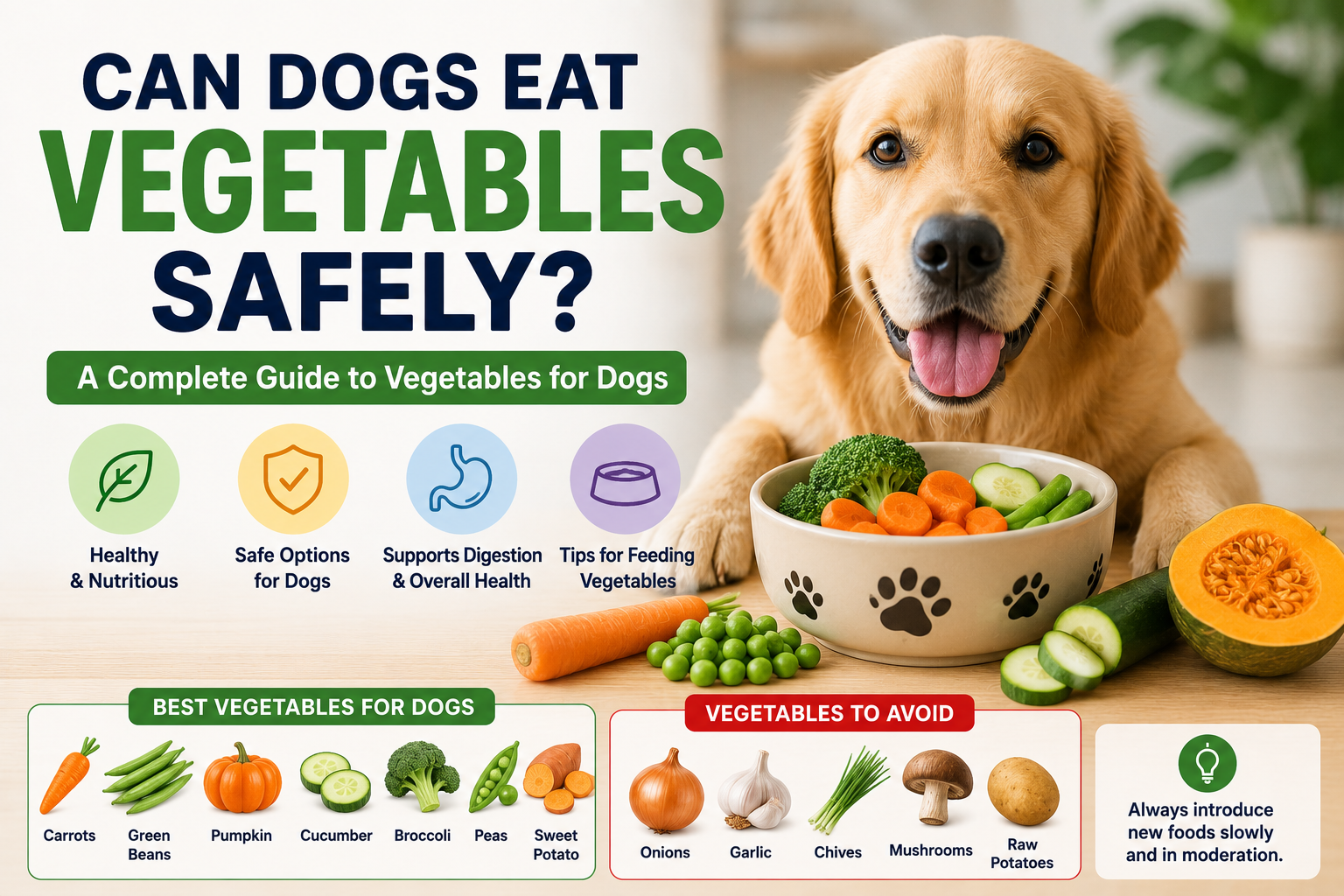
Yes, dogs can safely eat many vegetables, and some can be a healthy addition to a balanced diet. Carrots, green beans, pumpkin, sweet potatoes, cucumbers, broccoli (in moderation), peas, and spinach are among the best vegetables for dogs. However, not every vegetable is safe. Onions, garlic, chives, and wild mushrooms should never be fed to dogs because they can be toxic.
Can Dogs Eat Vegetables?
Dogs are considered omnivores, which means they can digest and benefit from both animal and plant-based foods.
While meat provides essential protein and nutrients, many vegetables for dogs supply valuable vitamins, minerals, antioxidants, and fiber that support overall health.
Vegetables should never replace a complete and balanced dog food, but they can make excellent treats or meal toppers when offered appropriately.
Best Vegetables for Dogs
If you’re wondering what vegetables are good for dogs, these are among the safest and most nutritious choices.
1. Carrots
Carrots are one of the most popular vegetables for dogs.
Benefits include:
- High in vitamin A
- Good source of fiber
- Low in calories
- Crunchy texture may help reduce plaque buildup
Serve:
- Raw in small pieces
- Steamed
- Cooked without seasoning
2. Green Beans
Green beans are nutritious and filling.
They provide:
- Fiber
- Vitamin C
- Vitamin K
- Manganese
Fresh, frozen, or steamed green beans are all suitable if they’re plain and unseasoned.
3. Pumpkin
Plain pumpkin is excellent for digestive health.
It contains:
- Soluble fiber
- Vitamin A
- Potassium
Pumpkin may help support normal bowel movements when fed in appropriate amounts.
Choose plain cooked pumpkin or 100% pumpkin puree without added sugar or spices.
4. Sweet Potatoes
Sweet potatoes are rich in:
- Fiber
- Vitamin A
- Vitamin C
- Potassium
Always cook sweet potatoes before serving, as raw sweet potatoes can be difficult for dogs to digest.
5. Cucumbers
Cucumbers are:
- Low in calories
- High in water
- Refreshing during warm weather
They’re an excellent snack for dogs that need to manage their weight.
6. Broccoli
Broccoli contains:
- Fiber
- Vitamin C
- Vitamin K
Feed only small amounts because excessive broccoli may cause stomach upset in some dogs.
7. Peas
Green peas provide:
- Plant protein
- Fiber
- Vitamin B
- Vitamin K
Fresh or frozen peas are generally suitable.
Avoid canned peas with added salt.
8. Spinach
Spinach contains:
- Iron
- Vitamin A
- Vitamin C
- Antioxidants
Small amounts are generally fine for healthy dogs.
Because spinach contains oxalates, it should not be fed in large quantities, particularly to dogs with certain kidney or urinary conditions.
9. Zucchini
Zucchini is:
- Low in calories
- Easy to digest
- Rich in vitamin C and potassium
It can be served steamed or raw in small pieces.
10. Bell Peppers
Red, yellow, and green bell peppers provide:
- Vitamin C
- Vitamin A
- Antioxidants
Remove the stem and seeds before serving.
Vegetables Dogs Should Avoid
Not every vegetable is safe.
Some can be toxic or difficult to digest.
Avoid feeding your dog:
Onions
Onions can damage red blood cells and may lead to anemia.
Garlic
Garlic belongs to the same plant family as onions and is also toxic to dogs.
Chives
Chives contain compounds similar to onions and garlic that can be harmful.
Wild Mushrooms
Some wild mushrooms are highly toxic and may cause severe illness.
Never allow your dog to eat mushrooms found outdoors.
Raw Potatoes
Raw potatoes contain solanine, which can be harmful to dogs.
Cooked potatoes are safer but should still be fed in moderation and without butter, salt, or seasonings.
How to Safely Feed Vegetables to Your Dog
Adding vegetables to your dog’s diet is simple if you follow a few basic guidelines.
1. Wash Thoroughly
Rinse vegetables to remove dirt, pesticides, and contaminants.
2. Serve Plain
Avoid adding:
- Salt
- Butter
- Garlic
- Onion
- Oils
- Heavy sauces
- Seasonings
Dogs don’t need these additions, and some can be dangerous.
3. Cut Into Small Pieces
Smaller pieces reduce the risk of choking, especially for small breeds.
4. Introduce New Foods Slowly
Offer one new vegetable at a time.
Monitor your dog for signs of digestive upset such as:
- Vomiting
- Diarrhea
- Excessive gas
5. Feed in Moderation
Vegetables should complement—not replace—a balanced dog food.
Treats and extras, including vegetables, generally shouldn’t make up more than about 10% of your dog’s daily calorie intake unless your veterinarian advises otherwise.
Can Puppies Eat Vegetables?
Yes, puppies can enjoy many vegetables safe for dogs, but they should already be eating a complete puppy diet before vegetables are introduced.
Start with small amounts of easily digestible vegetables such as:
- Cooked carrots
- Pumpkin
- Green beans
Avoid introducing several new foods at once.
Signs Your Dog Doesn’t Tolerate a Vegetable
Stop feeding the vegetable and contact your veterinarian if your dog develops:
- Vomiting
- Diarrhea
- Excessive drooling
- Swollen face
- Difficulty breathing
- Persistent stomach discomfort
Although allergies to vegetables are uncommon, food intolerances can occur.
Common Mistakes Dog Owners Make
Feeding Seasoned Vegetables
Garlic, onion powder, butter, and salt make vegetables unsafe for dogs.
Offering Too Much Fiber
Large amounts of vegetables can cause diarrhea, gas, or stomach discomfort.
Giving Large Chunks
Whole carrots or large vegetable pieces may become choking hazards for some dogs.
Assuming Every Vegetable Is Safe
Some vegetables are nutritious, while others are toxic.
Always check before offering something new.
Replacing Balanced Dog Food
Vegetables should supplement a complete diet—not replace it.
Frequently Asked Questions
Can dogs eat vegetables every day?
Yes. Many dogs can enjoy small amounts of vegetables daily as part of a balanced diet.
What vegetables are good for dogs?
Some of the best vegetables for dogs include carrots, green beans, pumpkin, cucumbers, zucchini, peas, sweet potatoes, spinach, broccoli (in moderation), and bell peppers.
What vegetables are not safe for dogs?
Dogs should never eat onions, garlic, chives, or wild mushrooms. Raw potatoes should also be avoided.
Can dogs eat raw vegetables?
Some vegetables, such as carrots and cucumbers, are safe raw. Others, including sweet potatoes and potatoes, should always be cooked first.
Are vegetables healthy for dogs?
Yes. Many healthy vegetables for dogs provide fiber, vitamins, minerals, and antioxidants that support overall health.
Can vegetables replace dog food?
No. Vegetables are nutritious additions but do not provide all the nutrients dogs need. A complete and balanced dog food should remain the main part of your dog’s diet.
Can overweight dogs eat vegetables?
Yes. Low-calorie vegetables like cucumbers and green beans can make satisfying treats for dogs that need to lose weight, provided they’re fed in moderation.
Can puppies eat vegetables?
Yes, once they’re eating a balanced puppy diet. Introduce vegetables gradually and in small amounts.
How should I prepare vegetables for my dog?
Wash them thoroughly, serve them plain without seasonings, and cut them into bite-sized pieces. Some vegetables are easier to digest when lightly cooked.
Can dogs be allergic to vegetables?
While uncommon, some dogs may have food sensitivities or intolerances. If your dog develops vomiting, diarrhea, itching, or other unusual symptoms after eating a new vegetable, stop feeding it and consult your veterinarian.
Key Takeaways
- Many vegetables for dogs are safe and nutritious when fed in moderation.
- Carrots, green beans, pumpkin, cucumbers, sweet potatoes, zucchini, peas, and bell peppers are among the best vegetables for dogs.
- Never feed onions, garlic, chives, or wild mushrooms.
- Wash vegetables thoroughly and serve them plain without butter, salt, or seasonings.
- Introduce new vegetables gradually and monitor your dog for digestive upset.
- Vegetables should supplement a balanced diet, not replace complete dog food.
Final Thoughts
Vegetables can be a healthy, low-calorie addition to your dog’s diet when chosen and prepared carefully. They offer valuable nutrients, variety, and an enjoyable crunch that many dogs appreciate. Whether you’re looking for healthier treats or simply want to add a little extra nutrition to your dog’s meals, plenty of vegetables safe for dogs can fit the bill.
Learn about Can cats Eat Vegetables Safely?
The key is moderation and selecting the right options. Stick to dog-safe vegetables, avoid toxic ones, and introduce new foods slowly. If your dog has an existing medical condition or special dietary needs, it’s always a good idea to check with your veterinarian before making significant changes to their diet.