Dog Weight Loss Diet Guide: Safe Ways to Help Your Dog Reduce Weight
A dog weight loss diet should help your dog lose excess fat while keeping their muscle, energy, and overall health in check. The best way to do this is by using measured portions, nutritionally balanced food, healthy treats, and regular exercise. Before making any changes to your dog’s food, it’s important to consult a veterinarian to determine a healthy target weight and the right number of daily calories, especially if your dog has to drop a lot of weight or has a health issue.
Simply feeding less isn’t the answer what matters is providing the right nutrients in the right amounts, so your dog can maintain a healthy lifestyle while losing weight gradually.
What Is a Dog Weight Loss Diet?
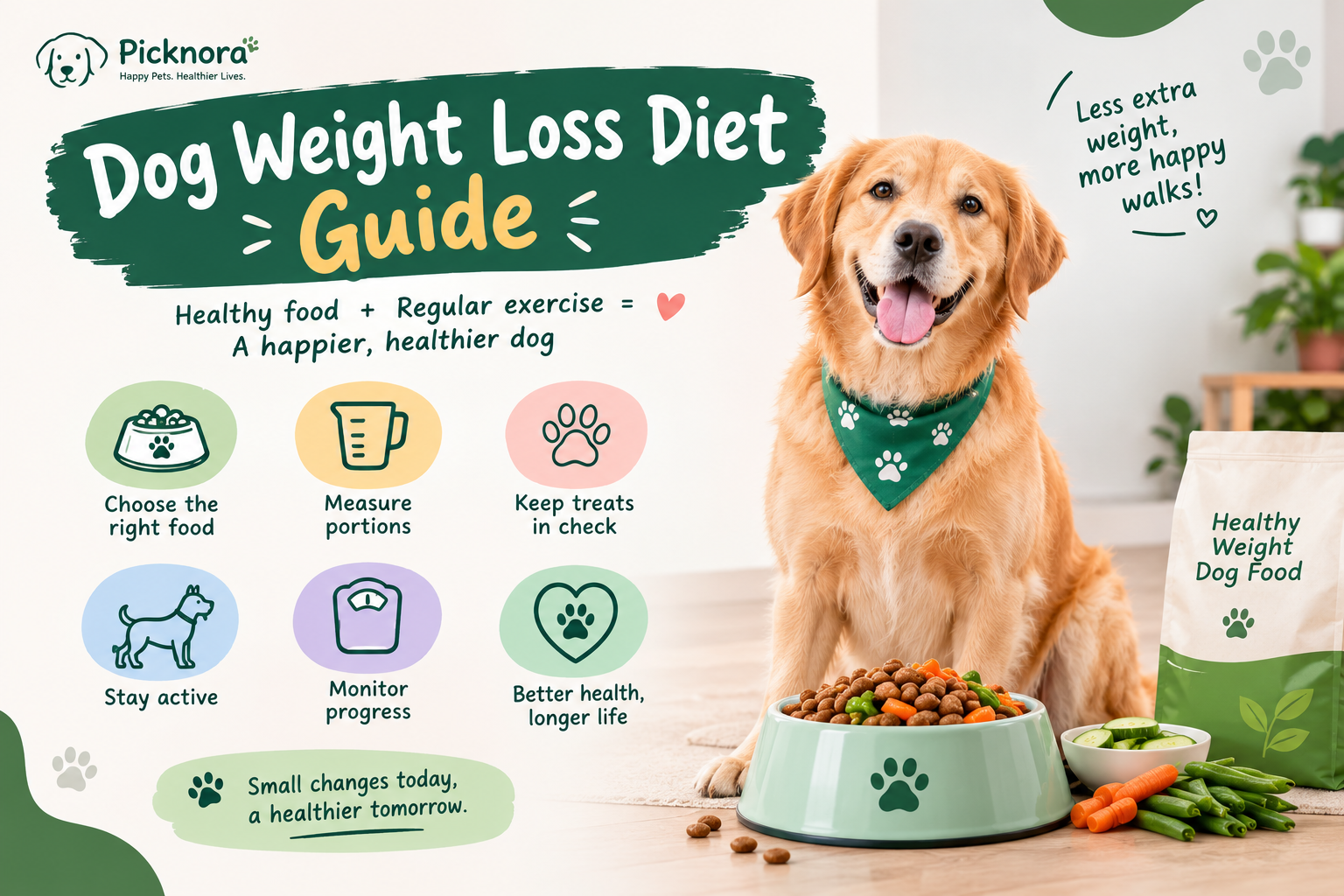
A suitable weight management plan usually includes:
-
Measured meals instead of unrestricted feeding.
-
Appropriate portions based on calorie needs.
-
Complete and balanced dog food.
-
Limited treats and table scraps.
-
Daily physical activity suited to the dog’s abilities.
-
Regular weight checks to monitor progress.
How to Tell If Your Dog Needs to Lose Weight
Your dog may be overweight if you notice changes in body shape or movement. However, one cannot determine whether weight loss is required based solely on appearance.
Look for these common signs:
-
You can’t easily feel the ribs beneath a thin layer of fat.
-
The waist is difficult to see when looking down from above.
-
The abdomen doesn’t tuck upward behind the rib cage when viewed from the side.
-
Your dog tires quickly during walks or struggles with activities it previously enjoyed.
Veterinarians often use a Body Condition Score (BCS) to assess a dog’s body fat. On the commonly used nine-point scale, a score of 4–5 is generally considered ideal, while 6–9 indicates increasing degrees of excess body fat.
Some breeds naturally have different body shapes, so don’t judge your dog by appearance alone. A veterinarian can help determine a realistic target weight.
Best Dog Food for Weight Loss
The best dog food for weight loss is one that provides complete, balanced nutrition while supplying an appropriate number of calories. It should help your dog feel satisfied without encouraging excessive calorie intake.
1. Veterinary weight management food
Depending on the formula, they may contain adjusted calorie levels, adequate protein, and added fiber to help support fullness and preserve lean muscle.
These diets can be particularly useful for dogs that need substantial weight loss or have other health concerns. Ask your veterinarian whether a prescription or nonprescription weight management food is appropriate.
2. Complete and balanced adult dog food
Some dogs can lose weight safely on their existing complete and balanced adult food if their veterinarian determines the correct portion and calorie target.
The key is measuring the amount accurately. Simply switching to a food labeled “light” or “healthy” doesn’t guarantee weight loss because calorie content varies between products.
3. High-protein, appropriately portioned food
Adequate protein helps maintain muscle during weight loss. A suitable diet should provide enough protein and other essential nutrients for your dog’s life stage and medical needs.
Don’t choose food based on protein content alone. Total calories, nutritional completeness, digestibility, and your dog’s individual needs all matter.
4. Low-calorie vegetables as occasional additions
Some plain vegetables can make useful low-calorie treats. Examples include green beans, cucumber, and small pieces of carrot.
Serve them without butter, oil, salt, or seasoning. Introduce new foods gradually, and remember that vegetables should not replace a nutritionally complete diet.
Avoid toxic foods such as grapes, raisins, onions, garlic, and foods containing xylitol.
Dog Weight Loss Meal Plan: A Simple Daily Example
A dog weight loss meal plan should be based on your dog’s individual calorie needs rather than a universal serving size.
Here’s an example of how to organize a day of feeding without prescribing a specific number of calories.
| Time | Feeding plan |
|---|---|
| Morning | A measured portion of complete and balanced dog food |
| Midday | A small portion of the daily food allowance reserved for training, if needed |
| Evening | The remaining measured food portion |
| Throughout the day | Fresh water and appropriate, portion-controlled treats |
You can reserve some of your dog’s regular kibble for training instead of adding extra treats.
Plain green beans or cucumber may be suitable occasional additions for some dogs, but keep extras limited and account for their calories. Most of your dog’s nutrition should come from complete and balanced food.
Common Dog Weight Loss Mistakes to Avoid
Small habits that add too many calories might cause even the best-intentioned diet to fail.
-
Reducing food too drastically: This can leave a dog short of essential nutrients.
-
Ignoring treats: Biscuits, dental chews, and table scraps can contribute substantial calories.
-
Changing food suddenly: Abrupt dietary changes may upset digestion. Transition gradually unless your veterinarian advises otherwise.
-
Over exercising an overweight dog: Excessive activity can strain joints and cause injury.
-
Assuming homemade food is automatically healthier: Unbalanced homemade diets may lack essential nutrients. Ask a veterinary nutritionist to formulate a long-term recipe.
-
Expecting immediate results: Healthy weight loss takes time, and progress may vary between dogs.
Frequently Asked Questions
1. What diet is ideal for a dog that is overweight?
The best diet provides complete, balanced nutrition with controlled calories and adequate protein. A veterinarian can help determine whether your dog needs a dedicated weight management formula or a carefully measured portion of its current food.
2. Can I help my dog lose weight without changing its food?
Sometimes. If your dog’s current food is nutritionally appropriate, adjusting portions and limiting extra calories may help. Consult your veterinarian before making significant changes.
3. Are homemade meals good for dog weight loss?
They can be appropriate when properly formulated, but homemade meals aren’t automatically nutritionally complete. A balanced diet tailored to your dog’s requirements can be made by a veterinary nutritionist.
4. How frequently should a dog that is overweight be fed?
Two measured meals a day are sufficient for many older dogs. However, feeding frequency depends on the individual dog, its health, and its routine.
5. Are rice and chicken good for dog weight loss?
Plain, cooked chicken and rice may be suitable for some short-term dietary situations, but they don’t provide complete nutrition for long-term feeding. Their calorie content also depends on the amounts and preparation.
6. What rewards are appropriate for dogs following a diet?
Small portions of your dog’s regular kibble, plain green beans, and cucumber can be useful options for many dogs. Introduce new foods carefully and avoid toxic ingredients.
Key Takeaways
-
A successful dog weight loss diet balances calorie control with complete nutrition.
-
Veterinary guidance helps establish a realistic target weight and appropriate daily calorie intake.
- Instead than calculating portions, measure meals and count goodies.
-
Choose suitable food based on nutritional quality, calorie content, and individual health needs.
-
Combine appropriate exercise with regular weight monitoring.
-
Avoid crash diets, excessive exercise, and unbalanced homemade meals.
Conclusion
Helping your dog reach a healthy weight takes patience, consistency, and a plan tailored to its needs. Start by assessing body condition with your veterinarian, measuring food accurately, and limiting unnecessary treats. Add regular, manageable activity and track progress over time.
The goal isn’t simply to make your dog weigh less. It’s to help your dog maintain healthy muscle, move comfortably, and enjoy a better quality of life.