Best Food for Senior Dogs: A Complete Guide to Senior Dog Nutrition
Choosing the best food for senior dogs isn’t just about picking a bag that says “senior.” Older dogs have different needs when it comes to calories, protein, fat, fiber, and minerals and these needs can vary based on their size, how active they are, their weight and their overall health. The best food is one that’s complete and balanced, giving the right amount of calories and nutrients to suit each dog’s unique situation.
As dogs get older, their metabolism slows down, they may be less active, lose some muscle, have slower digestion and are more likely to develop certain health problems. Because of this, feeding a senior dog should focus on keeping them at a healthy weight, helping them keep muscle, staying hydrated and adjusting their food as needed if they have any health issues.
What Is the Best Food for Senior Dogs?
The best food for older dogs is a complete and balanced diet that matches their life stage, body condition, and health needs. For many healthy senior dogs, this means food that is rich in nutrients, has the right amount of calories and includes high-quality protein.
However, dogs with health issues like kidney disease, obesity, diabetes or digestive problems may need a special diet that a vet recommends. There’s no single best food for all senior dogs. Two dogs of the same age could need very different diets.
For example, an 11 year old Labrador that’s overweight and mostly inactive might need fewer calories, while an older, thin dog that’s losing muscle may need more energy and protein. That’s why it’s important to tailor the diet to each older dog’s needs, rather than just using their age as the main guide.
Why Senior Dogs Need Different Nutrition
As dogs get older, they don’t automatically need a completely new type of food. But their body’s needs can change because of things like activity level, how their body uses energy, muscle and fat changes, and overall health. Older dogs often become less active, which means they need fewer calories. But they can also lose muscle, so it’s important to give them enough protein and good nutrition.
A good diet for senior dogs should help with:
- Keeping them at a healthy weight
- Keeping their muscle strong
- Giving them enough protein
- Helping their digestion work well
- Keeping them hydrated
- Avoiding too much of certain nutrients
- Helping them move around better and enjoy life more
What Should Senior Dogs Eat?
Senior dogs should eat a complete and balanced diet that offers the right number of calories and high-quality nutrients to match their specific needs.
Look for food that includes:
1. High-quality protein
Protein is important for keeping muscles strong, especially as dogs get older. Older dogs don’t always need a low protein diet. In fact, healthy senior dogs can benefit from the right amount of good quality protein to help them keep their body weight and muscle.
The right amount depends on each dog’s needs. If a dog has kidney disease, things like protein, phosphorus, sodium, and other nutrients need to be carefully managed as part of a vet-approved nutrition plan.
2. Appropriate calories
Many senior dogs are less active than they used to be, so they need fewer calories than they did when they were younger. Feeding the same amount as before can lead to weight gain over time.
On the other hand, some very old dogs might lose weight and muscle. In those cases, just reducing calories because the dog is senior could make the situation worse.
3. Adequate fiber
Fiber can support digestive health and is helpful in weight management diets. However, more fiber isn’t always better. Too much can lower the calorie content and might not be right for every dog.
4. Healthy fats
Fats provide energy and make food more appealing. The right amount of fat depends on your dog’s calorie needs, body condition, and health. A dog trying to lose weight might need a different fat and calorie balance than a dog that is already thin.
5. Essential vitamins and minerals
A well-made complete diet should give your dog the right amount of essential vitamins and minerals. Don’t add extra vitamins or minerals to a complete commercial diet unless your vet suggests it. Too much can cause imbalances in your dog’s nutrition.
6. Plenty of water
Staying hydrated is especially important for older dogs. Make sure your dog has access to fresh water all day. Watch for changes in how much they drink. Increased or decreased thirst can sometimes be a sign of a health issue and should be checked by a vet.
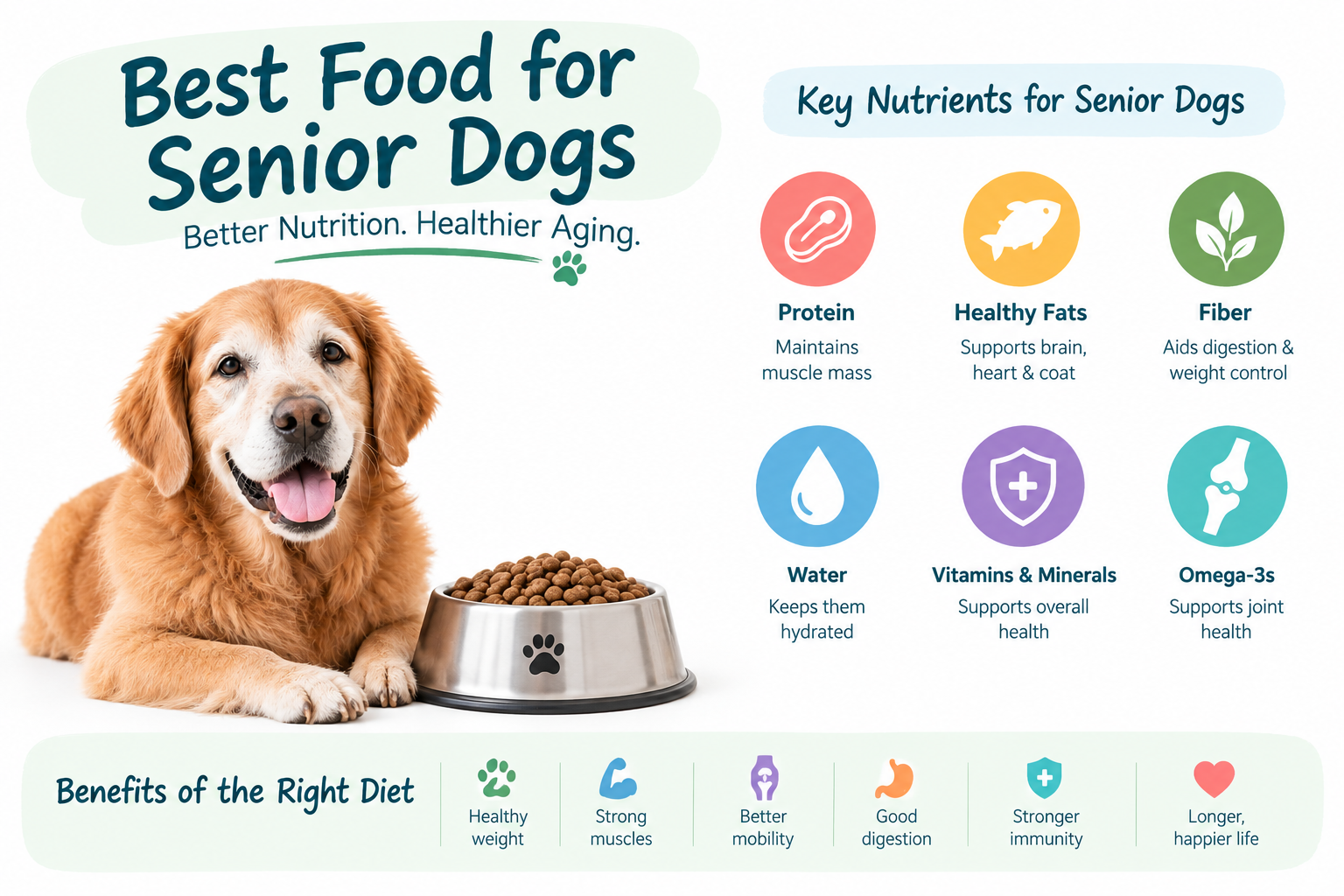
Key Nutrients in Senior Dog Nutrition
| Nutrient | Why It Matters |
|---|---|
| Protein | Helps maintain lean muscle |
| Fat | Provides energy and essential fatty acids |
| Fiber | Supports digestion and can help with weight management |
| Water | Essential for hydration and normal body function |
| Vitamins & minerals | Support normal physiological functions |
| Omega-3 fatty acids | May support overall health and joint-related nutrition |
| Antioxidants | May have a role in supporting healthy aging |
The important point is balance. A food isn’t necessarily better simply because it contains more of one nutrient.
How to Choose Senior Dog Food
Selecting the right food for your senior dog is easier when you look at their overall health instead of just the labels on the package.
Step 1: Think about your dog’s body condition
Take a close look at your dog’s weight and how they look.
Is your dog:
- At a healthy weight?
- Carrying too much fat?
- Losing weight?
- Losing muscle?
- Having trouble keeping a steady weight?
Knowing your dog’s body and muscle condition is a key part of deciding what they need to eat. The World Small Animal Veterinary Association offers tools that vets use to check body and muscle condition.
Step 2: Look at the calorie amount
Don’t just guess how much to feed by the size of the scoop. Check the food’s calorie count and match it to your dog’s energy needs.
A small amount of food that is high in calories can give more energy than a bigger amount of food with fewer calories.
Step 3: Look at the protein quality and amount
Protein is especially important for keeping your senior dog’s muscles strong. But just because a food is labeled “high protein” doesn’t always mean it’s the best choice. The right food depends on your dog’s health and lifestyle.
Step 4: Think about any health problems
A senior dog that is healthy is different from one with a long-term illness like kidney disease.
Special dog foods can help manage health issues like:
- Chronic kidney disease
- Diabetes
- Arthritis
- Obesity
- Digestive problems
- Some heart conditions
Step 5: Pick food your dog actually likes
If your dog doesn’t want to eat, then the food isn’t helping them. Older dogs can have dental problems, feel less hungry, or find certain foods less tasty. Depending on your dog, wet food, softened dry food, or a different texture might make eating easier.
Dry Food vs.Wet Food for Senior Dogs
Both dry and wet foods can work well for older dogs.
Dry Food
Dry food is easy to use, simple to measure, and has a lot of calories in each bite. But some senior dogs with tooth issues might have trouble chewing hard kibble.
Wet Food
Wet food has much more water than dry food, which can make it easier for some dogs to eat. It’s also good for dogs who like softer food.
A Combination
Some people mix wet and dry food together. That’s okay as long as the total number of calories is right and the whole meal stays healthy and balanced.
How much should a senior dog eat?
The right amount depends on how many calories are in the food and your dog’s specific calorie needs.
Here’s a helpful way to figure it out:
- Look at the feeding guide on the food packaging.
- Find out how many calories are in each cup, can, or gram of food.
- Think about your dog’s current weight and how healthy they look.
- Use measured portions instead of just guessing.
- Count treats as part of the daily calorie total.
- Keep an eye on your dog’s weight and muscle tone.
- If needed, change the amount of food with help from a vet.
If your senior dog suddenly starts eating a lot less or stops eating altogether, don’t just cut their food and hope for the best. A big change in eating habits can be a sign of a health problem.
How much protein does a senior dog need?
There isn’t a single protein percentage that works best for every older dog. A dog’s protein needs depend on their general health, muscle strength, activity level and any medical issues they might have.
Healthy senior dogs need enough high-quality protein to help keep their muscles strong. However, dogs with certain health problems may need careful control of protein, phosphorus, sodium, or other nutrients.
One common mistake is thinking all older dogs should eat low-protein food. That’s not always the right choice for every dog. If your dog has kidney disease or another condition that affects what they eat, talk to your vet before changing their food.
Should senior dogs eat homemade food?
Making homemade food can work in some cases, but it’s not as easy as just mixing meat, rice, vegetables and eggs together. A meal might seem healthy, but it could still be missing or have too much of important nutrients.
If you plan to feed homemade food to your senior dog for a long time, it’s best to talk to a vet or a veterinary nutritionist to create a recipe that’s right for your dog’s needs. For most people, using a properly made commercial dog food is easier and ensures your pet gets the right nutrition every day.
Common Senior Dog Feeding Mistakes
1. Thinking all older dogs need less food
Some older dogs need fewer calories, but not every senior dog does. Very old or underweight dogs might need more energy to stay healthy.
2. Switching to low-protein food without checking
Senior dogs still need enough protein to keep their muscles strong. You should only cut back on protein if a vet says it’s needed for a specific health issue, not just because the dog is old.
3. Choosing food based on age instead of the dog’s body condition
Two dogs of the same age can have very different needs. It’s better to look at weight, muscle tone, activity level, and overall health when choosing food.
4. Changing food too fast
Switching food quickly can upset a dog’s stomach. It’s better to change food slowly to help the dog adjust better.
6. Thinking appetite changes are just part of getting older
A big change in how much your dog eats shouldn’t be ignored. It could be a sign of dental problems, stomach issues, kidney disease, pain or other health concerns.
Frequently Asked Questions
What is the best food for senior dogs?
The best food for senior dogs is one that gives them all the nutrients they need in the right amounts, based on their age, how active they are, and their overall health. There isn’t a single food that works best for every senior dog.
Do senior dogs need special food?
Not always. Some senior dogs do fine with regular adult food, while others might need a different kind of food. The best choice depends on what the dog needs, not just their age.
Should senior dogs eat more protein?
Senior dogs need enough high-quality protein to keep their muscles strong, but the right amount of protein can vary from dog to dog. Dogs with certain health issues might need special dietary changes.
Is wet food better for senior dogs?
Not necessarily. Wet food can be helpful if a dog prefers softer food or needs more moisture in their diet, but both wet and dry food can be good as long as they are nutritionally complete and the right amount is given.
What should senior dogs eat for healthy joints?
A healthy weight is key to keeping joints in good shape. Some foods also have ingredients that help support joint health. Dogs with arthritis might need a more customized diet.
Can senior dogs eat regular adult dog food?
Yes, some can. A healthy senior dog doesn’t automatically need food made for seniors. What matters is whether the food meets their needs and whether they stay at a healthy weight and have good muscle tone.
How often should senior dogs eat?
Most senior dogs do well with two meals a day. Some may do better with smaller meals more often, especially if they have a weak appetite, digestion issues or other health problems.
How do I know if my senior dog is eating too much?
Keep track of your dog’s weight and body condition. If they are gaining weight slowly, moving less, or have too much body fat, it could be a sign they’re eating too much.
Should I give my senior dog supplements?
Not automatically. A complete and balanced diet usually gives all the vitamins and minerals a dog needs. If you think your dog needs supplements, talk to your vet first.
When should I switch my dog to senior food?
There’s no one size fits all age for switching to senior food. Look at your dog’s weight, energy level, appetite, muscle mass and overall health. Your vet can help you decide if it’s time to change their food.
Key Takeaways
- The best food for older dogs depends on the dog itself, not just how old they are.
- As dogs get older, their activity level and energy needs can change, so it’s important to watch their calorie intake carefully.
- Good quality protein is important for keeping their muscles strong.
- You shouldn’t automatically cut back on protein just because your dog is older.
- If your senior dog is overweight or underweight, they may need different kinds of food to help them stay healthy.
- Wet food can help some dogs feel more hungry and stay hydrated, but dry food can also work well for others.
- Dogs with health issues like kidney disease, diabetes, or digestive problems might need special food made for their condition.
- Make sure to measure your dog’s food and count treats when keeping track of how many calories they’re getting.
- It’s important to check your dog’s body shape and muscle tone, not just their weight on the scale.
- If your dog suddenly starts eating more or less, drinking more or less water, gaining or losing weight quickly, or has changes in their digestion, you should see a vet.
Final Thoughts
A good diet for an older dog isn’t about finding a special ingredient or buying the most expensive food. It’s about giving the right kind of balanced nutrition that works for your dog. An active senior dog that’s at a healthy weight might need a different type of food than an overweight dog with joint problems or an older dog that’s losing muscle.
As dogs get older, their needs can change again and again. The safest way is to pick a complete and balanced food, carefully measure how much your dog eats, keep an eye on their body shape and muscle tone, and talk to your vet whenever their health or eating needs change.