
How to Spot Pet Dehydration Before It Becomes Serious
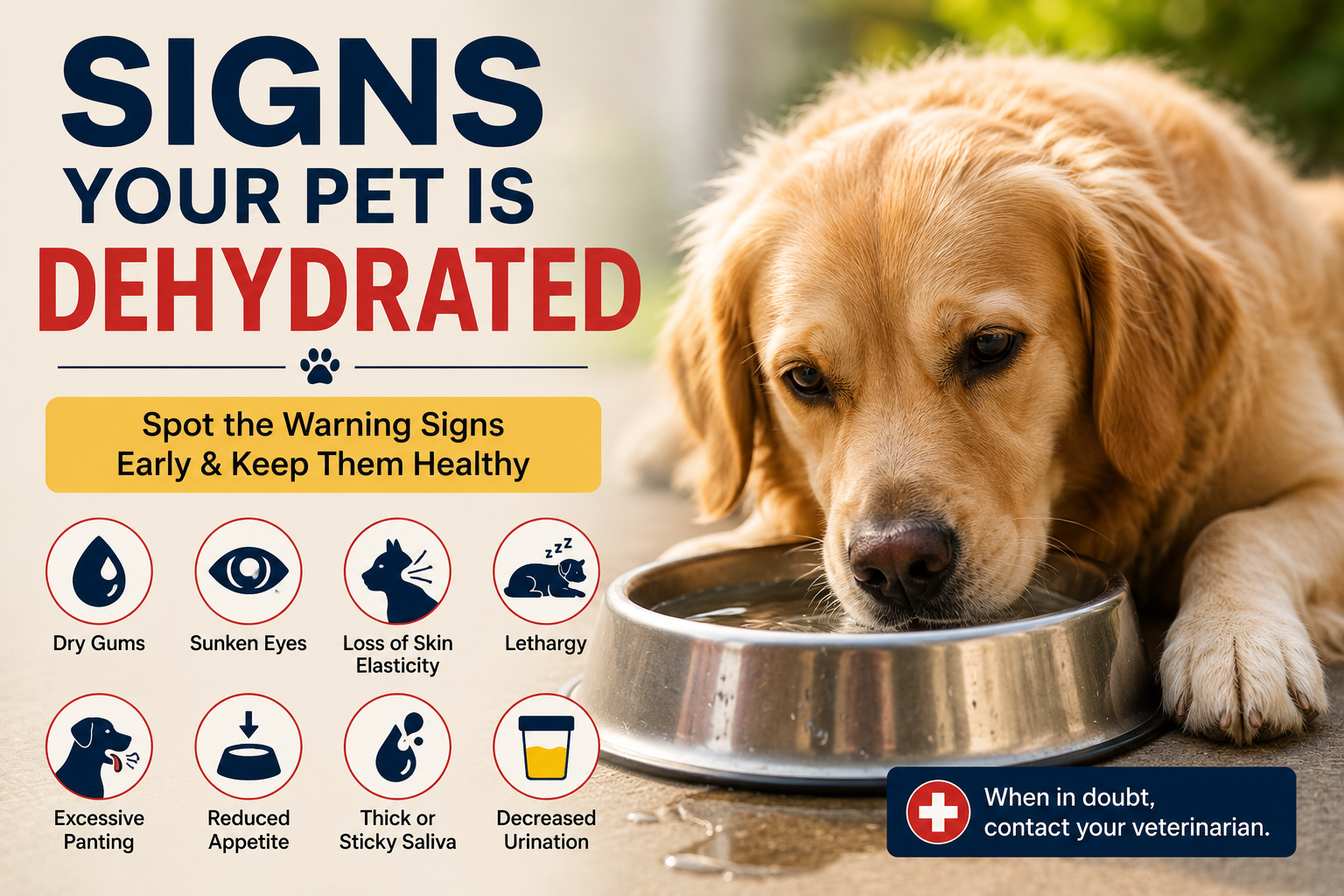
Dehydration in pets happens when they lose more fluids than they take in, making it difficult for their bodies to function normally. Common pet dehydration signs include dry gums, sunken eyes, loss of skin elasticity, lethargy, excessive panting, reduced appetite, and decreased urination. Recognizing these early signs can help you get your pet the care they need before dehydration becomes a medical emergency.
Whether you have a playful puppy, a curious cat, or another companion animal, knowing the signs of dehydration in pets can make a significant difference to their health and recovery.
Common Pet Dehydration Signs
Watch for these warning signs:
- Dry or sticky gums
- Loss of skin elasticity
- Sunken or dull-looking eyes
- Lethargy or unusual tiredness
- Excessive panting (especially in dogs)
- Reduced appetite
- Thick or stringy saliva
- Decreased urination
- Dark yellow urine
- Weakness or collapse in severe cases
If your pet shows multiple symptoms or appears seriously ill, contact your veterinarian immediately.
What Is Dehydration in Pets?
Dehydration occurs when a pet loses more water and electrolytes than they replace through drinking or food.
Water supports nearly every function in the body, including:
- Regulating body temperature
- Transporting nutrients
- Supporting digestion
- Lubricating joints
- Maintaining healthy organs
- Removing waste products
Without enough fluids, the heart, kidneys, brain, and other organs have to work harder, increasing the risk of serious complications.
Why Dehydration Is Dangerous
Even mild dehydration can affect how your pet feels and behaves.
As dehydration worsens, it can lead to:
- Reduced blood circulation
- Electrolyte imbalances
- Heat exhaustion or heatstroke
- Kidney damage
- Organ failure in severe cases
Young animals, senior pets, and those with existing medical conditions are especially vulnerable.
Common Pet Dehydration Signs
Recognizing dehydration early gives your pet the best chance of a quick recovery.
Dry or Sticky Gums
Healthy gums should feel moist and slippery.
If your pet’s gums feel:
- Dry
- Sticky
- Tacky
it may indicate dehydration.
Loss of Skin Elasticity
One simple at-home check is the skin tent test.
Gently lift the loose skin between your pet’s shoulder blades.
In a well-hydrated pet:
- The skin quickly returns to its normal position.
In a dehydrated pet:
- The skin stays raised longer than usual.
Keep in mind this test is less reliable in older pets because aging naturally reduces skin elasticity.
Sunken Eyes
A dehydrated pet may have:
- Eyes that appear sunken
- Dull-looking eyes
- Less brightness than normal
This is often a sign of moderate to severe dehydration.
Lethargy
One of the earliest signs of pet dehydration is a noticeable decrease in energy.
Your pet may:
- Sleep more
- Lose interest in play
- Walk more slowly
- Seem unusually quiet
Excessive Panting
Dogs cool themselves mainly by panting.
Heavy panting can both signal dehydration and contribute to additional fluid loss, especially during hot weather or after exercise.
Cats usually pant only under stress or during extreme heat, so persistent panting in a cat should be taken seriously.
Reduced Appetite
A dehydrated pet may lose interest in food.
If your pet suddenly refuses both food and water, seek veterinary advice promptly.
Thick Saliva
Instead of thin, watery saliva, you may notice:
- Thick drool
- Sticky saliva
- Dry mouth
These are common indicators of inadequate hydration.
Decreased Urination
Less water intake often means less urine production.
You may notice:
- Fewer bathroom trips
- Smaller urine clumps in a litter box
- Darker urine color
- Stronger urine odor
Weakness or Collapse
Severe dehydration is an emergency.
If your pet becomes:
- Unable to stand
- Extremely weak
- Unresponsive
- Collapses
seek immediate veterinary care.
What Causes Dehydration in Pets?
Many situations can lead to dehydration.
Common causes include:
- Hot weather
- Excessive exercise
- Vomiting
- Diarrhea
- Fever
- Kidney disease
- Diabetes
- Heatstroke
- Not drinking enough water
- Certain medications
Sometimes dehydration develops gradually over several days, making early signs easy to miss.
Pets Most at Risk
Some animals are more likely to become dehydrated.
Higher-risk pets include:
- Puppies
- Kittens
- Senior pets
- Nursing mothers
- Pets with chronic illnesses
- Flat-faced dog breeds during hot weather
- Very active dogs
- Outdoor pets during summer
These pets should be monitored closely, especially during warm temperatures.
How to Check Your Pet for Dehydration at Home
While a veterinarian provides the most accurate assessment, you can perform a few simple checks.
1. Check the Gums
Healthy gums should be:
- Pink (unless naturally pigmented)
- Moist
- Smooth
Dry or sticky gums may indicate dehydration.
2. Perform the Skin Tent Test
Lift the skin gently over the shoulders.
If it stays raised instead of quickly returning to place, dehydration may be present.
3. Observe Water Intake
Notice whether your pet is:
- Drinking normally
- Drinking excessively
- Refusing water altogether
Sudden changes deserve attention.
4. Monitor Energy Levels
A pet that’s unusually tired or reluctant to move may not simply be “having a lazy day.”
Behavior changes often provide early clues.
5. Watch Urination
Keep an eye on:
- Frequency
- Color
- Volume
Reduced urination can signal dehydration or another medical problem.
What to Do If Your Pet Is Dehydrated
The right response depends on how severe the dehydration appears.
Mild dehydration
- Offer fresh, clean water.
- Encourage frequent small drinks rather than large amounts at once.
- Move your pet to a cool, shaded environment if overheating is a factor.
- Monitor for improvement.
Moderate to severe dehydration
Do not rely on home treatment alone.
Contact your veterinarian immediately, especially if dehydration is accompanied by:
- Vomiting
- Diarrhea
- Heatstroke
- Collapse
- Refusal to drink
- Difficulty breathing
Many dehydrated pets require professional treatment with intravenous or subcutaneous fluids.
How to Prevent Dehydration
Preventing dehydration is usually easier than treating it.
Good habits include:
- Always provide clean, fresh drinking water.
- Wash water bowls daily.
- Bring water during walks and travel.
- Offer shade during hot weather.
- Avoid strenuous exercise during the hottest part of the day.
- Feed moisture-rich foods when appropriate, such as wet food if recommended by your veterinarian.
- Monitor pets closely during illness.
Common Mistakes Pet Owners Make
Avoid these common errors:
- Assuming a pet will drink enough on their own
- Ignoring mild symptoms
- Waiting too long before calling a veterinarian
- Leaving pets in hot cars
- Exercising pets during extreme heat
- Offering sports drinks or electrolyte drinks made for humans without veterinary guidance
Expert Tips
- Learn what’s normal for your pet’s drinking habits.
- Check water bowls several times each day.
- Carry portable water when traveling.
- Watch older pets more carefully during summer.
- If your pet is recovering from illness or surgery, monitor hydration closely.
Frequently Asked Questions
What are the first signs of dehydration in pets?
Early signs often include dry gums, reduced energy, increased thirst, and mild loss of skin elasticity.
How can I tell if my dog is dehydrated?
Common signs include excessive panting, dry gums, sunken eyes, lethargy, and skin that doesn’t quickly return to place after a gentle pinch.
How can I tell if my cat is dehydrated?
Cats may show dry gums, poor appetite, sunken eyes, reduced grooming, lethargy, and decreased urination.
Can dehydration become an emergency?
Yes. Severe dehydration can quickly become life-threatening and requires immediate veterinary treatment.
Can pets become dehydrated during winter?
Yes. Indoor heating, illness, and reduced water intake can contribute to dehydration even in colder months.
Does wet food help prevent dehydration?
Wet food contains significantly more moisture than dry food and can contribute to your pet’s overall fluid intake, but it shouldn’t replace access to fresh drinking water.
Should I force my pet to drink water?
No. Forcing water into your pet’s mouth can increase the risk of choking or aspiration. If your pet refuses to drink, contact your veterinarian for guidance.
How much water should my pet drink each day?
Water needs vary based on species, size, age, diet, activity level, health status, and environmental temperature. If you notice a sudden increase or decrease in drinking, consult your veterinarian.
Can vomiting and diarrhea cause dehydration?
Yes. These conditions can cause rapid fluid loss and should be monitored closely, especially if symptoms persist.
When should I call the veterinarian?
Seek veterinary advice if your pet has multiple pet dehydration signs, won’t drink water, is vomiting, has diarrhea, appears weak, or shows signs of heatstroke.
Key Takeaways
- Pet dehydration signs include dry gums, lethargy, sunken eyes, loss of skin elasticity, thick saliva, and reduced urination.
- Early recognition can prevent serious complications.
- Puppies, kittens, senior pets, and sick animals are at greater risk.
- Mild dehydration may improve with increased water intake, but moderate or severe dehydration requires veterinary care.
- Fresh water, proper hydration, and close monitoring during hot weather or illness are the best ways to prevent dehydration.
Final Thoughts
Dehydration can develop faster than many pet owners realize, particularly during hot weather, illness, or periods of increased activity. Learning to recognize the signs of dehydration in pets allows you to act quickly and protect your companion from avoidable health problems. If you’re ever unsure whether your pet is dehydrated, it’s safest to contact your veterinarian. Prompt advice and treatment can make all the difference in keeping your pet healthy and comfortable.