
Signs of Dehydration in Dogs: Symptoms, Causes and What to Do
Dog dehydration signs can include dry or sticky gums, reduced skin elasticity, sunken-looking eyes, lethargy, loss of appetite, and excessive panting. When a dog loses more fluid than they take in, they become dehydrated. It can develop after vomiting, diarrhea, heat exposure, illness or simply not drinking enough. Severe dehydration can become an emergency and requires prompt veterinary attention.
What Is Dehydration in Dogs?
Canine dehydration occurs when a dog’s body loses more fluid than it replaces. Water is essential for circulation, digestion, temperature regulation, and normal organ function. When fluid losses become significant, a dog can also develop electrolyte imbalances and problems with circulation.
Dehydration isn’t a disease by itself. It’s often a symptom of another problem, such as gastrointestinal illness, heat exposure, fever or an underlying medical condition.
That’s why it’s important to look beyond the water bowl and consider what else may be happening with your dog.
Common Dog Dehydration Signs
The symptoms of dehydration can range from subtle changes to obvious signs of illness. Watch for several symptoms occurring together rather than relying on one sign alone.
1. Dry or Sticky Gums
Healthy dogs generally have moist gums. Dry gums in dogs or gums that feel sticky or tacky can be a warning sign of dehydration. Veterinary professionals also assess the moisture of the mouth when evaluating hydration status.
If your dog’s gums are unusually dry, especially alongside weakness or vomiting, don’t ignore the change.
2. Loss of Skin Elasticity
A dehydrated dog may have reduced skin elasticity. When the skin is gently lifted, it may return to its normal position more slowly than expected. This is sometimes called skin tenting.
However, this isn’t a perfect home test. Age, body condition, and other factors can affect skin elasticity, so a veterinarian should interpret the finding in context.
3. Sunken-Looking Eyes
Sunken eyes in dogs can occur with more significant fluid loss. Veterinary sources associate retracted or sunken eyes with increasing dehydration severity.
A dog’s eye appearance can also vary for other reasons, so this symptom shouldn’t be used by itself to diagnose dehydration.
4. Excessive Panting
Panting is a normal way for dogs to regulate body temperature, particularly after activity. But excessive panting in dogs, especially when it’s unusual for the situation, can signal heat stress, illness, or fluid loss.
If heavy panting occurs with weakness, vomiting, bright-red gums, confusion, or collapse, treat it as an emergency rather than assuming your dog simply needs water
5. Lethargy or Weakness
A dehydrated dog may become less energetic, tired, or weak. Lethargy in dogs is especially concerning when it appears suddenly or occurs with other symptoms.
A dog that normally enjoys walks but suddenly seems too weak to get up deserves closer attention.
6. Loss of Appetite
Loss of appetite in dogs can occur alongside dehydration, particularly when the underlying problem is gastrointestinal illness. A dog that refuses food and is also drinking less water may need veterinary evaluation.
7. Reduced Water Intake
A dog not drinking water or a dog drinking considerably less than usual can become dehydrated, particularly if fluid losses are occurring at the same time.
Don’t assume that a dog will automatically drink enough to compensate for vomiting, diarrhea, heat exposure, or illness.
How to Know If Your Dog Is Dehydrated
If you’re wondering how to check dog dehydration, start with observation rather than relying on a single home test.
Look for:
- Gums: Are they moist, or unusually dry and sticky?
- Skin: Does gently lifted skin return normally?
- Eyes: Do they appear unusually sunken or dry?
- Behavior: Is your dog unusually tired or weak?
- Water intake: Is your dog drinking less than normal?
- Fluid loss: Has your dog recently vomited or had diarrhea?
- Heat exposure: Has your dog been outside in hot or humid conditions?
These observations can help you recognize dehydrated dog signs, but they don’t tell you exactly how dehydrated your dog is.
Veterinarians assess multiple factors, including oral moisture, skin turgor, eye appearance, circulation, body weight, and sometimes bloodwork or urinalysis.
Mild vs. Severe Dehydration in Dogs
Not every case of dehydration has the same severity.
Mild Dehydration in Dogs
Early or mild dehydration may be difficult to notice. A dog might:
- Drink less than usual
- Have slightly dry or sticky gums
- Seem less energetic
- Have a reduced appetite
- Show subtle changes in skin elasticity
Both the cause and the symptoms are important. A dog with mild fluid loss after exercise may recover differently from one losing fluid through repeated vomiting.
Severe Dehydration in Dogs
More serious dehydration can involve:
- Very dry gums
- Significant loss of skin elasticity
- Sunken or retracted eyes
- Marked weakness
- Rapid or weak pulse
- Altered awareness or consciousness
- Significant fluid loss or weight loss
Veterinary guidelines associate progressively severe dehydration with increasingly abnormal oral moisture, skin turgor, eye appearance, circulation, and mental status.
What Causes Dehydration in Dogs?
Understanding what causes dehydration in dogs can make it easier to prevent.
Vomiting and Diarrhea
Repeated vomiting or diarrhea can cause substantial fluid and electrolyte loss. This is particularly concerning when a dog can’t keep water down.
Heat and Exercise
Dogs can lose fluids during prolonged activity, especially in hot or humid weather. Dehydration after exercise in dogs can become more serious when combined with heat stress.
Illness and Fever
Various illnesses can reduce water intake or increase fluid losses. Dehydration may therefore be a secondary sign of an underlying medical problem.
Not Drinking Enough
A dog may drink less because of stress, illness, changes in environment, poor access to water, or simply because something has changed.
Underlying Health Conditions
Certain diseases, including kidney disease and diabetes, can affect a dog’s water balance. A persistent change in drinking or urination should be discussed with a veterinarian.
Dehydration in Puppies and Older Dogs
Some dogs need closer monitoring because dehydration can develop more quickly or because physical signs can be harder to interpret.
Dehydration in Puppies
Young puppies can be vulnerable to fluid loss, particularly when they’re sick or aren’t taking adequate fluids. In very young puppies, dry or sticky gums and reduced skin elasticity can be warning signs.
If a puppy has repeated vomiting or diarrhea, don’t wait for obvious dehydration before contacting a veterinarian.
Dehydration in Older Dogs
Dehydration in older dogs deserves particular attention because age-related changes can make some physical dehydration tests less reliable. For example, older dogs with reduced body condition may naturally have changes around the eyes or skin elasticity that resemble dehydration.
An older dog with a sudden change in drinking, appetite, energy, vomiting, or diarrhea should be evaluated based on the whole picture.
Dog Dehydration Treatment
The appropriate dog dehydration treatment depends on how dehydrated the dog is and why the fluid loss occurred.
A veterinarian may use:
- Oral fluids when appropriate
- Subcutaneous fluids under the skin
- Intravenous fluids for more significant dehydration
- Electrolyte correction
- Treatment for vomiting or diarrhea when indicated
- Diagnostic testing to identify the underlying disease
Veterinary fluid therapy is tailored to the dog’s hydration status, ongoing fluid losses, electrolyte balance, and underlying condition.
Should You Force a Dehydrated Dog to Drink?
Don’t force large amounts of water into a sick dog, particularly if the dog is vomiting or has trouble swallowing. Improper fluid administration can cause complications.
If your dog is repeatedly vomiting, severely weak, collapsed, or unable to drink normally, contact a veterinarian rather than attempting to manage significant dehydration at home. Merck Veterinary Manual notes that withholding water during vomiting can worsen dehydration, but fluid management should follow veterinary guidance in sick animals.
How Much Water Should a Dog Drink?
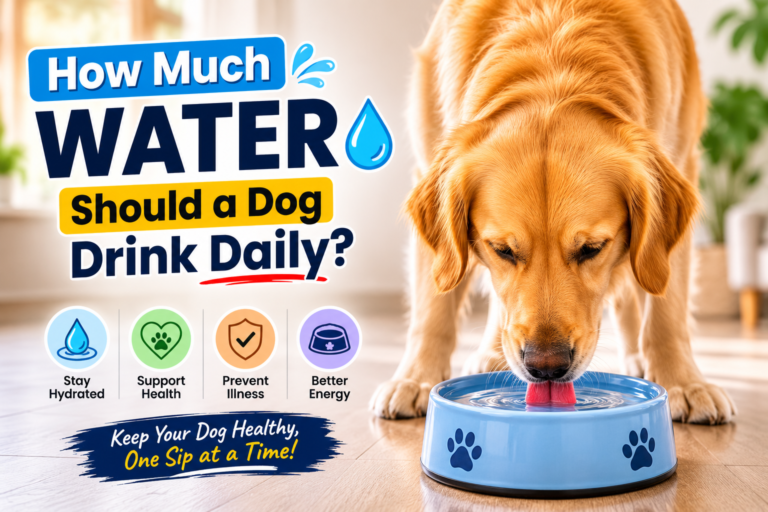
Water requirements vary with body size, diet, activity, weather, health, and other factors. There isn’t one perfect amount for every dog.
As a general guideline, the AKC notes that dogs require at least about 1 ounce of water per pound of body weight per day, although individual needs can vary.
For example, a 50-pound dog would have a general baseline of about 50 ounces of water per day, but its actual needs may be higher during hot weather or increased activity.
Dogs eating wet food may also obtain a substantial portion of their daily water from food.
If your dog’s normal water intake suddenly changes, pay attention to the change rather than focusing only on a fixed daily number.
Dog Hydration Tips: How to Prevent Dehydration
Good dog hydration tips are mostly simple habits.
- Keep fresh, clean water available throughout the day.
- Carry water when taking your dog on long walks or outings.
- Provide shade and water during outdoor activities.
- Avoid strenuous exercise during very hot weather.
- Monitor water intake when your dog is sick.
- Clean water bowls regularly.
- Pay extra attention to puppies, senior dogs, and dogs with medical conditions.
- Watch for vomiting or diarrhea that could cause rapid fluid loss.
Keeping dogs hydrated is particularly important during hot weather. If you suspect heatstroke, don’t wait for dehydration to become obvious-heatstroke itself is an emergency.
Common Mistakes When Managing Dog Dehydration
Waiting for obvious signs
Dehydration isn’t always easy to spot early. Monitoring your dog’s normal drinking, appetite, energy, and bathroom habits can help you notice changes sooner.
Assuming a dry nose means dehydration
A dry nose alone isn’t a reliable way to diagnose dehydration. Look at the whole dog rather than relying on one physical feature.
Giving large amounts of water to a vomiting dog
If a dog is actively vomiting, simply encouraging it to gulp large quantities of water may not solve the problem. Veterinary advice is appropriate when vomiting is persistent.
Ignoring the underlying cause
Replacing fluids doesn’t necessarily fix the reason the dog became dehydrated. Vomiting, diarrhea, heat illness, kidney problems, and other conditions may require specific treatment.
Using human electrolyte drinks without veterinary advice
Human hydration products aren’t automatically appropriate for dogs. Some products may contain ingredients or electrolyte concentrations that aren’t suitable for pets.
Frequently Asked Questions
What are the most common dog dehydration signs?
The most common signs include dry or sticky gums, reduced skin elasticity, sunken-looking eyes, lethargy, loss of appetite, and reduced water intake. Several signs together are more concerning than one isolated symptom.
How can I tell if my dog is dehydrated?
Check for multiple changes, including dry gums, reduced skin elasticity, unusual tiredness, sunken-looking eyes, and reduced drinking. Home checks can provide clues, but a veterinarian is needed to accurately assess severity.
Can vomiting cause dehydration in dogs?
Yes. Repeated vomiting can cause fluid and electrolyte losses, particularly when the dog can’t replace those fluids by drinking.
Can diarrhea cause dehydration in dogs?
Yes. Significant or persistent diarrhea can result in substantial fluid loss and dehydration.
How long can a dog go without water?
There’s no safe universal time limit. A dog’s needs depend on its size, health, environment, activity, diet, and fluid losses. A dog that isn’t drinking should be monitored closely, especially if it’s sick or losing fluids.
Can puppies become dehydrated quickly?
Yes. Young puppies can be particularly vulnerable to inadequate fluid intake and fluid losses. If a puppy develops vomiting, diarrhea, weakness, or stops drinking, contact a veterinarian promptly.
Should I give my dehydrated dog water at home?
If your dog is alert and able to drink normally, providing access to fresh water is reasonable. Don’t force water into a dog that is vomiting, weak, unconscious, or having difficulty swallowing. Significant dehydration needs veterinary assessment.
What should I do if I suspect dehydration from heat?
Move your dog to a cool environment and contact a veterinarian immediately if heatstroke is suspected. While arranging care, cooling measures using cool-not ice-cold-water can be started, and room-temperature water may be offered if the dog is able to drink.
Final Thoughts
Dog dehydration signs aren’t limited to thirst. Dry or sticky gums, reduced skin elasticity, sunken-looking eyes, lethargy, appetite changes, and unusual drinking behavior can all be warning signs. If symptoms are severe, worsening, or accompanied by heatstroke, collapse, repeated vomiting, or significant weakness, seek veterinary care promptly. Early attention can help prevent dehydration from becoming a more serious problem.