Dog Feeding Chart by Age: A Complete Guide to Feeding Puppies, Adult Dogs and Seniors
A dog feeding chart by age provides a general guideline for how much and how often to feed your dog as it grows. Puppies need smaller, more frequent meals to support rapid development, while adult and senior dogs usually thrive on one or two balanced meals daily. Your dog’s ideal feeding amount also depends on body weight, activity level, breed, health, and the calorie content of its food.
Key Takeaways
- A dog’s nutritional needs change from puppyhood to the senior years.
- Puppies typically eat 3–4 meals daily, while most healthy adult dogs do well with 2 meals a day.
- Portion sizes depend on age, weight, breed size, activity level, and food type.
- Monitor your dog’s body condition instead of relying only on feeding charts.
- Transition gradually from puppy food to adult food based on your veterinarian’s recommendations and your dog’s breed size.
Dog Feeding Chart by Age
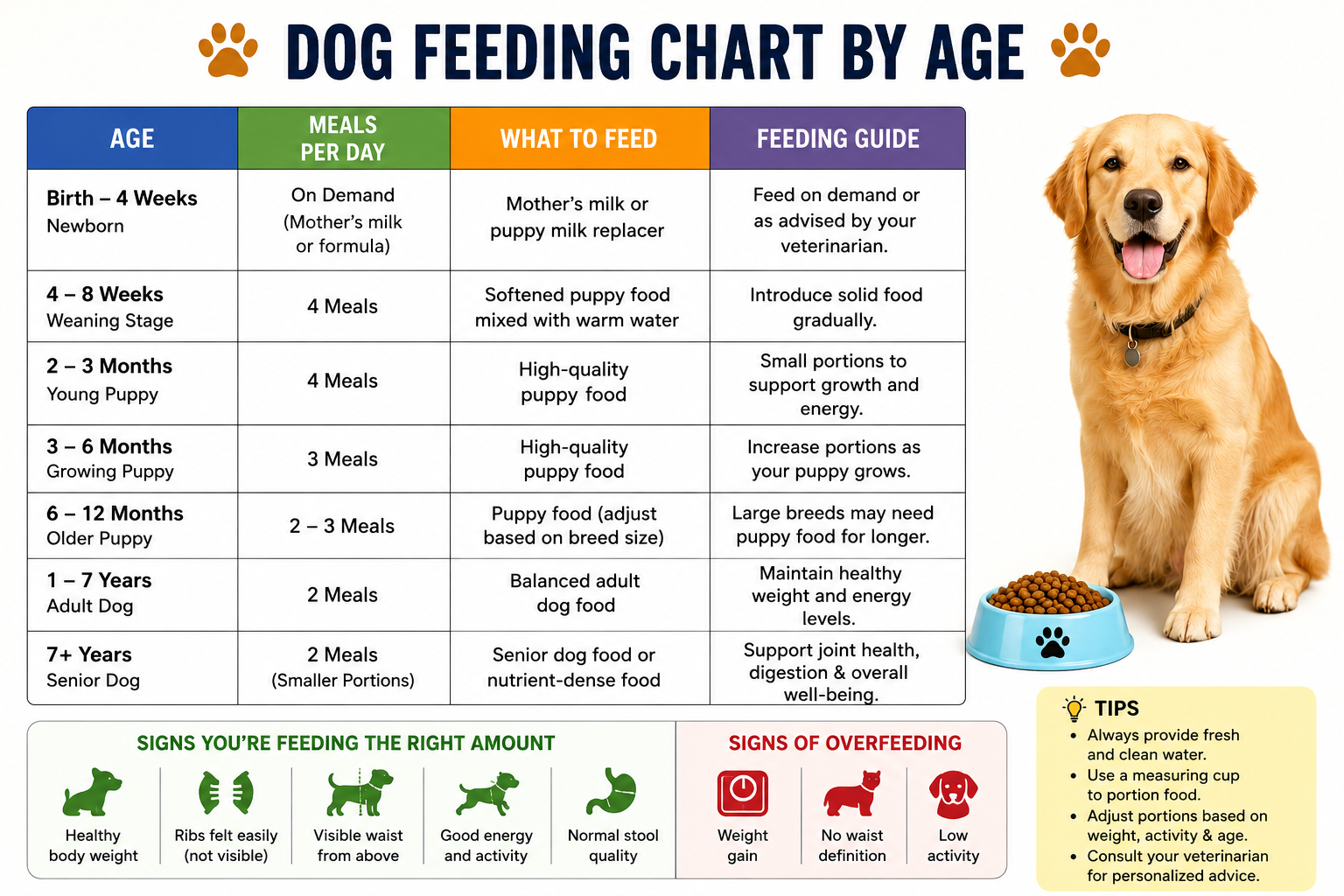
The following chart offers a practical starting point. Always compare it with your dog’s food label and consult your veterinarian if your dog has medical conditions or special dietary needs.
| Dog Age | Meals Per Day | General Feeding Recommendation |
|---|---|---|
| Birth–4 weeks | Mother’s milk or formula | Feed on demand or according to veterinary guidance |
| 4–8 weeks | 4 meals | Begin introducing softened puppy food |
| 2–3 months | 4 meals | High-quality puppy food in small portions |
| 3–6 months | 3 meals | Increase portions as your puppy grows |
| 6–12 months | 2–3 meals | Continue puppy food; adjust based on breed and growth |
| 1–7 years (Adult) | 2 meals | Balanced adult maintenance diet |
| 7+ years (Senior)* | 2 smaller meals | Nutrient-dense food with appropriate calorie intake |
Large breeds may be considered seniors earlier than small breeds.
Understanding Dog Growth Stages
Knowing the major dog growth stages makes it easier to adjust feeding schedules.
Newborn (0–4 Weeks)
Puppies rely entirely on their mother’s milk.
If the mother isn’t available, a veterinarian should recommend an appropriate puppy milk replacer.
Solid food should not be introduced too early.
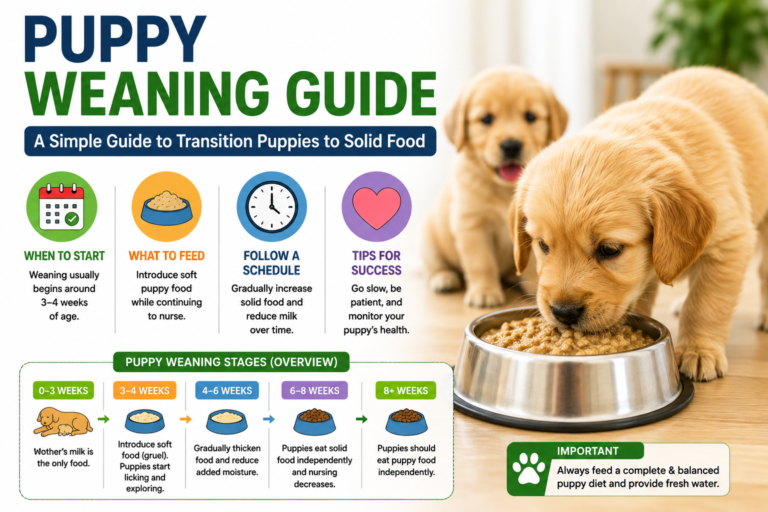
Weaning Stage (4–8 Weeks)
This is when puppies begin transitioning from milk to solid food.
Offer:
- Softened puppy kibble
- Puppy wet food
- Small meals throughout the day
Fresh water should always be available.
Puppy Stage (2–12 Months)
Growth is rapid during this period.
Large breeds grow more slowly than small breeds and may remain on puppy food longer.
Nutrition should focus on:
- Protein
- Healthy fats
- Calcium (in balanced amounts)
- DHA for brain development
Adult Stage (1–7 Years)
Most dogs have reached full size.
The focus shifts toward maintaining:
- Healthy body weight
- Muscle mass
- Energy levels
Avoid overfeeding, especially for indoor or less active dogs.
Senior Stage (7+ Years)
Older dogs often experience:
- Slower metabolism
- Reduced activity
- Joint changes
- Dental issues
Many benefit from foods formulated for seniors, though individual needs vary.
How Much Should I Feed My Puppy?
The exact amount depends on:
- Age
- Current weight
- Expected adult size
- Breed
- Activity level
- Food calorie density
As a general guideline:
| Puppy Age | Meals Daily |
|---|---|
| 8–12 weeks | 4 |
| 3–6 months | 3 |
| 6–12 months | 2–3 |
Use your puppy food packaging as a starting point, then adjust according to your puppy’s body condition and your veterinarian’s recommendations.
Avoid free-feeding unless your veterinarian specifically recommends it.
What Is the Best Feeding Schedule for Dogs?
A consistent routine helps support dog digestive health and may reduce begging behavior.
A practical schedule looks like this:
Puppies (8 Weeks–6 Months)
- Breakfast
- Lunch
- Dinner
- Optional late-evening meal for very young puppies
Adult Dogs
- Morning meal
- Evening meal
Senior Dogs
- Morning meal
- Evening meal
Some senior dogs benefit from slightly smaller, more frequent meals if recommended by a veterinarian.
How Often Should Puppies Eat?
Puppies have small stomachs and high energy needs.
General recommendations:
- Under 3 months: Four meals daily
- 3–6 months: Three meals daily
- After 6 months: Two or three meals daily
By adulthood, most dogs transition comfortably to two meals per day.
Should I Feed My Dog Once or Twice a Day?
For most dogs, feeding twice a day is considered a practical and commonly recommended routine.
Benefits include:
- More stable energy levels
- Better hunger control
- Easier digestion for many dogs
- More consistent daily routine
Some healthy adult dogs do well on one meal daily, but this may not be suitable for every dog. Puppies should never be limited to one meal per day.
If you’re unsure, ask your veterinarian what feeding schedule best matches your dog’s health, breed, and lifestyle.
How Do I Know If I’m Feeding My Dog Enough?
The best indicator isn’t the food bowl—it’s your dog’s body condition.
Signs your dog is receiving an appropriate amount of food include:
- Healthy body weight
- Visible waist when viewed from above
- Ribs can be felt with light pressure but aren’t prominently visible (for most breeds)
- Consistent energy
- Healthy coat
- Normal stool quality
You may be feeding too much if your dog:
- Gains weight rapidly
- Has little waist definition
- Becomes less active
You may be feeding too little if your dog:
- Appears unusually thin
- Loses weight
- Seems constantly hungry
- Has low energy
How Do I Switch From Puppy Food to Adult Food?
The transition usually happens after your dog reaches physical maturity.
Approximate timing:
| Breed Size | Transition Age |
|---|---|
| Small breeds | Around 9–12 months |
| Medium breeds | Around 12 months |
| Large breeds | 12–18 months |
| Giant breeds | Up to 18–24 months |
Switch gradually over about one week:
- Days 1–2: Mostly puppy food with a small amount of adult food.
- Days 3–4: Half puppy food, half adult food.
- Days 5–6: Mostly adult food.
- Day 7: Fully transition if your dog is doing well.
A gradual change helps reduce digestive upset.
Veterinarian Feeding Advice
A feeding chart is only a starting point.
Veterinarian feeding advice is especially important if your dog:
- Is underweight or overweight
- Has diabetes
- Has kidney disease
- Has food allergies
- Is pregnant or nursing
- Has digestive disorders
- Takes long-term medications
Your veterinarian can recommend calorie targets and appropriate diets based on your dog’s medical history.
Frequently Asked Questions
Can I leave food out all day for my dog?
Most veterinarians recommend scheduled meals instead of free-feeding because it’s easier to monitor food intake and maintain a healthy weight.
Is wet food better than dry food?
Both can provide complete nutrition if they’re labeled as balanced for your dog’s life stage. The best choice depends on your dog’s preferences, dental health, and medical needs.
Should puppies always eat puppy food?
Yes. Puppy food is formulated to support growth and development. Adult dog food may not provide appropriate nutrient levels for growing puppies.
When should I reduce my puppy’s meals?
Many puppies transition from four meals to three meals around 3 months of age and then to two meals between 6 and 12 months, depending on their breed and growth.
How much water should my dog drink?
Water needs vary with size, activity, diet, and weather. Fresh, clean water should always be available.
Why does my dog always seem hungry?
Some dogs naturally have a strong appetite. Hunger may also result from growth, increased activity, certain medical conditions, or an unbalanced diet. Persistent excessive hunger should be evaluated by a veterinarian.
Should active dogs eat more?
Yes. Dogs that exercise regularly or perform demanding work often require more calories than less active dogs.
Can I change my dog’s feeding schedule?
Yes, but make changes gradually and try to maintain consistency once you’ve established a routine.
What’s the most accurate way to determine food portions?
Using your dog’s food label, monitoring body condition, and working with your veterinarian provides the most accurate feeding plan.
Final Thoughts
A well-planned feeding routine is one of the simplest ways to support your dog’s lifelong health. While a feeding chart offers a solid starting point, every dog is unique. Paying attention to your dog’s age, growth stage, body condition, and daily activity will help you make informed feeding decisions as your companion grows from a playful puppy into a healthy adult and, eventually, a comfortable senior. Consistent meals, balanced nutrition, and regular veterinary checkups are the foundation of good health at every stage of life.