How to Switch Dog Food Safely: A Complete Step-by-Step Guide for a Healthy Transition
The safest method of changing dog food is to mix increasing portions of the new food with the old over a period of seven to ten days. This slow approach helps your dog’s canine digestive system adjust, reduces the risk of digestive upset in dogs, and makes it easier to spot any signs of food intolerance or food allergies. Dogs with a sensitive stomach, puppies, or those with medical conditions may need an even slower transition under veterinarian feeding advice.
Why You Shouldn’t Switch Dog Food Suddenly
Many pet owners assume changing dog food is as simple as opening a new bag. In reality, a sudden diet change can upset your dog’s digestive system.
A dog’s stomach and intestines rely on beneficial bacteria to digest food efficiently. When the ingredients change overnight, those bacteria need time to adapt.
Changing food too quickly may lead to:
- Loose stools
- Vomiting
- Gas
- Bloating
- Reduced appetite
- Temporary stomach discomfort
This doesn’t necessarily mean the new food is bad. Often, the digestive system simply hasn’t had enough time to adjust.
Can You Switch Dog Food Suddenly?
For most healthy dogs, the answer is no.
Unless your veterinarian specifically recommends an immediate switch because of a medical issue or product recall, changing food gradually is usually the safest approach.
How the Canine Digestive System Adjusts to New Food
Every dog has a unique digestive system influenced by age, breed, health, activity level, and previous diet.
Different dog foods contain varying amounts of:
- Protein sources
- Fat levels
- Fiber
- Carbohydrates
- Vitamins
- Minerals
- Probiotics
- Ingredients such as grains or legumes
Even switching between two high-quality foods can temporarily affect digestion because the gut microbiome needs time to rebalance.
That’s why switching dog food gradually supports better dog digestive health and lowers the chance of digestive upset.
When Should You Change Your Dog’s Food?
Changing dog food isn’t something you should do frequently without a reason.
Common reasons include:
1. Your Puppy Is Becoming an Adult
Most puppies eventually need to move from puppy food to adult maintenance food.
The timing depends on breed size:
| Dog Size | Typical Age to Switch |
|---|---|
| Small breeds | Around 9–12 months |
| Medium breeds | Around 12 months |
| Large breeds | 12–18 months |
| Giant breeds | Up to 24 months |
Always follow your veterinarian’s recommendation because growth rates vary.
2. Your Dog Has Food Allergies
Some dogs develop reactions to specific ingredients such as:
- Chicken
- Beef
- Dairy
- Wheat
- Soy
Symptoms may include:
- Itchy skin
- Ear infections
- Paw licking
- Digestive problems
In these cases, your veterinarian may recommend a limited ingredient dog food or another specialized diet.
3. Food Intolerance
Unlike allergies, food intolerance usually affects digestion rather than the immune system.
Common symptoms include:
- Gas
- Soft stool
- Occasional diarrhea
- Upset stomach
Finding the right food often requires patience and veterinary guidance.
4. Your Dog Has a Sensitive Stomach
Dogs with chronic digestive issues may benefit from foods designed for dog food transition for sensitive stomach.
These diets often include:
- Easily digestible proteins
- Moderate fat
- Added fiber
- Probiotics
- Limited ingredients
Even when switching to these foods, gradual transitions remain important.
5. Your Current Food Is No Longer Available
Manufacturers occasionally discontinue formulas or change ingredients.
If your dog’s usual food disappears, avoid switching abruptly if possible. Instead, introduce the replacement gradually.
How Long to Transition Dog Food
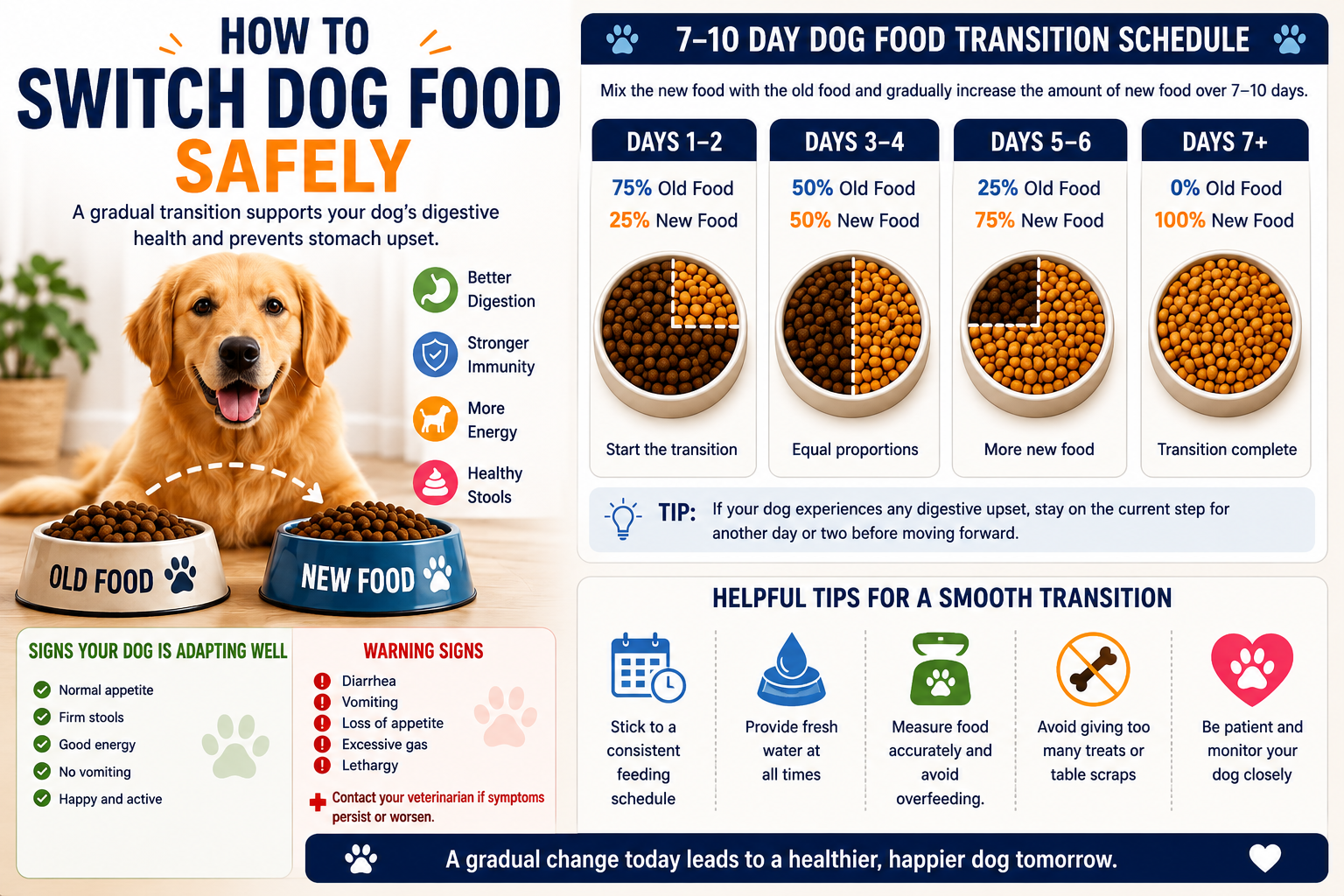
Most veterinarians recommend 7 to 10 days.
Some dogs adapt in less than a week, while dogs with sensitive stomachs may need 10 to 14 days.
Typical Transition Timeline
| Day | Old Food | New Food |
|---|---|---|
| 1–2 | 75% | 25% |
| 3–4 | 50% | 50% |
| 5–6 | 25% | 75% |
| 7+ | 0% | 100% |
If digestive problems appear, remain at the current ratio for another day or two before increasing the new food.
Step-by-Step Guide: How to Switch Dog Food
Step 1: Choose the Right Food
Before making the change, select a food that matches your dog’s:
- Age
- Breed size
- Activity level
- Health conditions
- Veterinary recommendations
A balanced canine nutrition plan starts with choosing food appropriate for your dog’s life stage.
Step 2: Mix the Foods
Instead of replacing the old food completely, combine both foods according to the transition schedule.
This allows the digestive system to adapt gradually.
Step 3: Feed Consistent Portions
Avoid increasing meal size simply because you’re changing foods.
Stick to your dog’s normal dog feeding routine.
Measure portions carefully.
Step 4: Watch Your Dog Closely
Monitor:
- Stool quality
- Energy level
- Appetite
- Water intake
- Vomiting
- Gas
Mild changes can happen during adjustment, but severe digestive upset should not be ignored.
Step 5: Finish the Transition
Once your dog eats 100% of the new food without digestive problems, the transition is complete.
Continue monitoring for another week to ensure long-term tolerance.
Signs Your Dog Is Adjusting Well
Most dogs show positive signs throughout the transition.
Look for:
- Firm stools
- Normal appetite
- Healthy energy
- No vomiting
- Comfortable digestion
- Normal bathroom habits
These signs indicate your dog’s digestive system is adapting successfully.
Warning Signs During a Food Transition
Some symptoms suggest the transition is moving too quickly.
Watch for:
- Dog food change diarrhea
- Frequent vomiting
- Severe gas
- Refusal to eat
- Lethargy
- Persistent loose stools
- Bloody stool
If symptoms are severe, prolonged, or accompanied by dehydration, contact your veterinarian promptly.
Dog Food Transition for Sensitive Stomach
Dogs with digestive sensitivities often need a slower transition.
Instead of seven days, consider extending the schedule over 10–14 days.
Helpful practices include:
- Introduce food more gradually.
- Avoid changing treats at the same time.
- Keep feeding times consistent.
- Offer plenty of fresh water.
- Avoid table scraps during the transition.
Some dogs benefit from veterinary-recommended diets designed for digestive support.
Switching Puppy Food to Adult Food
Switching puppy food is a common milestone.
Most dogs move to adult food once they’ve reached near-adult size, though the exact age depends on breed:
- Small breeds generally mature earlier.
- Large and giant breeds often stay on puppy food longer because they continue growing.
Follow the same gradual mixing schedule used for any food change.
Common Reasons Owners Switch Dog Food
People change dog food for many reasons, including:
- Puppy to adult food
- Adult to senior diet
- Food allergies
- Digestive problems
- Weight management
- Veterinary recommendation
- Better ingredient preferences
- Product availability
Regardless of the reason, the transition process remains largely the same.
Common Mistakes to Avoid
Switching Overnight
A sudden change often leads to digestive upset in dogs.
Changing Treats Too
Introducing multiple new foods makes it difficult to identify the cause if stomach problems develop.
Feeding Too Much
Overfeeding increases digestive stress.
Follow the feeding guide on the food label and adjust as needed based on your dog’s body condition and your veterinarian’s advice.
Ignoring Symptoms
Occasional soft stool may occur, but repeated vomiting, severe diarrhea, or blood in the stool requires veterinary attention.
Tips for Maintaining Dog Digestive Health
Good digestion depends on more than just food.
Support a healthy dog diet by:
- Feeding meals at consistent times.
- Providing fresh, clean water daily.
- Avoiding sudden dietary changes.
- Keeping treats under about 10% of daily calories.
- Ensuring regular exercise.
- Scheduling routine veterinary checkups.
A consistent dog meal plan promotes healthy digestion and helps maintain an ideal body condition.