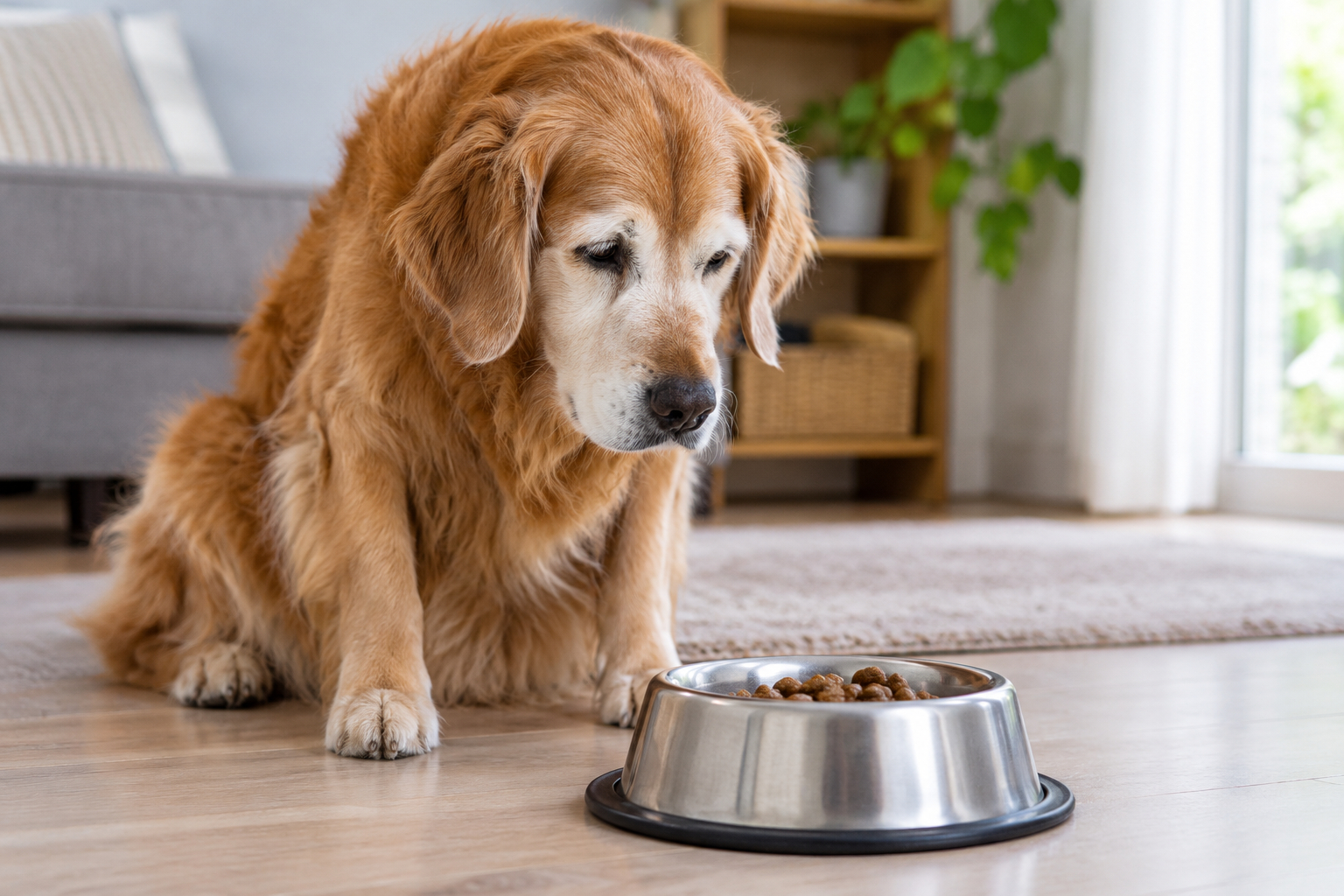
Senior Dog Not Eating: Causes, What to Do, and When to See a Vet
When a senior dog stops eating, it can be concerning, especially if they usually enjoy their meals. A senior dog not eating may be experiencing dental pain, digestive problems, stress, medication side effects, or an underlying illness. Sometimes, changes in food preference or routine play a role. The right response depends on how long the dog has refused food and whether other symptoms are present. Knowing what to look for can help you decide what to do next.
Why Is My Senior Dog Not Eating?
An older dog may stop eating because of pain, illness, changes in smell or taste, nausea, or difficulty chewing. Aging itself can affect appetite, but a noticeable loss of appetite shouldn’t automatically be considered a normal part of getting older.
Common Reasons a Senior Dog Stops Eating
There are several reasons why an older dog might lose interest in food. Understanding these possibilities can help you decide when to seek professional help.
1. Dental Problems and Mouth Pain
Dental disease is common in older dogs. Swollen gums, broken teeth, oral infections, or other mouth issues can make eating painful. A dog with mouth pain may approach the food bowl but then walk away after trying to eat. They might prefer soft food, chew on one side of their mouth, drool more than usual, or drop food while chewing.
What to do: Offer water and avoid forcing them to chew hard food. Arrange a veterinary exam to identify the source of the pain. Changing food texture may help temporarily, but it won’t treat the underlying dental issue.
2. Nausea or Digestive Problems
Nausea, constipation, stomach irritation, and other digestive issues can reduce appetite. Some dogs refuse to eat before they start vomiting, so the absence of vomiting doesn’t rule out a problem. Watch for signs like lip licking, repeated swallowing, drooling, abdominal discomfort, diarrhea, or changes in bowel movements.
What to do: Note when your dog last ate and whether they’ve vomited or passed stool normally. Contact a vet if appetite loss continues or digestive symptoms appear.
3. Medication Side Effects
Some medications can cause nausea, digestive upset, or appetite changes. If your senior dog recently started a new medicine or had a dosage change, the timing may be relevant.
What to do: Contact the prescribing veterinarian and explain when the appetite change began. Don’t stop or change a prescribed medication without guidance.
4. Changes in Smell, Taste, or Food Preference
Changes in smell or taste can make familiar food less appealing. A senior dog may also become less interested in a food they’ve eaten for years. Food that’s spoiled, stored improperly, or changed in texture may also be less appealing.
What to do: Check the food’s freshness and storage conditions. If your dog otherwise seems well, you can try offering their usual food in a quiet, comfortable place. Persistent appetite changes still deserve attention.
5. Stress, Anxiety, or Changes in Routine
An older dog that normally eats in a quiet kitchen may eat less when several people are moving around during mealtime.
What to do: Keep feeding times consistent and provide a calm eating area. If your dog continues refusing food, don’t assume stress is the only explanation.
6. Pain or Reduced Mobility
A dog may want to eat but struggle to reach the bowl or maintain a comfortable position.
What to do: Observe how your dog moves and whether they hesitate to bend down. A vet can assess pain and recommend appropriate treatment or feeding adjustments.
What to Do When Your Senior Dog Is Not Eating
The best way to handle this is to look for any warning signs first, and then take action based on how your dog is feeling. If your dog shows serious symptoms, don’t wait to see if home care will help, you should take them to the vet right away.
Step 1: Look for Other Symptoms
Before changing what your dog eats, check if they are showing any signs that something might be wrong.
Check if your dog is:
- Drinking water normally or drinking much more than usual.
- Vomiting or having trouble with their stomach or bowels.
- Acting unusually tired, weak, confused, or restless.
- Losing weight or looking thinner.
- Showing signs of pain when walking, chewing, or lying down.
- Urinating or passing stool differently than usual.
Write down the last time they had a normal meal and whether they’ve eaten anything since. This information can help the vet understand what’s going on.
Step 2: Try Offering Fresh, Familiar
Food If your dog is awake, comfortable, and shows no serious signs, try giving them a small amount of their usual food.
You can try these simple changes:
- Serve fresh food in a clean bowl.
- Offer a quiet spot away from loud noises or distractions.
- Warm up wet food slightly, but make sure it’s not too hot before serving.
- Add a little warm water to dry kibble to soften it, as long as your dog can swallow it without difficulty.
- Offer smaller portions instead of one big meal.
Avoid changing their food too much at once. Too many new foods can make their stomach upset and make it hard to know what they can handle.
Step 3: Make Eating Easier
Some older dogs have trouble with the physical act of eating, not the food itself. Think about whether your dog can reach the bowl, stand while eating, and chew their food properly. A non-slip mat or adjusting where the bowl is placed might help a dog with mobility issues.
Don’t automatically use an elevated bowl, though. The best feeding position depends on your dog’s size, condition, and ability to swallow.If your dog has trouble swallowing or has a history of digestive problems, ask your vet for advice.
Step 4: Keep a Record of Food and Water Intake
Instead of guessing how much your dog is eating, keep track of what they actually consume. Also note how much water they drink, how often they go to the bathroom, and their energy levels.
A simple record can help:
| What to monitor | What to record |
|---|---|
| Food | Amount eaten and time of meals |
| Water | Normal, increased, or decreased intake |
| Energy | Normal, tired, or weak |
| Digestion | Vomiting, diarrhea, or constipation |
| Weight | Any noticeable or ongoing loss |
This can lead to choking or aspiration, especially if your dog has trouble swallowing.