Dog Feeding Chart by Weight: How Much Should You Feed Your Dog?
A dog feeding chart helps estimate how much food your dog needs based on body weight, age, activity level, and the calorie content of the food. While feeding charts are a helpful starting point, they should always be adjusted for your dog’s body condition, health, and your veterinarian’s advice.
One of the most crucial aspects of maintaining your dog’s health is feeding them the proper amount. Too little food can lead to poor nutrition and weight loss, while too much increases the risk of obesity and related health problems. This guide explains how to use a dog feeding chart, calculate daily food portions, establish a healthy feeding schedule, and avoid common feeding mistakes.
Dog Feeding Chart by Weight
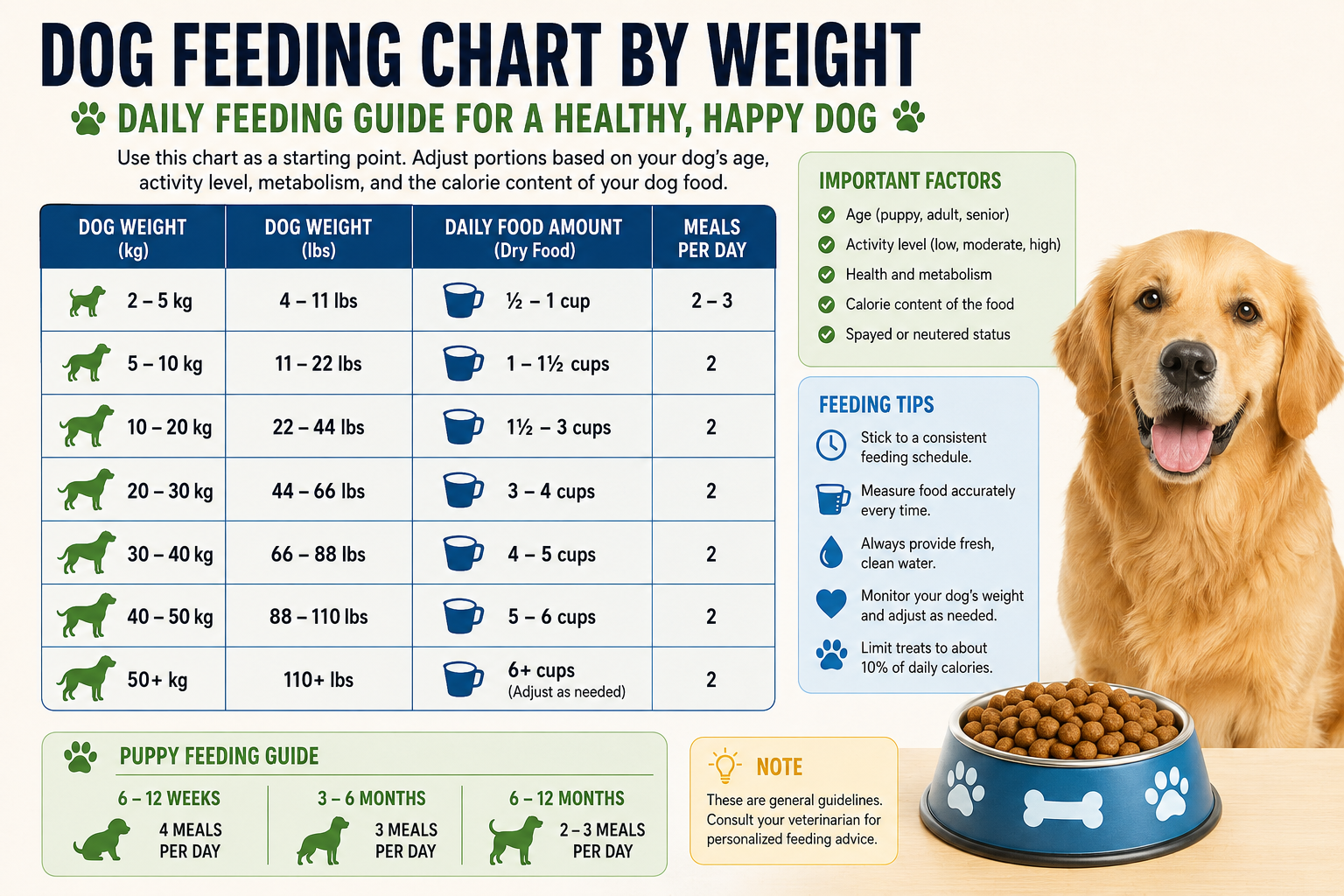
The chart below provides a general guideline for healthy adult dogs eating a complete and balanced dry dog food. Actual serving sizes vary by brand because calorie density differs.
| Dog Weight | Daily Food (Approx.) | Meals Per Day |
|---|---|---|
| 2–5 kg (4–11 lbs) | ½–1 cup | 2–3 |
| 5–10 kg (11–22 lbs) | 1–1½ cups | 2 |
| 10–20 kg (22–44 lbs) | 1½–3 cups | 2 |
| 20–30 kg (44–66 lbs) | 3–4 cups | 2 |
| 30–40 kg (66–88 lbs) | 4–5 cups | 2 |
| 40–50 kg (88–110 lbs) | 5–6 cups | 2 |
| Over 50 kg (110+ lbs) | 6+ cups (adjust as needed) | 2 |
What Is a Dog Feeding Chart?
A dog feeding chart is a guide that estimates how much food a dog should eat each day. Most charts are based on:
- Body weight
- Age
- Activity level
- Reproductive status
- Food type
- Calorie content
Think of it as a starting point rather than a strict rule.
Why Feeding the Right Amount Matters
Proper feeding supports nearly every aspect of your dog’s health, including:
- Maintaining a healthy body weight
- Supporting muscle development
- Providing steady energy
- Promoting healthy skin and coat
- Strengthening the immune system
- Supporting healthy joints
Overfeeding is one of the most common nutrition-related problems in pet dogs. Even small daily excesses can lead to gradual weight gain over time.
How Much Should I Feed My Dog Daily?
The amount your dog needs depends on several factors rather than weight alone.
1. Body Weight
Heavier dogs generally need more food, although smaller breeds often require more calories per kilogram than giant breeds.
2. Age
Nutritional needs change throughout life.
- Puppies require more calories for growth.
- Adults need enough calories to maintain body weight.
- Senior dogs may require fewer calories because of reduced activity.
3. Activity Level
Highly active dogs burn significantly more energy than dogs that spend most of the day indoors.
Examples include:
- Working dogs
- Sporting dogs
- Hiking companions
- Agility dogs
Inactive or overweight dogs often need smaller portions.
4. Health Conditions
Some medical conditions change calorie requirements.
Examples include:
- Diabetes
- Kidney disease
- Thyroid disorders
- Pregnancy
- Recovery from surgery
Your veterinarian should provide feeding guidance if your dog has a medical condition.
How Do I Calculate My Dog’s Food Intake?
A simple process works well for most healthy dogs.
Step 1: Know Your Dog’s Weight
Use an accurate scale.
Step 2: Check the Food Label
Dog foods vary greatly in calorie density.
One cup may contain:
- 280 calories
- 350 calories
- 420 calories
Always check the label.
Step 3: Estimate Daily Calories
Daily calorie needs depend on:
- Weight
- Activity
- Age
- Neuter status
- Overall health
If you’re unsure, ask your veterinarian for an appropriate calorie target.
Step 4: Convert Calories Into Cups
Example:
If your dog needs:
- 900 calories/day
and the food contains:
- 360 calories/cup
Then:
900 ÷ 360 = 2.5 cups daily
Split that amount into the recommended number of meals.
How Many Cups of Food Should My Dog Eat?
There isn’t one universal answer because every dog food contains a different number of calories.
As a rough guide:
| Dog Size | Daily Cups |
|---|---|
| Small | ½–1½ cups |
| Medium | 1½–3 cups |
| Large | 3–5 cups |
| Giant | 5–7+ cups |
Always measure food using a proper measuring cup rather than estimating by eye.
How Often Should I Feed My Dog?
Most healthy adult dogs do well with two meals each day.
Typical schedule:
- Breakfast: 7–9 AM
- Dinner: 5–7 PM
Consistent meal times help support digestion and make it easier to monitor appetite.
What Is the Best Feeding Schedule for Dogs?
A healthy routine usually includes:
| Time | Activity |
|---|---|
| Morning | Breakfast |
| Midday | Water and exercise |
| Evening | Dinner |
| Night | Fresh water available |
Dogs generally thrive on routine.
Avoid changing feeding times frequently unless necessary.
Can I Feed My Dog Once a Day?
For most adult dogs, feeding twice daily is preferred.
Feeding once a day may:
- Increase hunger
- Encourage rapid eating
- Increase the risk of digestive discomfort in some dogs
Some healthy adult dogs may do well on one meal daily if advised by a veterinarian, but this isn’t recommended for:
- Puppies
- Pregnant dogs
- Nursing dogs
- Dogs with certain medical conditions
How Much Should a Puppy Eat?
Puppies require more frequent meals because they are growing rapidly.
General guideline:
| Puppy Age | Meals Per Day |
|---|---|
| 6–12 weeks | 4 |
| 3–6 months | 3 |
| 6–12 months | 2–3 |
Always feed a complete puppy formula designed for growth.
What Time Should I Feed My Dog?
The exact time matters less than consistency.
A common routine is:
- 7–8 AM
- 6–7 PM
Try to keep meals at roughly the same times each day.
Wet Food vs. Dry Food
Both can support a healthy diet when they are complete and balanced.
Dry Food
Advantages:
- Convenient
- Easy to measure
- Often more economical
Wet Food
Advantages:
- Higher moisture content
- Often more appealing to picky eaters
- Easier for some senior dogs to chew
Many owners successfully feed a combination of both.
Common Dog Feeding Mistakes
Avoid these common errors:
- Guessing portion sizes
- Free-feeding without monitoring intake
- Giving too many treats
- Ignoring weight changes
- Switching foods suddenly
- Feeding table scraps regularly
- Not adjusting food after neutering or changes in activity
Signs Your Dog May Be Eating Too Much
Watch for:
- Weight gain
- Difficulty feeling the ribs
- Reduced activity
- Heavy panting after mild exercise
If these signs appear, review portion sizes and speak with your veterinarian.
Signs Your Dog May Not Be Eating Enough
Possible signs include:
- Weight loss
- Visible ribs or spine
- Low energy
- Poor coat condition
- Increased hunger
Persistent appetite changes should be evaluated by a veterinarian.
Frequently Asked Questions (FAQs)
1. How can I determine whether I’m giving my dog enough food?
A good indicator is your dog’s body condition. You should be able to feel the ribs without pressing hard, and your dog should have a visible waist when viewed from above. If your dog is steadily gaining or losing weight, adjust the portion size and consult your veterinarian if needed.
2. Does every dog need the same amount of food for its weight?
No. Two dogs with the same weight may require different amounts of food depending on their age, breed, activity level, metabolism, and overall health. Feeding charts provide a starting point, but individual adjustments are often necessary.
3. Should I change my dog’s food portion as it gets older?
Yes. Puppies, adult dogs, and senior dogs have different nutritional needs. As your dog ages, its energy requirements may change, so it’s important to review feeding amounts regularly and adjust them based on weight and activity.
4. Can treats affect my dog’s daily feeding amount?
Yes. Treats add extra calories, so they should be included in your dog’s daily calorie intake. If your dog receives several treats throughout the day, you may need to reduce the amount of regular food to help maintain a healthy weight.
5. Is it better to feed my dog before or after exercise?
It’s generally recommended to wait at least one hour before or after vigorous exercise before feeding your dog. This may help reduce the risk of digestive discomfort, especially in larger breeds that are more prone to stomach issues.
6. What should I do if my dog always seems hungry?
Constant hunger doesn’t always mean your dog needs more food. Boredom, high activity levels, certain medications, or medical conditions can also increase appetite. If your dog seems unusually hungry despite eating balanced meals, speak with your veterinarian.
Key Takeaways
- Use a dog feeding chart as a starting point and adjust portions based on your dog’s individual needs.
- Consider your dog’s age, weight, activity level, health, and food calories when determining daily portions.
- Feed measured meals on a consistent schedule to support healthy weight and digestion.
- Puppies need more frequent meals than adult dogs.
- Monitor your dog’s body condition regularly and adjust food as needed.
- Limit treats and always provide fresh, clean water.
- Pair proper nutrition with regular exercise and routine veterinary care for long-term health.