How Often Should You Feed a Senior Dog?
A senior dog’s feeding schedule often works best when their daily food is split into two or more measured meals at the same times each day. But there’s no one size fits all schedule for all older dogs. Things like their age, weight, activity level, body condition, appetite, dental health and any medical issues can all affect how much and how often they should eat.
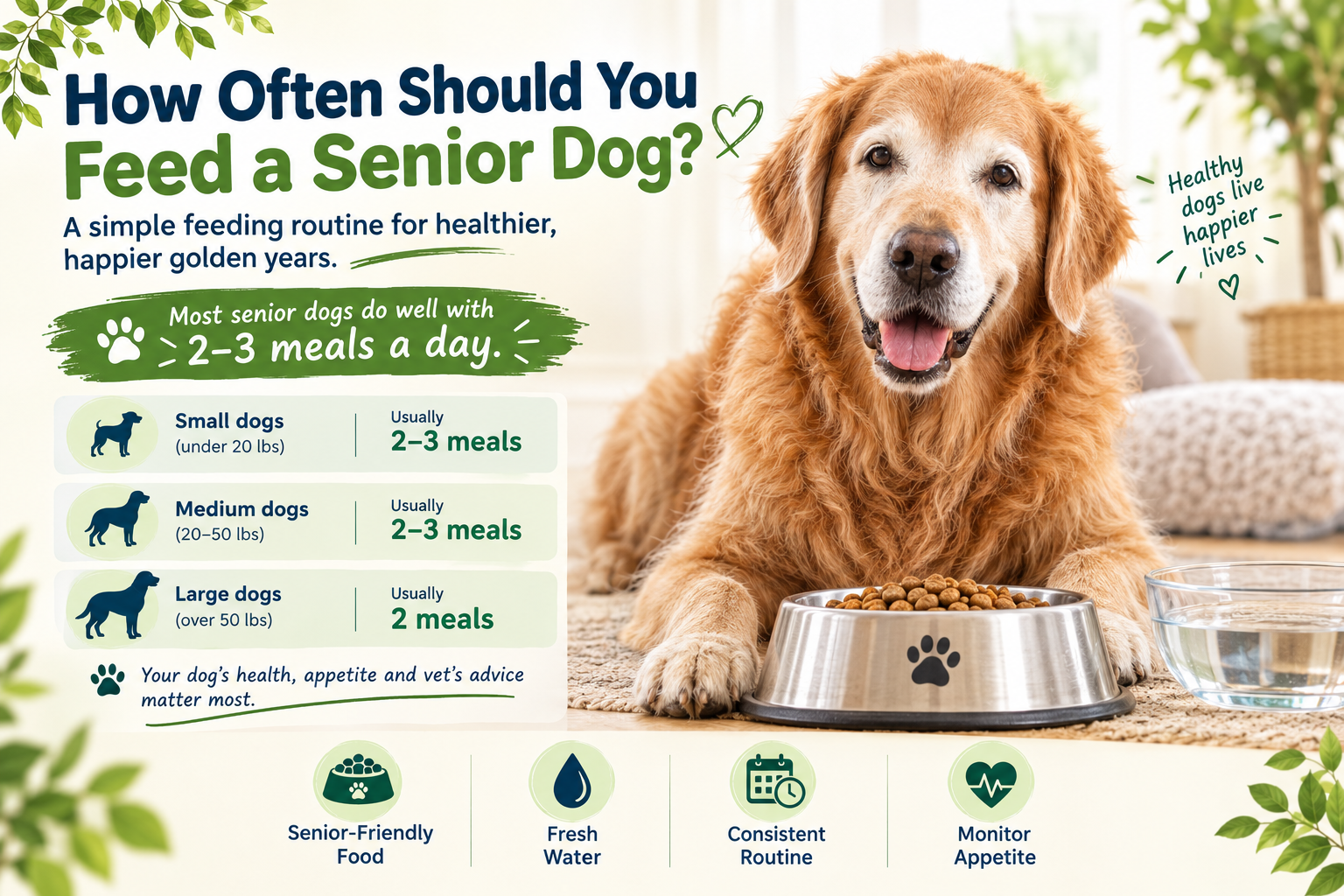
Most healthy senior dogs can still do well with two meals a day, like breakfast and dinner. Some older dogs might do better with three or four smaller meals, especially if they aren’t eating much, have trouble eating a big meal or have a reason from their vet to eat more often. The key is to measure the total food amount each day and adjust it based on your dog’s weight and body condition, not just follow the feeding chart on the food package.
What Is a Senior Dog Feeding Schedule?
A senior dog feeding schedule is a daily plan that tells you when your older dog should eat and how much food to give at each meal.
A simple schedule might look like:
| Time | Meal |
|---|---|
| 7:00 AM | 50% of daily food |
| 6:00 PM | 50% of daily food |
For a dog that does better with smaller meals:
| Time | Meal |
|---|---|
| 7:00 AM | 25% |
| 12:00 PM | 25% |
| 5:00 PM | 25% |
| 9:00 PM | 25% |
The number of meals isn’t the only thing that matters. It’s more important to make sure your dog gets the right amount of food and the right kind of nutrients, rather than just giving more or less food in bigger or smaller portions.
As dogs get older, their energy needs can change. Weight loss, muscle loss, less activity, or health issues linked to age can also affect their nutritional needs.
How Often Should You Feed a Senior Dog?
For a healthy older dog, feeding them two measured meals each day is a good starting point. However, some dogs might do better with three or more smaller meals throughout the day.
Feeding twice a day
This routine can work well for many dogs:
- Eating breakfast in the morning
- Having dinner in the evening
- Keeping the same feeding times every day
- Splitting the daily food amount into two meals
Feeding in portions can also help you notice if your dog’s appetite changes. If your dog suddenly stops eating or eats less than usual, it could be a sign that something is wrong.
Feeding three or four times a day
Some senior dogs may benefit from eating smaller meals more often.
This can be helpful if a dog:
- Has trouble eating a big meal
- Is not interested in food as much
- Needs more meals because of a health issue
- Is having trouble keeping their weight
- Has been told by a vet to follow a special feeding plan
Senior Dog Feeding Schedule by Age
There isn’t one feeding schedule that changes automatically when a dog turns a certain age. A dog’s food needs depend on more than just how old they are. Factors like breed, size, how active they are, their body condition, muscle tone, and overall health all play a role.
A practical approach is:
| Life stage | Possible feeding approach |
|---|---|
| Mature adult | Usually 2 measured meals daily |
| Early senior | Continue a consistent routine and monitor weight |
| Older senior | Change food amount based on activity, body condition, and health |
| Very old dog | Some dogs may do better with smaller, more frequent meals |
The main idea is that just because a dog is older doesn’t mean they need a totally different feeding plan.
Senior Dog Feeding Schedule by Weight
Weight can give some guidance for how much to feed, but just knowing a dog’s weight isn’t enough to decide the exact amount. Two dogs that both weigh 50 pounds might need different amounts of food because they can have very different levels of activity, body make-up, metabolism,and health problems.
Instead of only using weight, think about these things too:
- Current weight
- Ideal weight
- Body condition score
- Muscle condition
- Activity level
- How many calories are in the food
- How much treat food is given
- Any health issues
- How weight has changed over time
Veterinarians say it’s important to watch for changes in body and muscle condition. If a senior dog is losing weight or muscle without a clear reason, it might mean their food plan needs to be checked.
A better way to use a feeding chart
The feeding chart on a food package can give you a good starting point, but it shouldn’t be considered a final or fixed plan.
For instance, if the package recommends a specific amount based on your dog’s weight, you can begin with that amount only if it matches your dog’s situation. Then keep an eye on your dog’s weight and overall body condition.Make adjustments as needed, but always do so under the guidance of a veterinarian.
How Much Should a Senior Dog Eat?
The right amount depends on how many calories your dog needs and how many calories are in the food, not just how much food is in the bowl.
For example, one cup of one type of dog food might have a lot more calories than one cup of another food. That’s why looking at the amount in cups alone can be confusing.
A good way to feed your senior dog is:
- Check how many calories are in the food
- Look at the feeding guide from the manufacturer
- Think about your dog’s current weight and what they should weigh
- Include treats and other foods in the total
- Watch your dog’s weight and how they look
- Change the amount if needed
Senior Dog Feeding Chart: A Practical Example
The following is a schedule example, not a universal portion chart.
| Feeding frequency | Morning | Midday | Evening | Late evening |
|---|---|---|---|---|
| 2 meals | 50% | — | 50% | — |
| 3 meals | 40% | 30% | 30% | — |
| 4 meals | 25% | 25% | 25% | 25% |
The percentages shown are based on the total daily food your dog should eat, not how many cups they should have at each meal.
For instance, if your vet says your dog needs a certain amount of food each day, you can split that amount into two, three or four meals, depending on what’s best for your dog.
Common Senior Dog Feeding Mistakes
1. Feeding based only on age
Just because a dog is 10 years old doesn’t mean it needs the same food or amount as another 10-year-old dog. Every dog is different.
2. Using the food chart on the bag all the time
The chart on the food bag is a good starting point, but it’s not always right for every dog. Some may need more or less food depending on their health and activity level.
3. Leaving food out all day
Letting your dog eat whenever they want can make it hard to tell how much they’re actually eating. Measuring portions helps you keep track and notice if their appetite changes.
4. Not considering treats
Even small treats can add up, especially if your dog isn’t as active as before. It’s important to count them in your daily food plan.
5. Switching food just because the dog is older
Not all older dogs need a special “senior” diet. You should only change your dog’s food if there’s a specific reason, like health issues or changing nutritional needs.
6. Not paying attention to weight loss
If an older dog is losing weight, it might not just be because of aging. It could be due to dental problems, illness, or changes in appetite.Always check with a vet if you notice this.
When should you talk to a veterinarian?
A change in feeding routine might be okay, but if your senior dog suddenly changes how much they eat or their weight changes a lot, you should pay attention.
Call your veterinarian if your senior dog:
- Stops eating all of a sudden
- Eats much less all the time
- Loses weight without a clear reason
- Gains weight very quickly
- Has trouble chewing or swallowing
- Vomits often – Has ongoing diarrhea
- Drinks or urinates much more than usual
- Loses muscle that you can see
- Has a new medical condition diagnosed
Key Takeaways
- Feeding a senior dog two meals a day is a good plan for many healthy older dogs.
- Some dogs might do better with three or four smaller meals instead.
- The right amount of food depends on the dog’s individual needs, not just their age or weight.
- A feeding chart for seniors is a helpful guide, but not something you have to follow strictly.
- Keep an eye on your dog’s weight, how they look, their muscle tone, how much they eat, and how active they are.
- Older dogs often need fewer calories, but very old or underweight dogs might need more food that’s packed with energy.
- Don’t just switch to a senior food automatically when your dog gets older.
- Certain health issues can change what a dog needs in terms of food.
Frequently Asked Questions
1. Should senior dogs eat twice a day?
Yes. Feeding a senior dog two meals a day can work well for many healthy older dogs.Just because a dog is older doesn’t mean they need to eat more often.
2. Should senior dogs eat smaller meals?
Some senior dogs may do better with smaller meals eaten more often, but it’s not something every older dog needs. If your dog is eating two meals and staying at a healthy weight, that could be just fine.
3. What is the best time to feed a senior dog?
There’s no single best time to feed a senior dog. A regular schedule, like feeding in the morning and evening, can be helpful for many dogs.The most important thing is to keep feeding times consistent and split the dog’s daily food amount into meals.
4. How often should I feed a 10-year-old dog?
A dog’s age alone doesn’t decide how often they should eat. A healthy 10-year-old dog might be fine with two meals a day, but another dog the same age might need a different feeding schedule depending on their weight, activity level, appetite, or health.
5. What should I do if my senior dog suddenly stops eating?
Don’t think it’s just part of getting older. A sudden loss of appetite can be a sign of something serious, like dental issues or illness.Call your vet, especially if the change in eating continues or happens along with vomiting, diarrhea, tiredness, pain or weight loss.
Final Thoughts
The best feeding plan for a senior dog isn’t always the one with the most meals. It’s the routine that gives your dog the right amount of complete and balanced food, helping them stay at a healthy weight, keep good muscle tone, have a good appetite, and enjoy a good quality of life.
However, if your dog is losing weight, gaining weight, having trouble eating, or has a medical condition, their feeding plan might need to be different. In those cases, a personalized nutrition plan from a vet is much better than a general feeding chart. The main goal isn’t just to feed your senior dog more or less often. It’s to feed them the right amount, at regular times, and to adjust the plan as their needs change over time.