Free Feeding vs Scheduled Feeding for Dogs: Which Feeding Method Is Better?
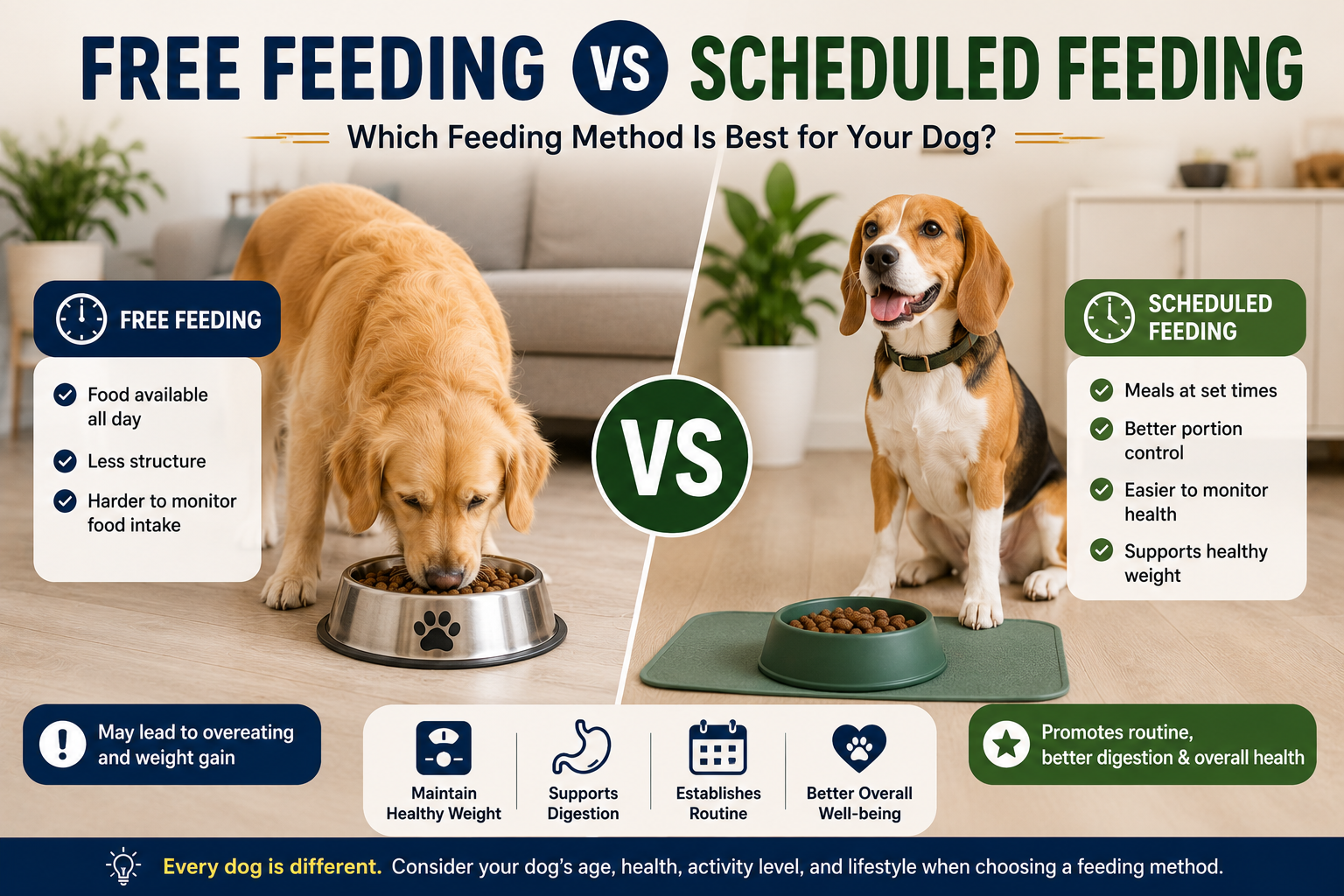
When comparing free feeding vs scheduled feeding dogs, scheduled feeding is the better choice for most dogs. Feeding measured meals at consistent times makes it easier to control portions, maintain a healthy weight, monitor appetite, and identify health problems early. Free feeding may work for a small number of dogs, but it can increase the risk of overeating and make it harder to track food intake.
What Is Free Feeding?
Free feeding means leaving food available throughout the day so your dog can eat whenever they choose.
With this method, owners typically:
- Fill the food bowl once or several times daily.
- Allow constant access to dry food.
- Let the dog decide when and how much to eat.
Free feeding is usually only practical with dry kibble because wet food spoils quickly when left out.
What Is Scheduled Feeding?
Scheduled feeding involves offering measured meals at specific times each day.
Most healthy adult dogs are fed:
- Once or twice daily
- At roughly the same times every day
Food is placed down for a set period—often 15 to 30 minutes—and any leftovers are removed until the next meal.
Free Feeding vs Scheduled Feeding Dogs: Key Differences
| Feature | Free Feeding | Scheduled Feeding |
|---|---|---|
| Food Availability | Available all day | Available only at meal times |
| Portion Control | More difficult | Easy to manage |
| Weight Management | Higher risk of overeating | Easier to maintain healthy weight |
| Appetite Monitoring | Difficult | Much easier |
| Training | Less structured | Supports routine and training |
| Multi-Dog Homes | Can be challenging | Easier to supervise |
For most dogs, scheduled feeding offers more advantages.
Why dog Feeding Method Matters
The way you feed your dog affects more than just hunger.
A consistent feeding routine helps support:
- Healthy digestion
- Stable energy levels
- Weight management
- Behavior and training
- Early detection of illness
Since appetite is often one of the first indicators of health problems, knowing exactly how much your dog eats each day can be valuable.
Benefits of Scheduled Feeding
When comparing dog free feeding vs scheduled, scheduled meals provide several important advantages.
Better Portion Control
Measured meals help prevent accidental overfeeding.
This is especially important for dogs that gain weight easily.
Easier Weight Management
Obesity is one of the most common health concerns in dogs.
Scheduled feeding makes it easier to adjust portions based on:
- Age
- Activity level
- Body condition
- Veterinary recommendations
Improved Appetite Monitoring
If your dog suddenly refuses breakfast or leaves dinner unfinished, you’ll notice immediately.
With free feeding, changes in appetite can go unnoticed.
Supports House Training
Dogs often develop regular bathroom habits when they eat at consistent times.
This can be particularly helpful during puppy training.
Encourages Better Routine
Dogs thrive on predictable daily schedules.
Consistent meal times reduce uncertainty and can help some dogs feel more secure.
Benefits of Free Feeding
Although scheduled feeding is generally preferred, free feeding has advantages for certain dogs.
Convenient for Some Owners
Owners with unpredictable schedules may find free feeding easier.
Works for Some Self-Regulating Dogs
A small number of dogs naturally eat only what they need.
These dogs may maintain a healthy weight with constant food access.
May Reduce Competition in Certain Situations
In carefully managed households with compatible dogs, constant food availability may reduce anxiety around meal times.
However, this isn’t true for every dog.
Potential Drawbacks of Free Feeding
Free feeding isn’t ideal for many dogs.
Possible disadvantages include:
- Increased risk of overeating
- Difficulty monitoring appetite
- Weight gain
- Food becoming stale
- Difficulty measuring calorie intake
- Increased competition in multi-dog households
It may also make medication schedules more complicated when medicine needs to be given with food.
Potential Drawbacks of Scheduled Feeding
Scheduled meals also have a few limitations.
Some dogs may:
- Eat too quickly
- Beg between meals
- Require time to adjust when switching from free feeding
Slow-feeder bowls and puzzle feeders can help dogs that eat too rapidly.
Which Dogs Benefit Most from Scheduled Feeding?
Scheduled feeding is often the best option for:
- Puppies
- Overweight dogs
- Dogs with diabetes
- Dogs on prescription diets
- Multi-dog households
- Food-motivated breeds
- Dogs undergoing training
These dogs usually benefit from predictable meal times and controlled portions.
Which Dogs May Do Well With Free Feeding?
Some dogs can successfully free feed, including:
- Dogs that naturally regulate their intake
- Healthy dogs with stable body weight
- Single-dog households without food competition
Even then, owners should monitor body condition carefully.
Free Feed vs Schedule Dogs: Which Is Better?
For most families, the answer is clear.
When comparing free feed vs schedule dogs, scheduled meals generally provide better:
- Portion control
- Weight management
- Health monitoring
- Feeding consistency
- Behavioral structure
Free feeding can work in specific situations, but it isn’t the best choice for many dogs.
How to Transition From Free Feeding to Scheduled Meals
If you’re switching feeding methods, make gradual changes.
Step 1
Determine how much food your dog should eat each day.
Step 2
Divide the daily amount into one or two measured meals.
Step 3
Offer food at the same times each day.
Step 4
Allow about 15–30 minutes for eating.
Remove uneaten food afterward.
Step 5
Stay consistent.
Most dogs adjust to the new routine within several days.
Common Feeding Mistakes when feeding dogs
Guessing Portion Sizes
Always measure food accurately.
Giving Too Many Treats
Treats count toward your dog’s daily calories.
Feeding Inconsistently
Changing meal times frequently can confuse your dog.
Ignoring Weight Changes
Adjust food amounts if your dog begins gaining or losing weight.
Assuming Every Dog Needs the Same Schedule
Every dog has unique nutritional needs based on age, activity level, and health.
Expert Tips
- Feed at the same times every day.
- Use a measuring cup or kitchen scale.
- Keep fresh water available at all times.
- Monitor your dog’s body condition regularly.
- Limit treats to a small portion of daily calorie intake.
- Consult your veterinarian before making major dietary changes.
Frequently Asked Questions
Is free feeding bad for dogs?
Not necessarily, but it isn’t ideal for most dogs. Free feeding can increase the risk of overeating and make it difficult to monitor appetite.
Is scheduled feeding better than free feeding?
For most dogs, yes. Scheduled feeding provides better portion control, weight management, and health monitoring.
Can puppies be free fed?
Most veterinarians recommend scheduled meals for puppies to support healthy growth and establish consistent eating habits.
Can overweight dogs be free fed?
Generally, no. Measured meals are usually recommended for dogs that need to lose or maintain weight.
How many meals should adult dogs eat?
Most healthy adult dogs do well with two meals each day, although some may do well with one meal if recommended by their veterinarian.
Does scheduled feeding reduce begging?
It can help establish predictable meal times, although some dogs may still beg if they’ve learned that begging results in treats.
Can multiple dogs share a free-feeding bowl?
This is generally not recommended because it becomes difficult to monitor each dog’s intake and may encourage competition.
How long should food stay out during scheduled feeding?
Many veterinarians recommend allowing about 15–30 minutes before removing uneaten food.
Can I switch from free feeding to scheduled meals?
Yes. Most dogs adjust well when the transition is made gradually and consistently.
Which feeding method do veterinarians usually recommend?
For most healthy dogs, veterinarians commonly recommend scheduled feeding because it supports weight management and makes health monitoring easier.
Key Takeaways
- Free feeding vs scheduled feeding dogs is a common question among dog owners.
- Scheduled feeding is generally the healthier and more practical choice.
- Measured meals improve weight control and make appetite changes easier to notice.
- Free feeding may work for a small number of self-regulating dogs but isn’t suitable for every household.
- Choose a feeding method that matches your dog’s age, health, activity level, and lifestyle.
Final Thoughts
Choosing between free feeding vs scheduled feeding dogs comes down to understanding your dog’s individual needs. While some dogs can successfully manage constant access to food, most benefit from structured, measured meals served at consistent times each day.
Scheduled feeding offers better control over portions, supports healthy weight management, and allows you to notice changes in appetite that could signal an underlying health issue. By selecting a feeding routine that fits both your dog’s needs and your daily schedule, you’ll help support long-term health, good nutrition, and a predictable routine your dog can depend on.