Best Time to Feed a Dog: A Complete Guide
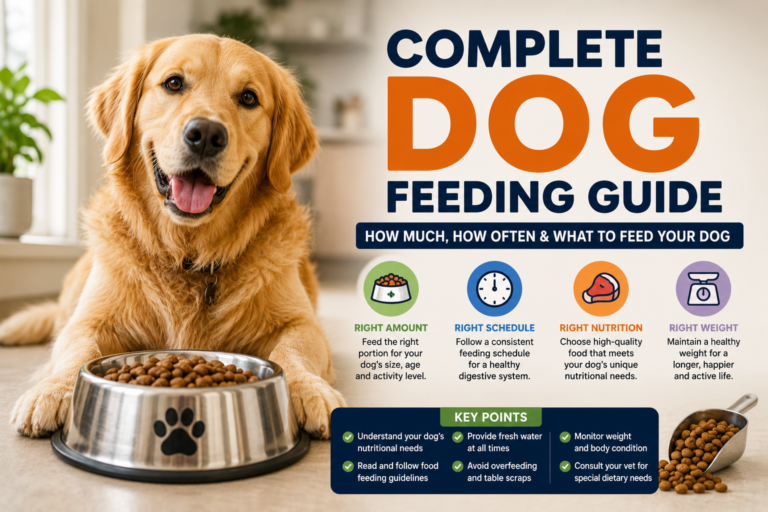
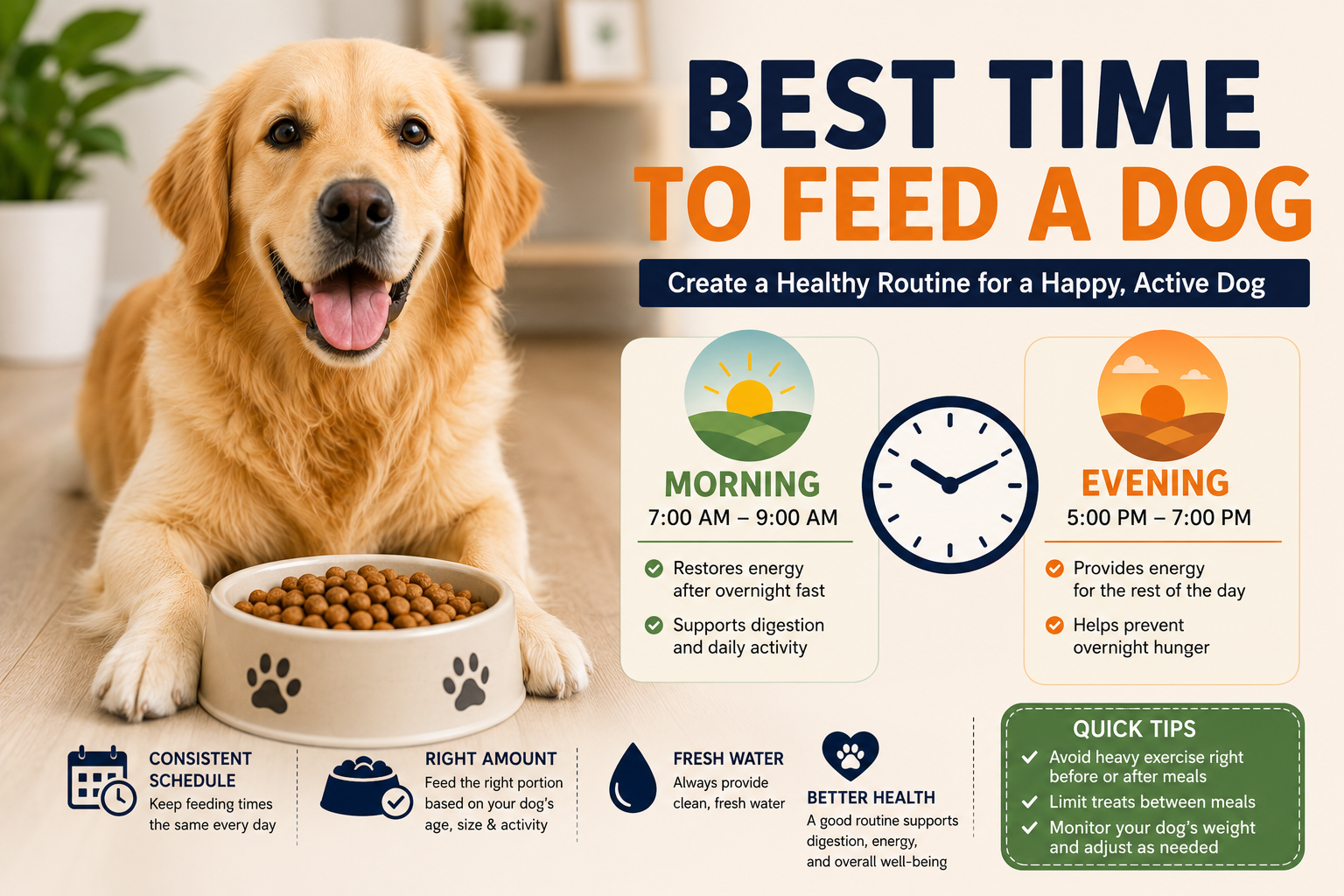
The best time to feed a dog depends on their age, lifestyle, and health, but most healthy adult dogs do best with two meals a day, typically one in the morning (between 7:00–9:00 a.m.) and one in the evening (between 5:00–7:00 p.m.). Keeping a consistent feeding schedule supports digestion, maintains energy levels, and helps prevent overeating.
What Is the Best Time to Feed a Dog?
The best time to feed a dog is at consistent times every day rather than at random hours.
For most adult dogs, a simple schedule works well:
- Morning: 7:00–9:00 a.m.
- Evening: 5:00–7:00 p.m.
Spacing meals about 10 to 12 hours apart helps maintain stable energy levels and gives the digestive system enough time to process food.
The exact timing isn’t as important as consistency. Feeding your dog at roughly the same times each day helps establish a routine they can rely on.
Why Feeding Time Matters
A regular feeding schedule offers several benefits beyond simply satisfying your dog’s appetite.
Consistent meal times can:
- Support healthy digestion
- Help maintain a healthy body weight
- Reduce begging between meals
- Make it easier to monitor appetite changes
- Establish predictable bathroom routines
- Improve training and daily routines
Dogs thrive on consistency, and feeding is an important part of that routine.
Factors That Affect the Best Feeding Time
There’s no single feeding schedule that works for every dog.
Several factors influence the ideal timing.
Age
Puppies require more frequent meals than adult dogs.
Senior dogs often continue eating twice daily but may benefit from adjustments based on medical conditions.
Activity Level
Highly active dogs burn more calories and may benefit from meals scheduled around their exercise routine.
Working dogs often have different feeding needs than companion dogs.
Health Conditions
Some medical conditions require specific meal timing.
Dogs with diabetes, digestive disorders, or those taking certain medications may need customized feeding schedules provided by a veterinarian.
Household Routine
Choose feeding times that you can realistically maintain every day.
Consistency matters more than selecting a “perfect” clock time.
Best Feeding Schedule for dogs by Age
Puppies (8–12 Weeks)
Young puppies typically need:
- Four meals per day
Their small stomachs can’t hold enough food for fewer meals.
Puppies (3–6 Months)
As puppies grow, feeding usually changes to:
- Three meals daily
Older Puppies (6–12 Months)
Most puppies transition to:
- Two or three meals each day
Large breeds may transition differently than smaller breeds.
Adult Dogs
For most healthy adults, the best times to feed a dog are:
- Morning
- Early evening
Two evenly spaced meals help maintain steady energy throughout the day.
Senior Dogs
Older dogs generally continue eating:
- Two meals daily
Some seniors with specific health conditions may require smaller, more frequent meals.
Morning vs. Evening Feeding for dog
Many owners wonder whether morning or evening meals are more important.
The answer is that both meals play an important role.
Morning Meal
A morning meal:
- Replenishes energy after overnight fasting
- Supports daily activity
- Establishes a consistent routine
Evening Meal
An evening meal:
- Provides energy for the rest of the day
- Helps prevent excessive overnight hunger
- Fits naturally into most household routines
Skipping either meal isn’t recommended for most dogs.
Should You Feed Before or After Exercise?
Timing meals around exercise is important, especially for medium and large breeds.
Before Exercise
Avoid feeding a large meal immediately before vigorous exercise.
Waiting before activity may reduce digestive discomfort.
After Exercise
Allow your dog time to cool down and rest before offering a full meal.
Fresh water should always be available after physical activity.
If your dog participates in intense exercise or competitive sports, consult your veterinarian about the best feeding routine.
Should Dogs Eat at the Same Time Every Day?
Yes. Dogs generally benefit from a predictable routine.
Feeding at consistent times helps:
- Regulate digestion
- Reduce anxiety around meals
- Make appetite changes easier to notice
Even small daily variations are usually fine, but large differences in feeding time can disrupt your dog’s routine.
Free Feeding vs. Scheduled Meals
Scheduled Meals
Most veterinarians recommend scheduled feeding because it allows owners to:
- Measure portions accurately
- Prevent overeating
- Monitor appetite
- Maintain healthy weight
Free Feeding
Free feeding means leaving food available all day.
It may work for some dogs, but it can make it difficult to:
- Detect appetite changes
- Prevent obesity
- Monitor daily food intake
For most dogs, scheduled meals are the better choice.
What Are the Best Times to Feed a Dog if You Work All Day?
Many owners work traditional office hours.
A practical schedule might look like:
- Breakfast before leaving home
- Dinner shortly after returning home
If your schedule changes occasionally, try to keep feeding times reasonably consistent.
Automatic feeders can also help maintain regular meal times when you’re away.
Signs Your Dog Is on the Right Feeding Schedule
A healthy feeding routine usually results in a dog that:
- Maintains a healthy body weight
- Has consistent energy levels
- Produces normal stools
- Eats meals with enthusiasm
- Doesn’t constantly beg for food
If your dog frequently seems hungry or consistently leaves food behind, it may be time to review the feeding plan.
Common Feeding Schedule Mistakes when dog feeding
Feeding at Random Times
Changing meal times every day can disrupt your dog’s routine.
Feeding Too Close to Vigorous Exercise
Large meals immediately before intense activity may increase the risk of digestive problems.
Giving Too Many Treats Between Meals
Frequent snacks can reduce interest in regular meals and contribute to weight gain.
Guessing Portion Sizes
Always measure food rather than estimating.
Ignoring Changes in Appetite
A sudden increase or decrease in appetite may indicate an underlying health issue.
Expert Tips for Feeding Your Dog
- Feed at approximately the same times every day.
- Measure portions accurately.
- Provide fresh, clean water at all times.
- Limit treats to a small part of your dog’s daily calorie intake.
- Store food properly to maintain freshness.
- Monitor body weight regularly.
- Consult your veterinarian if your dog’s appetite changes unexpectedly.
Frequently Asked Questions
What is the best time to feed a dog?
For most healthy adult dogs, the best feeding schedule is one meal in the morning (around 7:00–9:00 a.m.) and another in the early evening (around 5:00–7:00 p.m.), spaced about 10–12 hours apart.
What are the best times to feed a dog?
The exact times vary, but consistent morning and evening meals are generally recommended for healthy adult dogs.
Is it better to feed dogs once or twice a day?
Most adult dogs do well with two meals each day. Puppies require more frequent meals because they’re still growing.
Should I feed my dog before or after a walk?
Light walks are generally fine before or after meals. For vigorous exercise, avoid feeding a large meal immediately beforehand and allow time for rest afterward.
Can I feed my dog at different times every day?
Small variations are usually acceptable, but a consistent schedule is healthier and easier for your dog to follow.
What is the best time of day to feed a dog?
Both morning and early evening are ideal. The key is maintaining a regular routine rather than focusing on an exact clock time.
Should dogs eat before bedtime?
Most dogs don’t need a bedtime meal if they’re fed appropriately during the day. Dogs with certain medical conditions may require different schedules under veterinary guidance.
Can free feeding cause problems?
Yes. Free feeding can contribute to overeating, obesity, and difficulty monitoring appetite, particularly in food-motivated dogs.
Do puppies need different feeding times?
Yes. Puppies require three to four meals daily during early growth before gradually transitioning to two meals as they mature.
When should I ask my veterinarian about my dog’s feeding schedule?
Consult your veterinarian if your dog has chronic medical conditions, unexplained weight changes, digestive problems, or sudden changes in appetite.
Key Takeaways
- The best time to feed a dog is usually twice daily—once in the morning and once in the early evening.
- Consistency matters more than choosing an exact feeding hour.
- Puppies require more frequent meals than adult dogs.
- Scheduled feeding is generally preferred over free feeding.
- Avoid large meals immediately before vigorous exercise.
- Monitor your dog’s body condition and adjust the feeding schedule if recommended by your veterinarian.
Final Thoughts
Choosing the best time to feed a dog is about creating a routine that supports your dog’s health and fits your daily life. Most healthy adult dogs thrive on two well-spaced meals each day, while puppies and dogs with certain medical conditions may require a different schedule.
Remember that feeding times are only one part of good nutrition. Offering balanced meals, measuring portions accurately, providing fresh water, and monitoring your dog’s weight are just as important. If you’re ever unsure about your dog’s feeding schedule or nutritional needs, your veterinarian can help you create a plan that’s tailored specifically to your dog’s age, lifestyle, and health.