
In this comprehensive guide, you will learn exactly how to clean a Shark vacuum filter, when to clean it, and how often to replace it. We will also dive into the types of filters used in Shark vacuums and how to troubleshoot common issues.
1. Why Cleaning The Shark Vacuum Filter Matters
Vacuum filters play a crucial role in the performance of your Shark vacuum cleaner. They capture dirt, dust, and other particles from the air, preventing them from being recirculated back into your home. Over time, these filters become clogged with debris, causing reduced airflow and suction power. Not only does this affect the vacuum’s efficiency, but it also strains the motor, leading to potential long-term damage.
By cleaning the filter regularly, you help ensure that your vacuum:
- Retains its full suction power
- Provides cleaner air quality by trapping dust and allergens
- Prolongs the lifespan of the vacuum motor
- Reduces bad odors caused by accumulated dirt
2. The Importance of Regular Maintenance
Regular maintenance is essential to ensure that your Shark vacuum continues to operate at peak performance. Apart from cleaning the filters, you should also clean other parts of the vacuum, such as the brush roll, hose, and dust canister. Neglecting any of these components can result in a decrease in suction power, a buildup of dust, and possible malfunctions.
- Maintaining the brush roll prevents hair and dirt from clogging, ensuring that the vacuum continues to pick up debris effectively.
- Cleaning the dust canister ensures that dirt is stored properly, and the vacuum doesn’t get overloaded, making it harder to clean effectively.
- Inspecting and cleaning hoses helps to prevent blockages, especially when cleaning larger debris.
When you take excellent care of your vacuum, it works efficiently and serves you for a longer time.
3. Common Vacuum Issues Caused by Dirty Filters
Dirty filters in your Shark vacuum can cause several issues, which might be mistaken for problems elsewhere in the vacuum. Here are some of the most common signs that your filter might be clogged:
- Reduced Suction Power: One of the most noticeable signs of a dirty filter is a decrease in suction power. If your vacuum is no longer picking up dirt and debris as effectively as it used to, the filter may be clogged.
- Motor Overheating: If the filter is too clogged, it can cause the motor to overheat because the vacuum is working harder to suck up dirt.
- Unpleasant Odors: A dirty filter, especially in models with foam or charcoal filters, can start to emit a musty or foul smell due to trapped dirt and moisture.
- Increase in Allergies or Dust in the Air: If your vacuum filter is not properly cleaning the air, you may notice an increase in dust and allergens around the house.
Understanding these signs early can help you take action and clean or replace the filter before any serious issues arise.
4. Safety Tips Before You Start
Before you dive into the process of cleaning your Shark vacuum filter, always remember to prioritise safety. Here are some key safety tips to keep in mind:
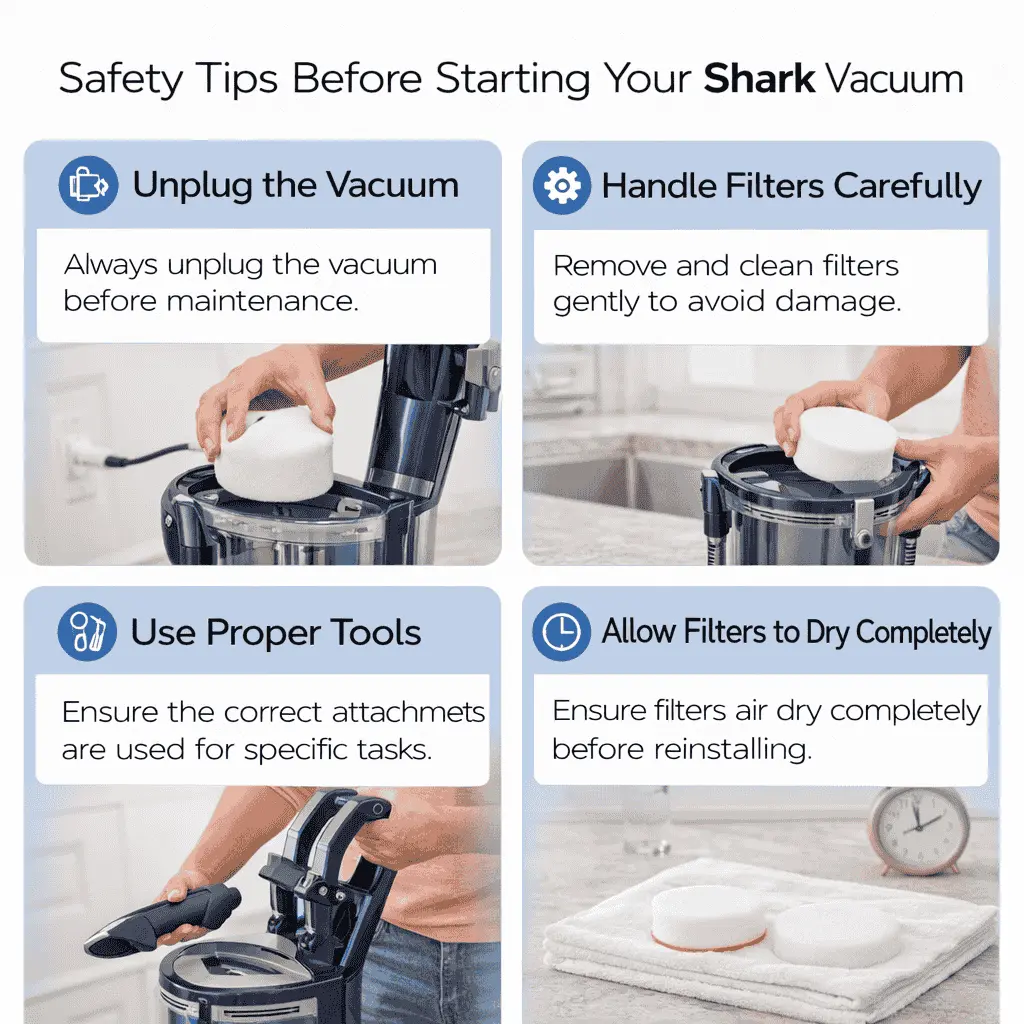
- Unplug the Vacuum: Always make sure the vacuum is unplugged before disassembling any parts. This prevents electrical hazards and ensures that you don’t accidentally turn on the vacuum while working on it.
- Handle Filters Carefully: Filters, especially HEPA filters, can be fragile. Handle them gently to avoid damaging the material.
- Use Proper Tools: Use soft brushes, mild soap, and non-abrasive cloths when cleaning filters to avoid tearing or damaging them.
- Allow Filters to Dry Completely: Never reinstall a wet or damp filter. Allow the filters to dry completely, as installing a wet filter can damage the vacuum or cause mold growth.
5. Tools and Materials You’ll Need
Here’s a list of essential tools and materials to have on hand before cleaning your Shark vacuum filter:
| Tool/Material | Purpose |
| Soft brush or dusting brush | Removes loose debris and dust from filters |
| Mild dish soap | For cleaning foam and felt filters |
| Warm water | For rinsing the filters |
| Towel | For drying the filter |
| Container or basin | For soaking the filter if necessary |
Having these items will make the cleaning process smoother and more effective.
6. Types of Shark Vacuum Filters
Understanding the types of filters used in Shark vacuums will help you clean them properly. Different filters require different cleaning methods and care.
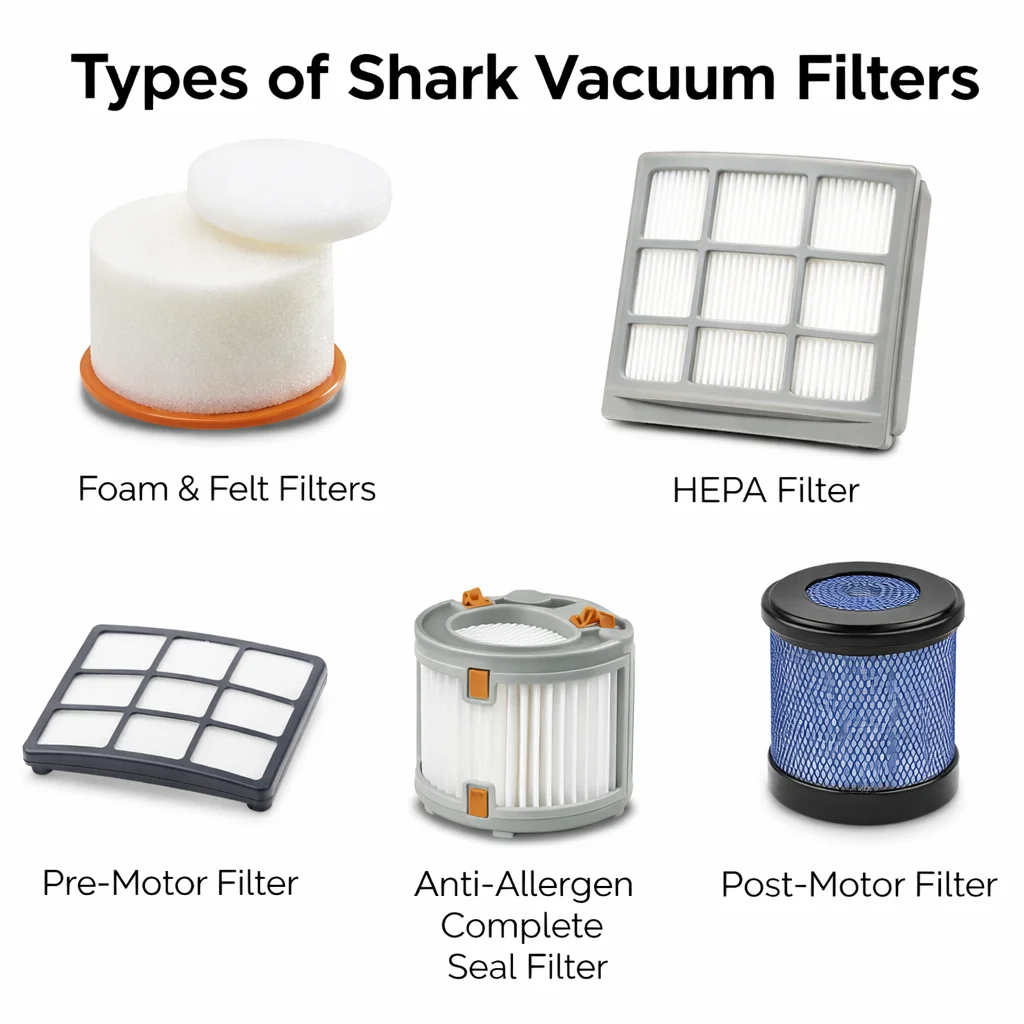
Foam Filters
Foam filters are common in many Shark vacuum models. They’re soft, porous, and are typically washable. These filters are designed to trap larger particles of dirt and debris.
Felt Filters
Felt filters are often used in conjunction with foam filters for additional filtration. They’re also washable but are typically more delicate, so extra care is needed when cleaning them.
HEPA Filters
High-Efficiency Particulate Air (HEPA) filters are used in models that are designed to capture fine particles, allergens, and dust. Some Shark models use washable HEPA filters, but not all do. Always check your vacuum’s manual to determine if your HEPA filter can be washed.
Charcoal Filters (In Some Models)
Certain Shark vacuum models feature charcoal filters, which help to neutralize odors. These are often found in pet-specific models. Charcoal filters can sometimes be rinsed with water, but check the manual to be sure.
7. How Often Should You Clean Your Shark Vacuum Filter?
The frequency of cleaning your Shark vacuum filter depends on how often you use it and the type of cleaning tasks you perform. Here are some general guidelines:
- Heavy Use (Pet Owners, Large Homes, or High Traffic Areas): Clean the filter every 1–2 weeks.
- Moderate Use (Normal Households): Clean the filter every 3–4 weeks.
- Light Use (Minimal Dirt and Dust): Clean the filter every 6 weeks.
If you notice reduced suction or the vacuum is emitting odors, it’s a sign that the filter needs cleaning, regardless of the schedule.
8. When to Replace Shark Vacuum Filters
While cleaning the filter is important, it’s equally essential to replace it periodically. Here are signs that it may be time to replace your Shark vacuum filter:
- Tears or Rips: If your filter is damaged beyond repair, it’s time to replace it.
- Extreme Dirt and Stains: If cleaning doesn’t restore the filter’s efficiency, it’s time for a new one.
- Persistent Odors: Even after cleaning, if your filter smells bad, it may no longer be effective.
- Discoloration: If the filter has become discolored and cleaning doesn’t improve its performance, consider replacing it.
Tip: Always check the user manual or Shark’s official website for the recommended replacement frequency.
9. How to Clean Your Shark Vacuum Filter
Now, let’s break down the detailed steps for cleaning your Shark vacuum filter.
Pre‑Cleaning Tips and Tricks
Before you begin cleaning the filter, take the following preparatory steps:
- Turn off your vacuum and unplug it to avoid any accidents.
- Remove the dust canister from your vacuum. You want to start with a clean workspace.
- Use a soft brush to brush away excess dirt and debris from the filter before washing.
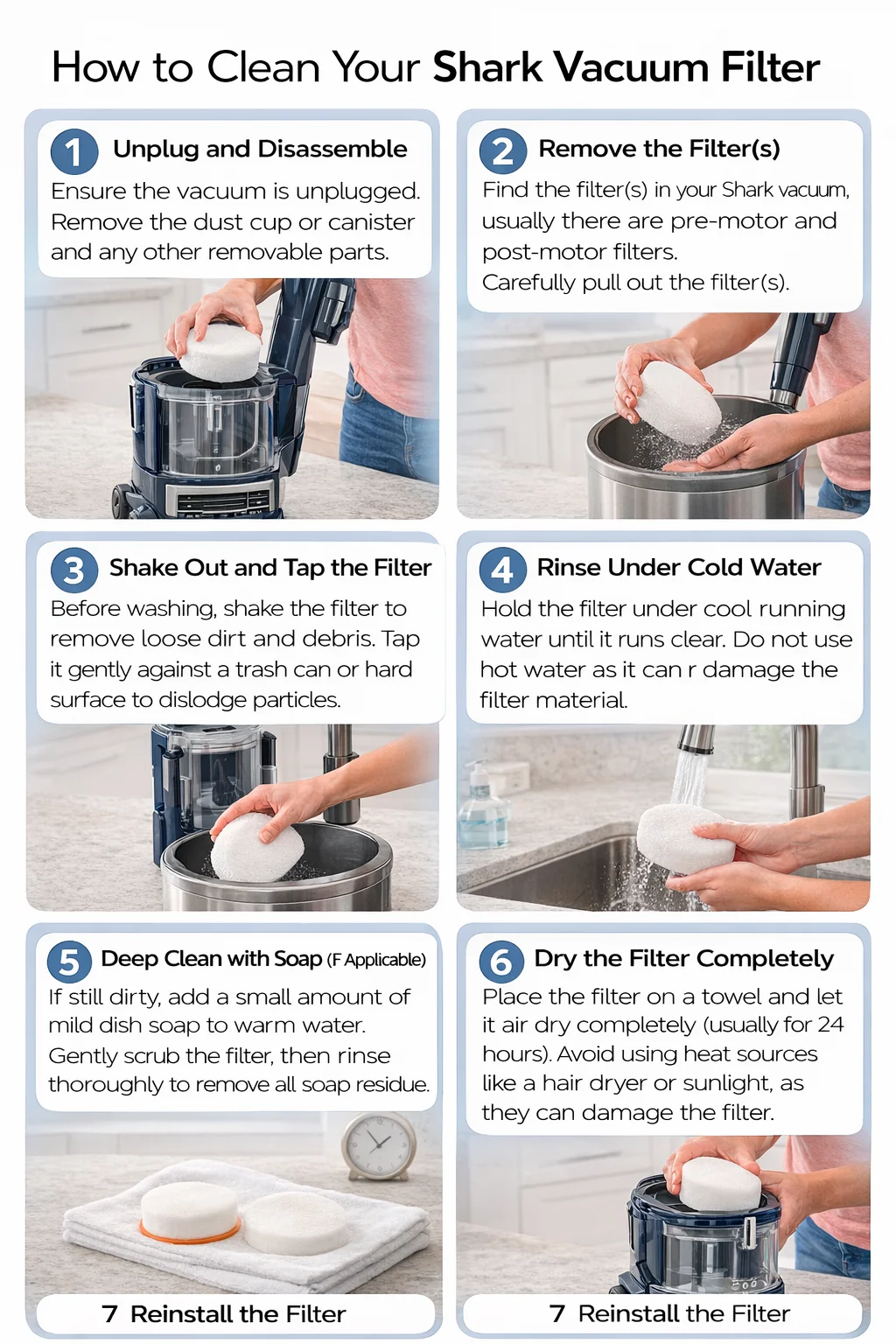
Step 1: Unplug and Disassemble
As mentioned earlier, safety comes first. Ensure the vacuum is unplugged. Then, remove the dust cup or canister from the vacuum, as well as any other removable parts.
Step 2: Remove the Filter(s)
Consult your user manual to locate the filter in your specific Shark model. Typically, there is one or more filters:
- Pre‑motor filters are located near the motor.
- Post‑motor filters are located near the exhaust.
Carefully pull out the filter(s) and lay them on a clean, flat surface.
Step 3: Shake Out and Tap the Filter
Before washing the filter, shake it gently to remove loose dirt and debris. You can tap it against a trash can or a hard surface to help release larger particles.
Step 4: Rinse Under Cold Water
Hold the filter under cool running water. Rinse until the water runs clear. This helps remove dust and dirt without damaging the filter material.
Step 5: Deep Clean with Soap (If Applicable)
If the filter is still dirty after rinsing, use mild dish soap:
- Add a small amount of soap to warm water.
- Gently scrub the filter using your fingers or a soft brush.
- Be sure to rinse the filter thoroughly to remove any soap residue.
Step 6: Dry the Filter Completely
Place the filter on a towel and allow it to air dry completely. Do not use heat sources such as a hair dryer, direct sunlight, or an oven, as this can damage the filter.
Step 7: Reinstall the Filter
Once the filter is completely dry, reinstall it back into your vacuum, ensuring that it fits securely.
10. How to Clean Foam vs. HEPA Filters
Understanding the cleaning process for foam filters versus HEPA filters is essential:
- Foam Filters: Foam filters are washable. Use cool water and mild soap for a deeper clean.
- HEPA Filters: HEPA filters should be treated with care. If your HEPA filter is washable, rinse it gently under cold water and let it air dry. If it’s non-washable, you should replace it when it becomes clogged.
11. How to Extend the Life of Your Shark Vacuum Filter
Here are some helpful tips for extending the life of your Shark vacuum filter:
- Clean it regularly based on usage.
- Avoid over‑filling the dust canister, as this increases filter strain.
- Use the correct settings for your floor type. Switching to a higher power level when cleaning carpet and a lower level for hardwood floors will reduce filter wear.
- Use the vacuum on bare floors or low‑pile carpets to reduce the amount of dirt and debris that makes its way to the filter.
12. Troubleshooting Common Shark Vacuum Filter Issues
If you’re experiencing issues, check the following:
- Loss of suction: Clean or replace the filter.
- Odor: Clean thoroughly, and if the smell persists, replace the filter.
- Clogged hoses or brush roll: Remove obstructions and clean.
13. How to Maintain Your Shark Vacuum for Peak Performance
To keep your Shark vacuum working at its best, remember to:
- Clean the brushroll regularly.
- Empty the dust canister after each use.
- Inspect the hoses for blockages.
- Keep the exterior clean.
14. Frequently Asked Questions (FAQs)
Q1: How often should I clean my Shark vacuum filter?
A: It depends on usage, but aim for every 1–2 weeks for heavy use, and every 3–6 weeks for light use.
Q2: Can I clean my HEPA filter?
A: Some HEPA filters are washable, but check your model’s manual to confirm.
Q3: My vacuum smells bad even after cleaning. What’s wrong?
A: A wet filter or a clogged hose might be the cause. Make sure the filter is fully dry and check for blockages.
15. Conclusion
Cleaning your Shark vacuum filter regularly is a simple and effective way to ensure your vacuum continues to work efficiently and last longer. By following the detailed steps in this guide, you can extend the life of your vacuum, maintain excellent suction, and ensure your home stays free of allergens and dust. Regular maintenance also helps prevent expensive repairs, so make it a habit to clean your filters often and follow the best practices for filter replacement.
Follow Us for more informative content – Your Picknora ✅