
Dog harness Options are more popular than ever. Many dog owners use them for daily walks, training, and safety. But with so many types of dog harnesses, it can be confusing to know which one is best for your pet. Every harness is designed for a different purpose.
Some are for small dogs, some for big ones, and others for special needs or activities. This guide will help you understand the main types of dog harnesses, their uses, and how to choose the right one for your dog.
Let’s explore the world of dog harnesses step by step, so you can make a confident choice for your furry friend.
Why Use A Dog Harness?
A harness is more than a simple dog accessory. It can change how you walk your dog and how safe your dog feels. Here are some reasons why many people choose harnesses over collars:
- Better control: Harnesses give you more control, especially if your dog pulls or is strong.
- Safety: A harness reduces the risk of neck injuries. Collars can hurt a dog’s throat if they pull suddenly.
- Comfort: Many dogs feel more comfortable in a harness than a collar, especially for long walks.
- Training: Some harnesses help with training, making it easier to teach your dog not to pull.
- Special needs: Dogs with medical issues or disabilities may need a harness designed for their condition.
Many dog owners notice that their dogs behave better on walks with a harness. If your dog has a flat face (like a pug or bulldog), a harness is much safer than a collar. For puppies, harnesses are gentle and help with learning to walk on a leash.
Main Types Of Dog Harness
Not all harnesses are the same. Each type has a purpose. Let’s look at the main types you can find in pet stores and online.
1. Back-clip Dog Harness
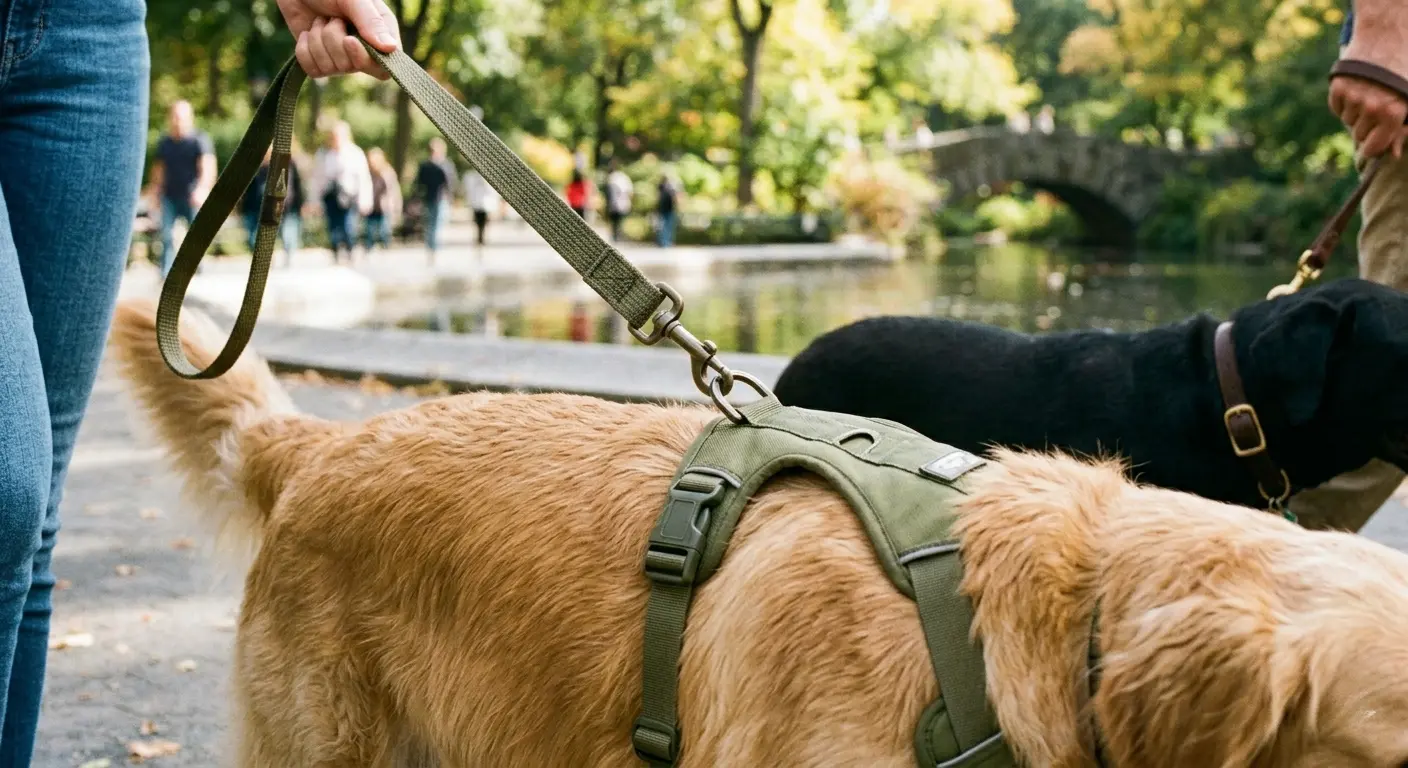
This is the most common style. The leash attaches on the dog’s back, usually between the shoulder blades.
Best for: Small to medium dogs that do not pull hard.
Pros:
- Easy to put on and take off.
- Comfortable for most dogs.
- Less likely to tangle the leash under your dog’s legs.
Cons:
- Not good for strong pullers. It does not give much control.
- Some dogs may pull even more because the pressure is on their chest and shoulders.
Common mistake: Many people use a back-clip harness for strong pullers and get frustrated. If your dog pulls a lot, this is not the best choice.
Example brands: Puppia, Blueberry Pet
2. Front-clip (no-pull) Dog Harness
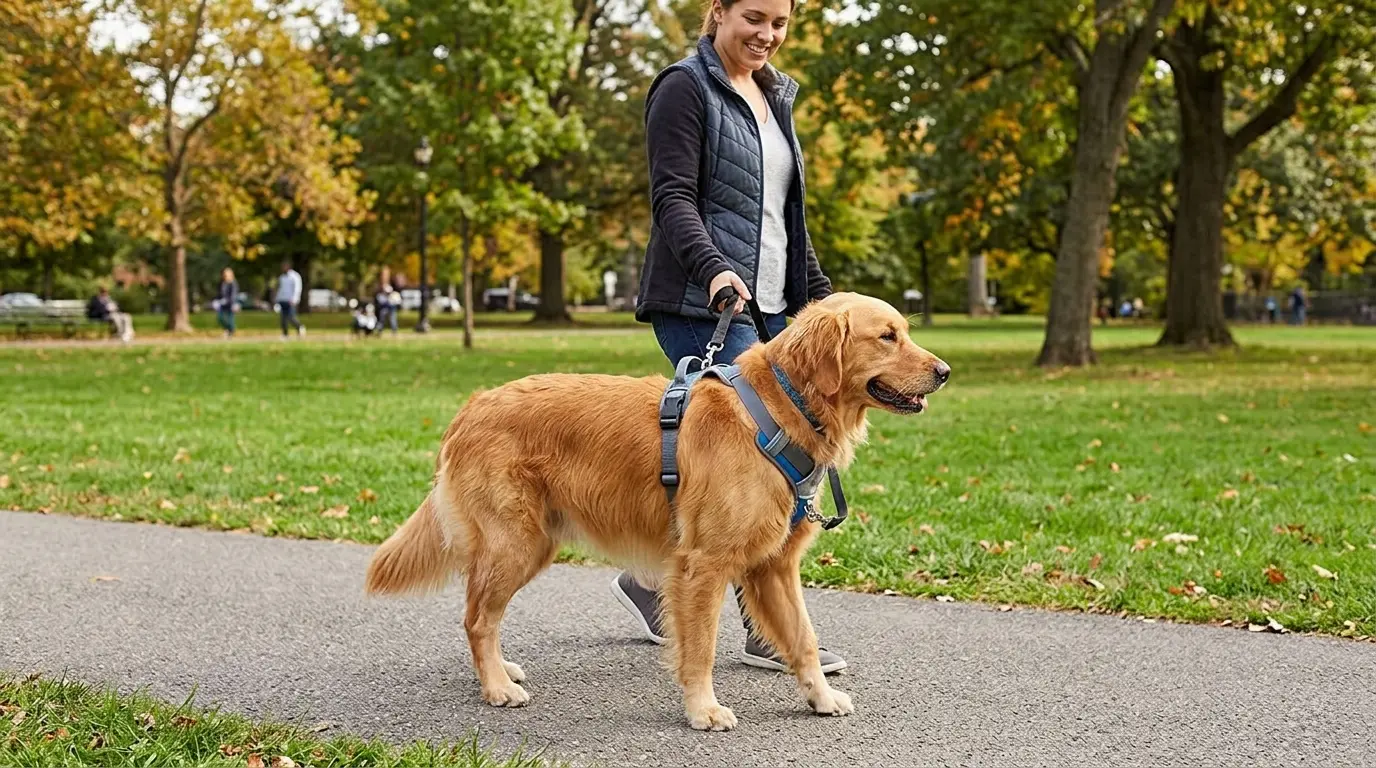
The leash attaches at the front of your dog’s chest.
Best for: Dogs that pull during walks, or dogs in training.
Pros:
- Helps stop pulling. When your dog pulls, the harness turns them back toward you.
- Better control for the owner.
- Good for training loose-leash walking.
Cons:
- Some harnesses may twist or get tangled if not fitted well.
- Not always comfortable for long walks if poorly padded.
Practical tip: Make sure the harness fits well and is adjusted snugly. Loose harnesses can rub under the dog’s armpits.
Example brands: PetSafe Easy Walk, Freedom No-Pull
3. Dual-clip (multi-use) Dog Harness
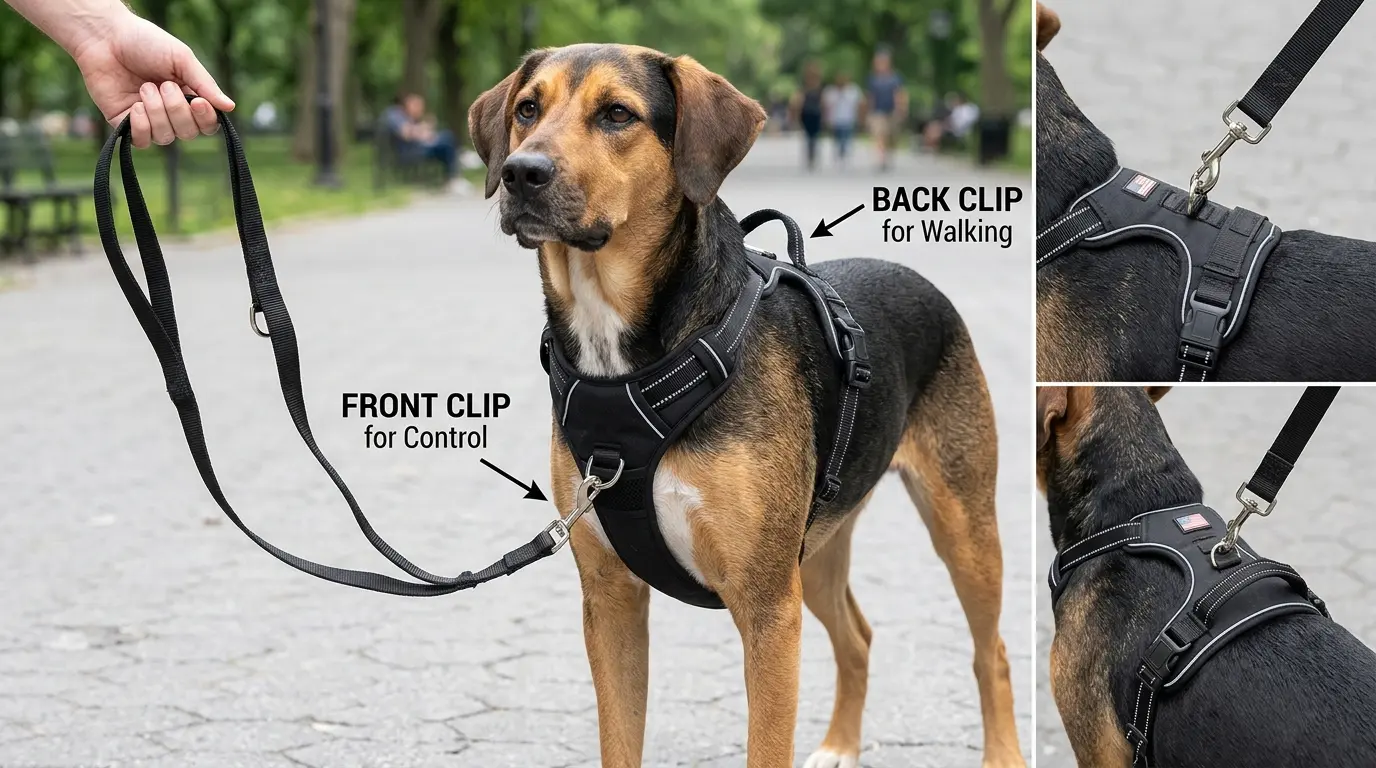
These harnesses have both front and back leash attachments.
Best for: Owners who want flexibility, or trainers working with different behaviors.
Pros:
- Can switch between front and back clip, or use both at once with a double-ended leash.
- Good for training, hiking, or everyday use.
Cons:
- Usually more expensive than single-clip harnesses.
- Can be bulky for very small dogs.
Non-obvious insight: Using both clips with a double leash gives even more control, but many owners don’t try this option.
Example brands: Ruffwear Front Range, 2 Hounds Freedom Harness
4. Step-in Dog Harness
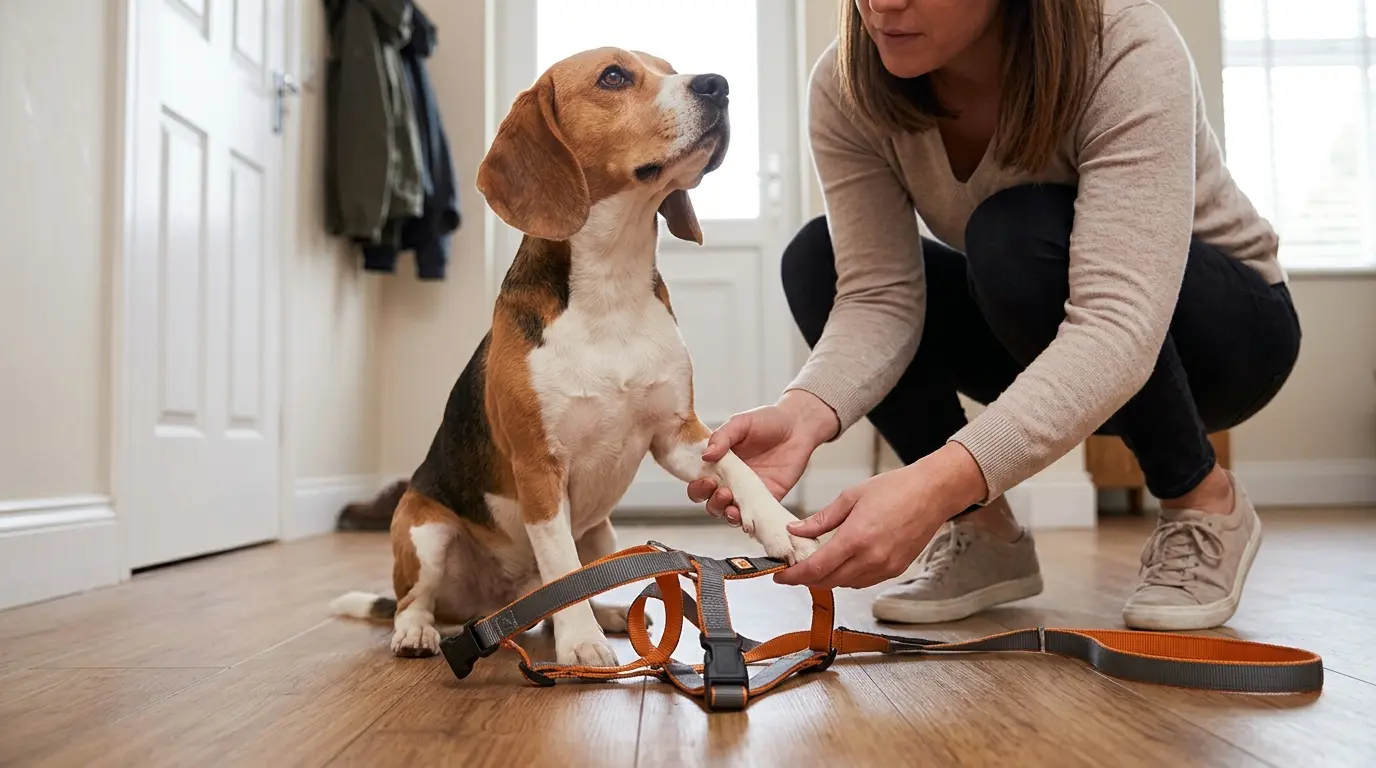
This harness is shaped so your dog steps into it with both front legs. You then pull it up and clip it over the back.
Best for: Small dogs, dogs who don’t like things pulled over their heads.
Pros:
- Easy to put on for calm dogs.
- Comfortable and lightweight.
- Less risk of hurting the dog’s neck.
Cons:
- Can be confusing to put on at first.
- Some dogs may escape if not fitted correctly.
Practical tip: Always check the fit before going out. Step-in harnesses are easy to put on wrong, especially for new users.
Example brands: Voyager, Downtown Pet Supply
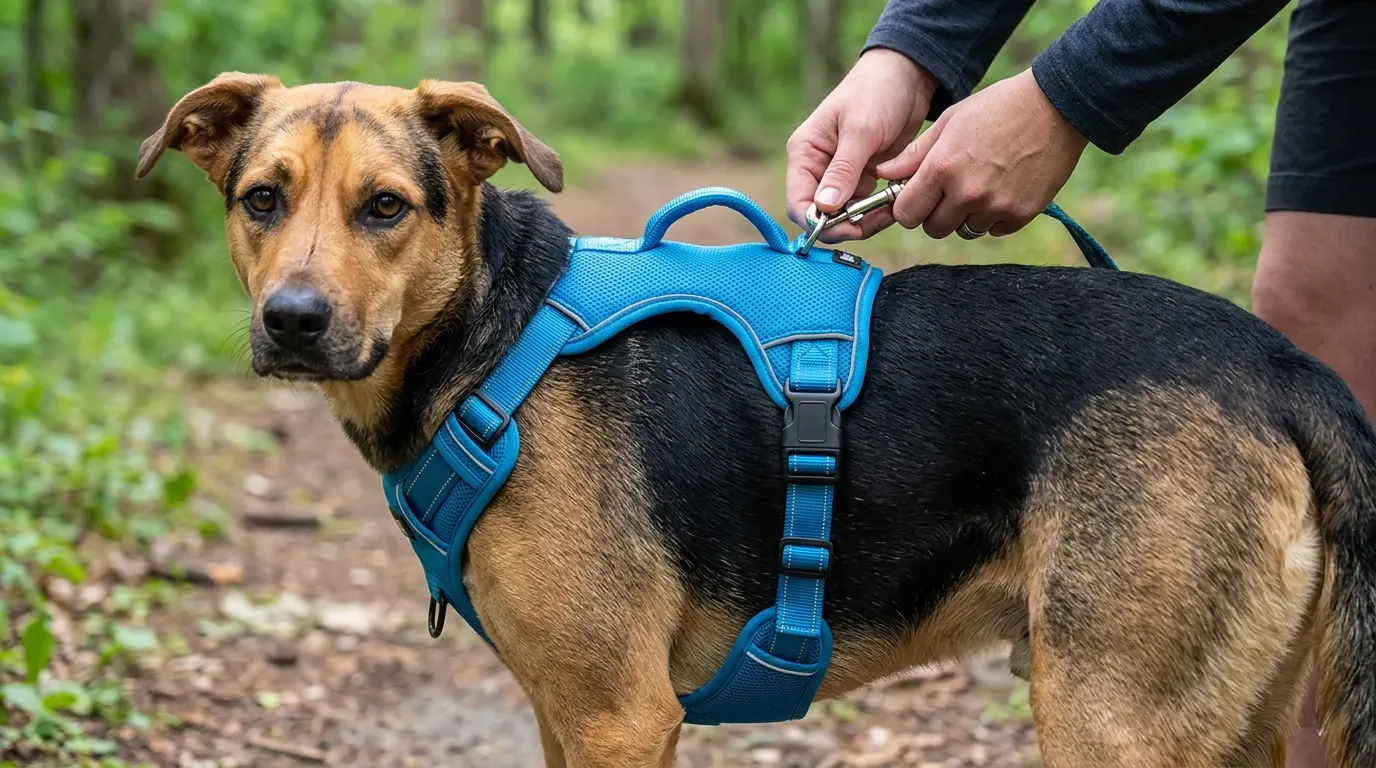
5. Overhead (vest-style) Dog Harness
This harness slips over the dog’s head and buckles around the chest.
Best for: Dogs of all sizes, especially nervous dogs.
Pros:
- Secure fit, less chance of escape.
- Good weight distribution.
- Padded styles are comfortable for long walks.
Cons:
- Some dogs don’t like things going over their heads.
- Can be tricky with dogs that wiggle or are impatient.
Non-obvious insight: For shy or anxious dogs, introduce the harness slowly with treats so they feel safe.
Example brands: Julius-K9 IDC, Rabbitgoo
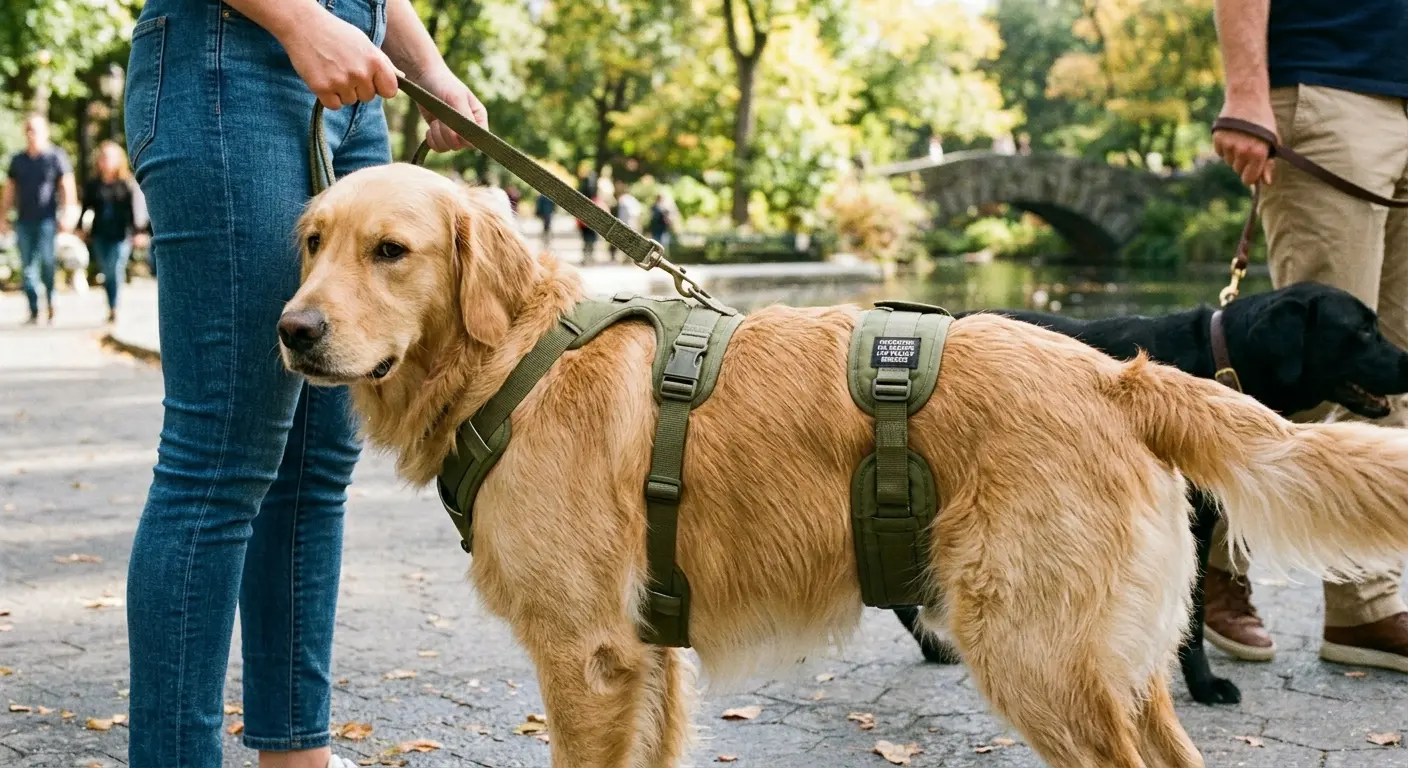
6. No-escape Dog Harness
Specially designed for “Houdini” dogs who can slip out of normal harnesses.
Best for: Dogs who are escape artists, or slim breeds like greyhounds.
Pros:
- Extra straps or a special design to prevent escapes.
- Safer for nervous or reactive dogs.
Cons:
- More complex to put on.
- Heavier than basic harnesses.
Practical tip: Try this harness for rescue dogs or new adoptees who might panic on walks.
Example brands: Ruffwear Web Master, Blue-9 Balance Harness
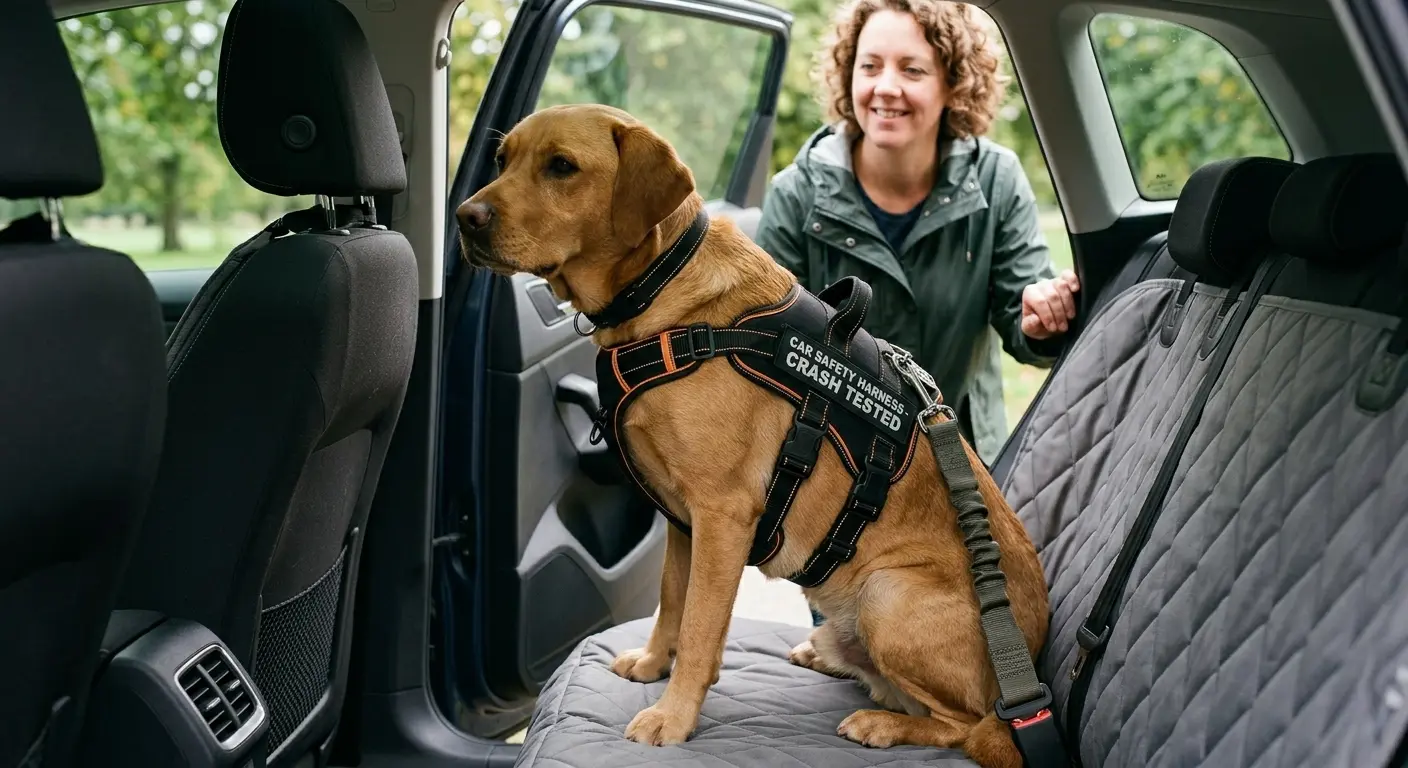
7. Car Safety Dog Harness
Made for car travel, these harnesses attach to the seatbelt system to keep your dog safe.
Best for: Dogs who travel in the car.
Pros:
- Prevents your dog from jumping out or moving around.
- Protects your dog in case of a crash.
- Many can be used as a walking harness, too.
Cons:
- Must be crash-tested for real safety.
- Can be bulky for small cars or dogs.
Non-obvious insight: Many “car harnesses” are not crash-tested. Always check for safety certifications.
Example brands: Kurgo Tru-Fit, Sleepypod Clickit
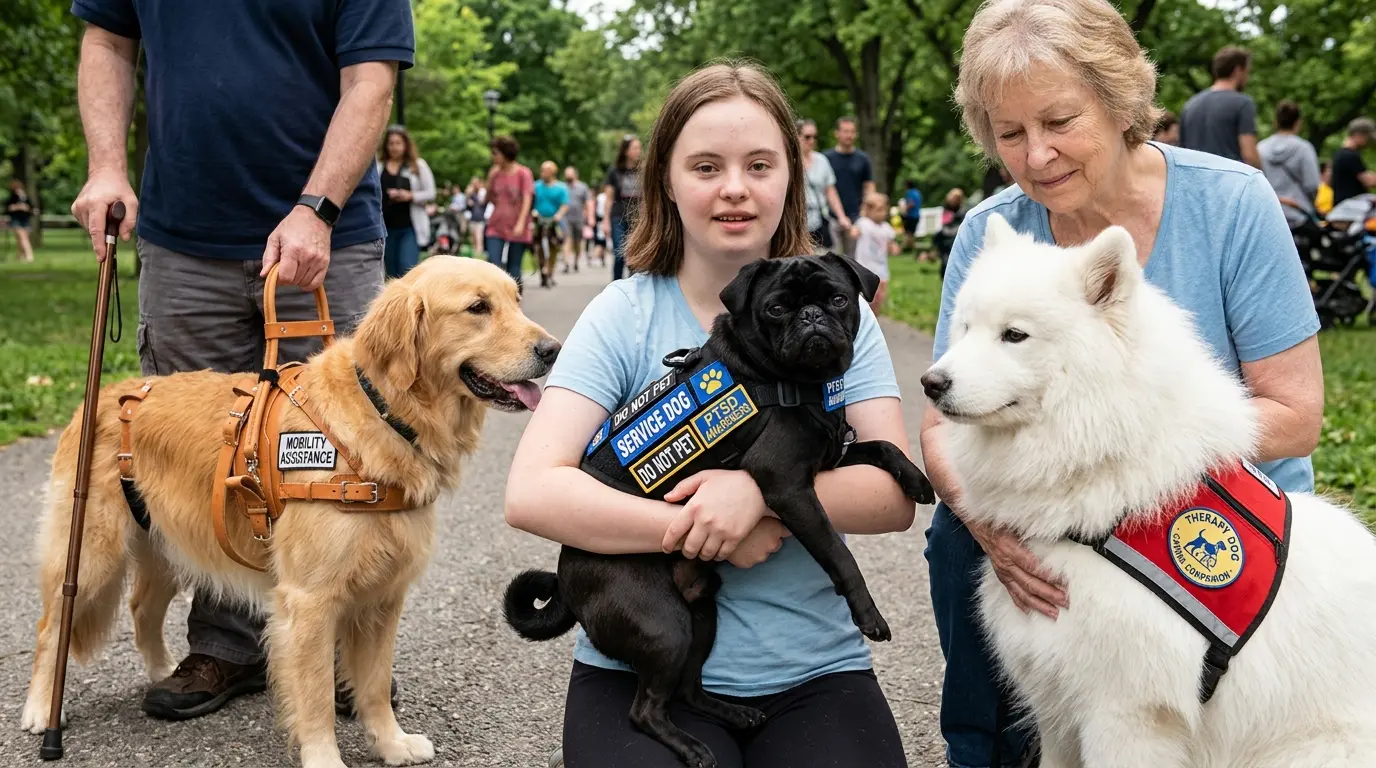
8. Harnesses For Special Needs
Some dogs need a harness made just for them. These include:
- Mobility harnesses: For dogs with arthritis, injuries, or senior dogs who need help standing or walking.
- Service dog harnesses: Have handles or special patches.
- Therapy dog vests: Show that the dog is working.
Pros:
- Help both the dog and the handler.
- Often have padding and strong handles.
Cons:
- Usually more expensive.
- May need custom fitting.
Practical tip: Talk to your vet or trainer before choosing a special needs harness.
Example brands: Help ‘Em Up Harness, Industrial Puppy Service Dog Vest
Materials And Construction
Harnesses come in many materials. The right material depends on your dog’s needs and your environment.
- Nylon: Lightweight, durable, easy to clean. Most common.
- Polyester: Also lightweight and easy to clean. Used for colorful patterns.
- Mesh: Soft and breathable, great for hot weather.
- Leather: Strong, classic look, but needs care and is heavier.
- Padded/fleece-lined: Extra comfort, less rubbing.
Non-obvious insight: Some harnesses have reflective stitching for night walks. This small detail can make a big difference in safety.
Check for: Strong buckles, reinforced stitching, and rust-proof metal D-rings. Cheap harnesses may break under stress.
How To Choose The Right Harness
Selecting a harness is not just about style. The right harness depends on your dog’s size, behavior, and your activities together.
Measure Your Dog
Always measure your dog’s chest and neck before buying a harness. Every brand is different. Use a soft tape measure:
- Chest girth: Measure the widest part, usually behind the front legs.
- Neck size: Measure around the base of the neck.
Learn How to Measure your dog correctly in our detailed dog harness size guide.
Consider Your Dog’s Personality
- Does your dog pull on the leash?
- Is your dog calm or hyper?
- Is your dog an escape artist?
- Does your dog have health problems?
Knowing these answers will help you narrow your choices.
Think About Activities
- Daily walks: Comfort and ease of use matter most.
- Training: Look for front-clip or dual-clip harnesses.
- Running or hiking: Choose padded, strong harnesses.
- Car travel: Only use crash-tested car harnesses.
Try Before You Buy
If possible, try different harnesses in a pet store. Some dogs are picky and may hate one style but love another.
Common mistake: Buying the cheapest harness without checking fit or comfort. This can cause rubbing, escape, or even injury.
Check For Adjustability
A good harness has multiple adjustment points. This helps get a snug fit and allows for growth (helpful for puppies).
Harnesses For Different Dog Sizes
Not all harnesses fit every dog. A harness for a Chihuahua will not work for a Great Dane. Here’s what to think about for different sizes:
Small Dogs
- Need lightweight harnesses.
- Mesh or soft vest harnesses are popular.
- Back-clip or step-in harnesses are easy for small breeds.
Medium Dogs
- Most styles will fit.
- Choose based on personality (puller or calm).
Large And Giant Dogs
- Need strong, wide straps.
- Look for padded chest plates.
- Dual-clip or no-pull harnesses often work best.
Non-obvious insight: Big dogs can break cheap plastic buckles. Look for metal hardware.
Puppies
- Choose harnesses with room to adjust as they grow.
- Soft materials avoid rubbing on sensitive skin.
When To Replace Your Dog’s Harness
Even the best harness won’t last forever. Replace a harness if:
- Straps are fraying or worn.
- Buckles are cracked or don’t snap tightly.
- It no longer fits (after weight gain or loss).
- Your dog chewed parts of it.
Common mistake: Keeping an old harness “just in case.” A broken harness can cause accidents.
Fitting A Harness Correctly
A harness must fit snugly but not too tight. Here’s how to check:
- You should be able to fit two fingers between the harness and your dog’s body.
- The harness should not rub under the armpits or behind the legs.
- Your dog should not be able to slip out of it, even when backing up.
Take the time to adjust the straps every few months, especially if your dog is still growing or has changed weight.
Cleaning And Maintenance
A dirty harness can cause skin problems. Most nylon or polyester harnesses are machine washable (gentle cycle, air dry). Leather should be wiped with a damp cloth and treated with leather conditioner.
Practical tip: Wash your dog’s harness at least once a month, or more often if your dog swims or rolls in dirt.
Common Harness Problems And How To Solve Them
1. Dog pulls even more: Try a front-clip or dual-clip harness and practice loose-leash walking.
2. Harness rubs or causes hair loss: Check fit, switch to a padded harness, or try a different style.
3. Dog escapes: Use a no-escape harness and make sure all straps are adjusted tightly.
4. Dog hates putting it on: Use treats and a gentle voice. Try a step-in or overhead style, depending on your dog’s preference.
Harnesses Vs. Collars
A collar is simple, but not always safe. Harnesses are better for:
- Pullers
- Flat-faced breeds
- Small or delicate dogs
- Dogs with neck or trachea problems
Collars are fine for ID tags or for calm dogs who never pull.
Non-obvious insight: Some trainers recommend using both a collar and harness (with two leashes) for safety in crowded places.
Frequently Asked Questions
Q: Can my dog wear a harness all day?
A: It’s best to remove the harness when your dog is resting at home. Long-term wear can cause rubbing or skin irritation.
Q: How do I know if the harness fits?
A: The harness should be snug but not tight. Check that you can fit two fingers under every strap.
Q: Are harnesses good for puppies?
A: Yes! They’re safer and gentler than collars. Choose a soft, adjustable harness for growing puppies.
Q: What if my dog chews through harnesses?
A: Look for harnesses with chew-proof materials, like reinforced nylon, or remove the harness when not in use.
Q: Can I train my dog not to pull with just a harness?
A: No-pull harnesses help, but training is still important. Practice loose-leash walking and reward calm behavior.
Q: Where can I learn more about harness safety and reviews?
A: The American Kennel Club AKC has useful advice on harness types and training.
Dog harnesses come in many types and styles. The right one can make walks safer, more comfortable, and more fun. Before buying, think about your dog’s size, personality, and your activities together. Try different types if you’re not sure. With a good harness, you and your dog will enjoy many happy adventures together.