

Welcoming a newborn into the world marks the beginning of a lifelong journey of discovery.What Is the First Sense a Baby Develops? A baby-first-sense-guide for a parent, you naturally wonder how your baby perceives their new environment. You might ask, “Can they see me clearly?” or “Do they recognize my voice?” However, the most profound discovery involves the very first bridge between your baby and the world: the sense of touch.
This comprehensive guide explores the intricate timeline of sensory development, explains why touch remains the foundational pillar of infant growth, and provides actionable advice for nurturing your baby’s expanding world.
1. The Biological Timeline: What Is the First Sense a Baby Develops?
Many parents assume that a baby’s senses “switch on” at birth. In reality, the sensory organs begin their complex journey early in the first trimester. To answer the fundamental question,we must look at the earliest stages of embryonic life, where the foundation for all future perception is laid.
The Primacy of Touch: What Is the First Sense a Baby Develops in the Womb?
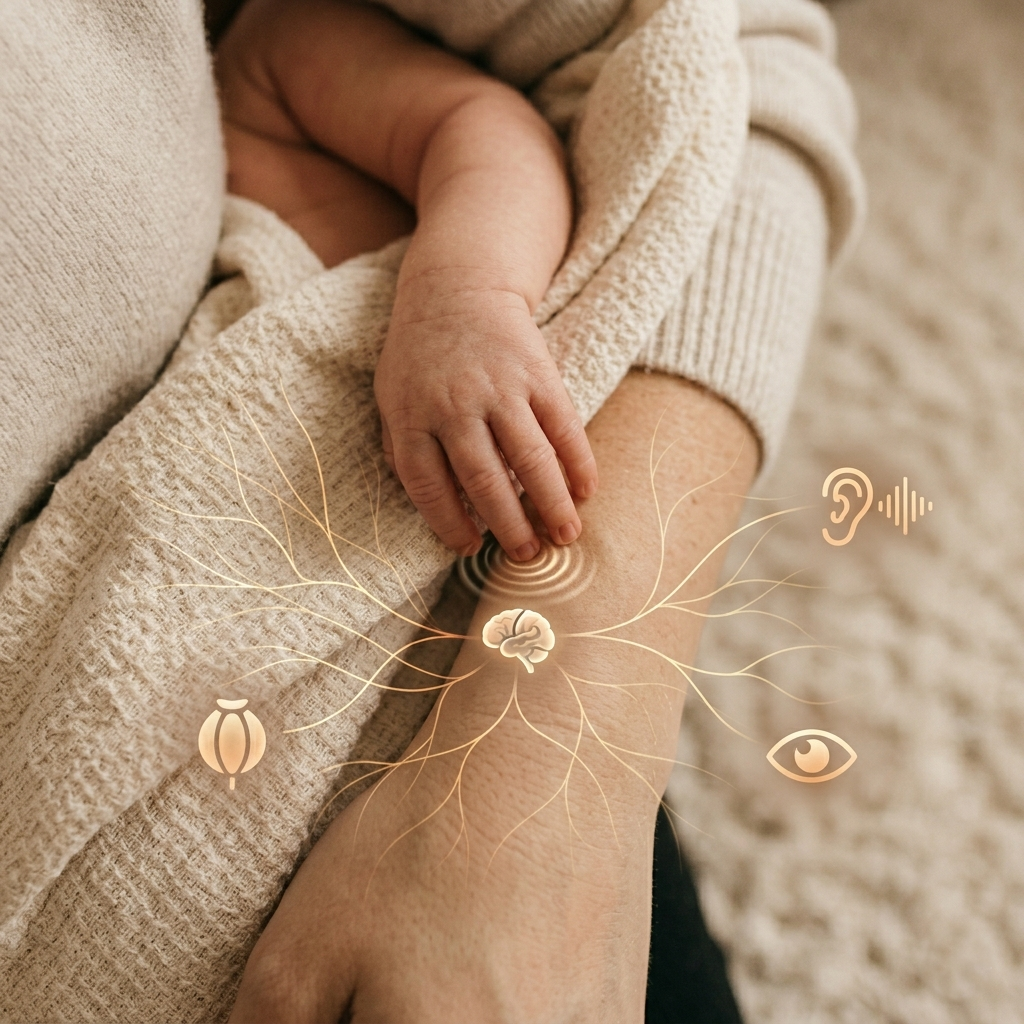
Science confirms that touch is the first sense a baby develops. Unlike vision or hearing, which require external stimuli that are limited inside the womb, the somatosensory system (the system responsible for touch) starts forming around week 7 or 8 of pregnancy.
Initially, this sensitivity begins around the mouth and nose. By week 11, the baby can feel sensations on their palms. By the end of the second trimester, the entire body—excluding the top of the head, which remains less sensitive to protect the brain during birth—becomes responsive to tactile stimulation.
How the Womb Shapes the Mind or What Is the First Sense a Baby Develops?
While in the womb, the baby constantly interacts with their environment. They feel the walls of the uterus, touch their own face, and even grab the umbilical cord. When considering What Is the First Sense a Baby Develops?, these early physical interactions provide the answer. They send vital signals to the developing brain, creating the first neural pathways for spatial awareness and self-recognition.
2. Beyond Touch: The Sequence of Sensory Emergence
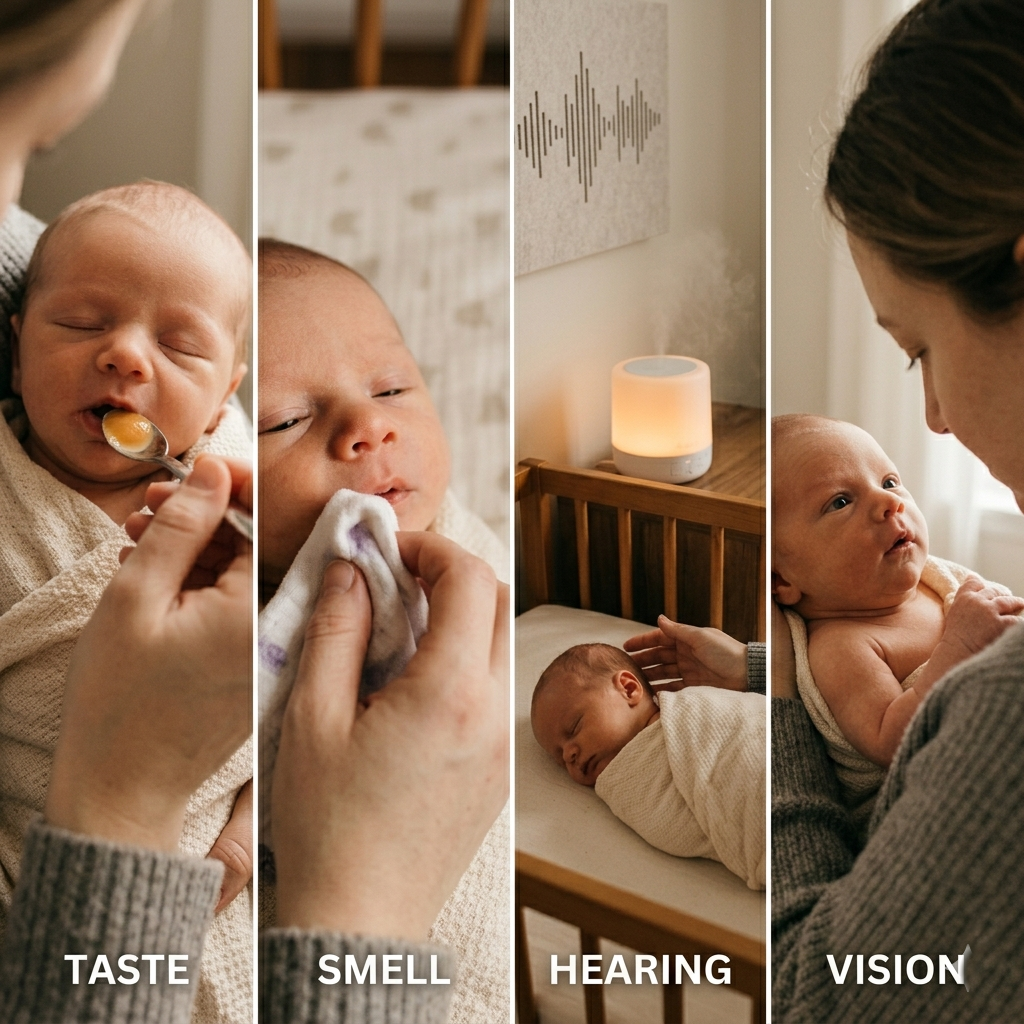
To understand the full scope of your baby’s experience, we must look at how the other four senses follow the lead of touch.
Taste and Smell (Chemosensation)
Following touch, the chemical senses of taste and smell develop. By week 13 to 15, a baby’s taste buds are already functional. They “taste” the flavors of the food the mother eats through the amniotic fluid. This early exposure often influences their food preferences later in life.
Hearing (Audition)
The auditory system becomes functional around week 20. By the third trimester, your baby recognizes the rhythm of your voice and the beat of your heart. This is why newborns often find “white noise” or rhythmic patting soothing—it mimics the internal sounds of the womb.
Vision (Primary Perception)
Vision is the last sense to develop and the least mature at birth. Inside the womb, there is very little to see. At birth, a newborn can only focus on objects about 8 to 12 inches away—the exact distance between a mother’s face and her baby during feeding.
3. Why Touch is the First Sense a Baby Develops and Why it Matters
Understanding that touch comes first allows parents to utilize “Transactional Parenting”—using physical actions to achieve specific developmental outcomes.
Regulating the Nervous System
When you hold your baby skin-to-skin (Kangaroo Care), you initiate a biological transaction. Your body heat stabilizes their temperature; your heartbeat regulates their breathing.
Building Emotional Security
Every gentle stroke and warm embrace tells the baby’s brain that the world is a safe place. This “tactile bonding” releases oxytocin (the love hormone) in both the parent and the child, lowering cortisol levels and reducing stress.
4. Practical Application: Dressing for Comfort and Development
Since touch is so sensitive, the fabrics you choose for your baby act as their primary “filter” for the world. This is especially critical during winter. When you understand What Is the First Sense a Baby Develops?, you realize that every layer of clothing is more than just warmth—it is a continuous sensory experience that can either soothe or irritate your newborn’s highly receptive nervous system.
Choosing Winter Fabrics
When you shop for winter clothes, prioritize organic cotton, bamboo, and merino wool. These materials offer:
-
Breathability: Prevents overheating.
-
Softness: Reduces friction against the delicate skin barrier.
-
Moisture Wicking: Keeps skin dry and free from irritation.
The Psychology of Swaddling
Swaddling mimics the snug pressure of the womb. Because a baby’s first sense is touch, the gentle “hug” of a swaddle provides a sense of boundaries, preventing the startle reflex from waking them up.
5. Stimulating Brain Growth Through Sensory Play
You can actively improve your baby’s brain development by engaging their senses through structured play.
-
Texture Time: Let your baby touch different safe materials—silky ribbons, bumpy rattles, or soft faux fur.
-
The Power of Massage: Use infant-safe oils to give a gentle leg and arm massage. This improves circulation and body awareness.
-
The “Knee Bounce” (Soft Rocking): Gently rocking your baby on your knees stimulates the vestibular system (balance), which works closely with the sense of touch.
6. E-E-A-T: Trustworthy Advice for Every Parent
When researching “what is the first sense a baby develops,” always look for evidence-based sources. Pediatricians emphasize that while gadgets and “brain-training” videos exist, nothing replaces the biological necessity of human touch.
Key Takeaways for Parents:
-
Prioritize Skin-to-Skin: Especially in the first three months (the Fourth Trimester).
-
Monitor Environmental Cues: If a baby is fussy, check for “tactile triggers” like a scratchy tag or a tight sock.
-
Talk and Touch Together: Combining your voice with a gentle caress creates a multi-sensory learning experience that speeds up neural connection.
7. Somatosensory Cortex: The Science Behind What Is the First Sense a Baby Develops
To truly answer what is the first sense a baby develops, we must look at the brain. The somatosensory cortex is the area of the brain that processes touch. In a newborn, this area is much more developed than the visual cortex.
When you touch your baby, receptors in their skin send electrical impulses directly to the brain. These impulses stimulate the production of growth hormones. Without this tactile transaction, a baby’s physical and cognitive growth can actually slow down. This is why doctors emphasize “positive touch”—it is a biological requirement, not just a luxury.
The Role of Nociceptors (Pain Receptors)
Even in the womb, babies develop nociceptors. By the third trimester, a baby can distinguish between a gentle stroke and a sharp poke. This awareness helps them navigate the birth canal, as they respond to the pressure and positioning required for delivery.
8. Transactional Benefits of Winter Layering
When dressing your newborn for the cold, think of each layer as a “sensory transaction.”
-
The Base Layer (The Direct Touch): Use 100% organic cotton. This layer sits against the skin and provides the most constant sensory input.
-
The Middle Layer (The Insulation): This provides the “weight” that babies find comforting. A soft fleece or wool sweater offers a different texture, helping the brain categorize “soft” vs. “fuzzy.”
-
The Outer Layer (The Protection): A windproof bunting or suit protects the baby’s sensory environment from harsh, cold interruptions.
[Image 6: A flat-lay design of essential winter baby clothes, including a cotton onesie, wool leggings, and a soft hat]
9. Cognitive Milestones Linked to Touch
As your baby grows, the sense of touch evolves from a passive experience to an active tool for learning.
-
0–3 Months (Reflexive Touch): The baby uses the “rooting reflex.” When you touch their cheek, they turn to nurse. This is the first link between touch and survival.
-
3–6 Months (Exploratory Touch): The baby begins to reach. They use their hands to “see” objects. If an object feels cold, hard, or soft, the brain records this data immediately.
-
6+ Months (Functional Touch): The baby uses touch to understand cause and effect. They press buttons, splash water, and feel the texture of solid foods.
10. Environmental Harmony: Humidity and Temperature
Because a baby’s skin is so sensitive, the air itself affects their first sense. Winter air is notoriously dry. This dryness can lead to “sensory discomfort” or itchy skin.
Transactional Tip: Use a humidifier in the nursery. By maintaining 40–60% humidity, you protect the baby’s skin barrier. This ensures that their primary sense—touch—remains a source of comfort rather than a source of irritation or pain from dry, cracked skin.
[Image 7: A cozy, dimly lit nursery with a humidifier emitting a gentle mist near a baby’s crib]
11. The “Synonym of Comfort”: Soft Knee Rocking
Parents often look for a “bounce baby on knee synonym” to describe calming techniques. In developmental terms, we call this Vestibular-Tactile Stimulation. When you perform a soft knee rock, you combine the sense of touch (the pressure of your hands) with the sense of balance. This dual-input approach is highly effective for “resetting” a fussy baby’s nervous system. It creates a rhythmic transaction that mimics the mother’s walking gait while the baby was in the womb.
12. Essential Checklist for Newborn Sensory Care
To ensure you are supporting the first sense a baby develops, follow this daily checklist:
-
Check the Neck: Use your hand to touch the back of the baby’s neck. This is the most accurate way to feel their true body temperature.
-
Vary the Textures: During tummy time, place the baby on different fabrics—a quilted mat, a sheepskin rug, or a smooth cotton sheet.
-
Fragrance-Free Zone: The sense of smell is closely linked to touch. Use fragrance-free detergents to avoid chemical irritation on the skin.
-
Daily Skin-to-Skin: Dedicate at least 20 minutes a day to undisturbed chest-to-chest contact.
13. Summary of Neonatal Sensory Rankings
To provide a clear hierarchy for your SEO readers, here is the order of sensory development:
| Sense | Development Starts | Functionality at Birth |
| Touch | 7–8 Weeks (Pregnancy) | High (Primary Sense) |
| Taste | 13–15 Weeks | Moderate (Likes Sweet) |
| Smell | 11–15 Weeks | Moderate (Recognizes Mom) |
| Hearing | 20–24 Weeks | Moderate (Familiar Voices) |
| Vision | 26+ Weeks | Low (Focuses 8–12 inches) |
Final Thoughts: The Language of the Skin
Your baby does not need expensive toys to get a head start in life. They need you. By understanding that touch is the first sense a baby develops, you unlock the key to their emotional and physical world.
Every time you wrap them in a warm blanket, gently rock them on your knees, or choose a soft cotton outfit, you are communicating. You are telling their brain that they are loved, protected, and safe. Start your sensory journey today by prioritizing the power of touch.
FAQ
1. What is the very first sense a baby develops in the womb?
The very first sense a baby develops is touch. Biological studies show that a fetus begins to respond to tactile stimulation around the mouth and nose as early as 8 weeks into pregnancy. This early start makes the skin the baby’s first interface with the world.
2. Can a baby feel pain during the first trimester?
While the neural pathways for touch begin at 8 weeks, the complex connections required to process “pain” as an emotional and sensory experience typically develop later, around the second and third trimesters. However, the baby remains highly sensitive to pressure and movement throughout the entire pregnancy.
3. How does touch influence baby brain development?
Every time you touch your baby, their brain creates new neural connections. Positive touch releases growth hormones and oxytocin. These chemicals lower stress and physically help the brain grow larger and more interconnected. In short, touch is “brain food.”
4. Why is skin-to-skin contact so important after birth?
Skin-to-skin contact, or Kangaroo Care, acts as a biological stabilizer. It helps the newborn regulate their own body temperature and heart rate. Because touch is their most “trusted” sense at birth, being close to your skin reduces their crying and helps them feel safe in a strange new environment.
5. What are the best fabrics for a newborn’s sensitive skin?
Prioritize natural, breathable fibers. Organic cotton, bamboo, and merino wool are the best choices. These fabrics prevent skin irritation and “sensory overload” caused by scratchy synthetic materials. Always choose soft textures to support their delicate sense of touch.
6. When do babies develop the other four senses?
-
Taste and Smell: 13–15 weeks (in the womb).
-
Hearing: 20–24 weeks (they recognize your voice before birth).
-
Vision: Develops last. Newborns see best at a distance of 8–12 inches, which is the distance to your face during feeding.
7. How can I soothe a fussy baby using their sense of touch?
Use rhythmic, tactile stimulation. A gentle “knee bounce” (soft rocking), swaddling, or a warm bath provides the consistent pressure babies find comforting. These actions mimic the snug, moving environment of the womb, quickly calming the infant’s nervous system.
Conclusion: The Foundation of a Lifetime
The sense of touch is more than just a physical feeling; it is the language of love and the blueprint for brain development. By recognizing that touch is the first sense your baby develops, you can make informed, heart-centered decisions about their care, clothing, and environment.
Whether you are choosing the softest winter fleece or simply spending an afternoon in quiet cuddles, you are building the neural foundations that will support your child for years to come. Embrace the power of touch—it is the greatest gift you can give your newborn.