
Weighted blankets have become increasingly popular for both humans and pets. They provide a calming, pressure-like sensation that helps anxious dogs feel safe and secure. But when your heavy pet blanket gets covered in fur, drool, dirt, and that unmistakable dog smell — a question comes to mind: can you actually wash a weighted blanket without ruining it?
The short answer is yes — but there are important rules to follow. Washing a weighted blanket the wrong way can damage the internal filling, cause uneven clumping, break the stitching, or shrink the outer fabric. Done correctly, however, your heavy pet blanket can come out of the wash fresh, clean, and fully intact.
In this complete guide, you will learn exactly how to wash a weighted blanket safely, how to dry it properly, and how to maintain it long-term so it stays in great condition for years to come.
What Is Inside a Weighted Blanket?
Before washing, it helps to understand what you are actually dealing with. The weight in a weighted blanket comes from one of several types of filling material, and each one has slightly different care requirements.
- Glass beads — The most common filling in quality weighted blankets. Small, smooth, and dense. Generally machine-wash safe and hold up well over time.
- Plastic poly pellets — Lightweight plastic beads. Machine washable but can be damaged by high heat in the dryer.
- Steel shot beads — Heavy and durable. Machine washable, but check for any signs of rust after washing if the outer fabric ever tears.
- Sand or rice filling — Found in cheaper blankets. These are almost never machine washable and should only be spot cleaned, as water causes clumping and mold.
- Natural materials (buckwheat, grain) — Completely water-sensitive. These must never be machine washed under any circumstances.
Checking your blanket’s care label before washing is not optional — it is essential. If you are unsure what filling your blanket contains, treat it as delicate until you know for certain.
Can You Wash a Weighted Blanket in a Washing Machine?
Yes — most weighted blankets with glass bead or plastic pellet filling can be safely machine washed. However, the weight of the blanket introduces a practical challenge: your home washing machine may not be able to handle it.
Weight limits by machine type:
- Standard top-load washing machine with agitator — Can typically handle blankets up to 8 to 10 lbs (3.5 to 4.5 kg). The central agitator can also be rough on the stitching of weighted blankets, making this the least ideal machine type.
- Top-load washing machine without agitator — Better option. Can usually handle blankets up to 12 to 15 lbs (5.5 to 7 kg).
- Front-load washing machine — The best home option for weighted blankets. Gentle tumbling action, no agitator, and typically handles blankets up to 15 to 20 lbs (7 to 9 kg).
- Commercial laundromat machine — The safest choice for any blanket over 15 lbs. These machines have large drums, high capacity, and a gentle enough cycle to handle heavy blankets without stress on the seams.
If your weighted blanket is too large or heavy for your home machine, do not force it. An overloaded machine cannot clean effectively and risks damaging both the blanket and the appliance. Take it to a laundromat instead.
Step-by-Step: How to Wash a Weighted Blanket
Follow these steps carefully to wash your heavy pet blanket safely and effectively.
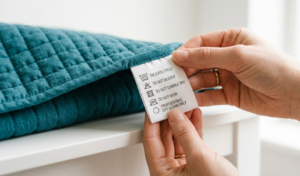
Step 1: Check the Care Label
Always read the manufacturer’s care label before washing. Look for:
- Recommended water temperature
- Whether machine washing is permitted
- Maximum spin speed
- Dryer instructions
- Any filling-specific warnings
If the label says dry clean only, follow that instruction. Some premium weighted blankets use filling materials or outer fabrics that cannot survive a machine wash.
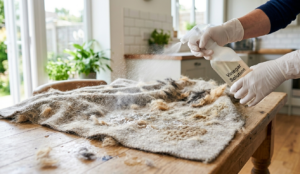
Step 2: Pre-Treat Stains and Remove Hair
Before washing, take care of visible stains and pet hair:
- Remove loose fur using a lint roller, rubber gloves, or the dry dryer trick (10 minutes on air-only cycle before washing)
- Spot treat stains by applying a small amount of mild, pet-safe detergent or a diluted white vinegar solution directly to the stained area. Let it sit for 10 to 15 minutes before washing.
- Check all seams and stitching for any weak points or tears before putting the blanket in the machine. Washing with damaged seams can cause the filling to escape and clog your machine.
Step 3: Load the Washing Machine Correctly
- Place the blanket in the drum alone — never with other laundry. The weight and bulk need space to move freely.
- For top-load machines, drape the blanket evenly around the drum rather than bunching it on one side. Uneven loading causes the machine to vibrate excessively during spin.
- For front-load machines, simply place the blanket inside loosely without folding it tightly.
Step 4: Choose the Right Detergent and Settings
- Detergent: Use a mild, gentle, or hypoallergenic detergent. Avoid anything with strong fragrances, brighteners, or bleach. For pet blankets specifically, a fragrance-free formula is best — strong scent residue can bother your dog’s sensitive nose.
- Amount: Use slightly less detergent than usual. Weighted blankets are thick and heavy, making it harder to fully rinse out excess soap. Detergent residue left in the fabric can stiffen the blanket and irritate skin.
- Water temperature: Always use cold or warm water — never hot. Hot water can damage the outer fabric, affect the filling material, and cause shrinkage.
- Cycle: Select the gentle or delicate cycle. This minimizes the mechanical stress on the blanket’s stitching and seams.
- Spin speed: Choose a low spin speed. High-speed spinning puts enormous stress on the seams of a heavy blanket and can cause stitching to tear.
- Extra rinse: Always add an extra rinse cycle to ensure all detergent is fully flushed out of the thick filling.
Step 5: Inspect Before Drying
When the wash cycle ends, remove the blanket and inspect it carefully before drying:
- Feel for any areas where filling has shifted significantly or clumped together — gently redistribute it with your hands.
- Check all seams for any signs of tearing or loosening.
- Give the blanket a firm shake to help redistribute the filling evenly.
Do not skip this step. Drying a blanket with unevenly distributed filling causes permanent lumpy spots that are very difficult to fix later.
How to Dry a Weighted Blanket
Drying is the most critical part of washing a weighted blanket — and the most commonly done wrong.
Air Drying (Best Option)
Lay the blanket flat on a clean surface outdoors or on a large drying rack. Flat drying is important for weighted blankets — hanging them on a line while wet causes the filling to shift downward under the weight, creating an uneven distribution that may not recover fully.
- Flip the blanket every 1 to 2 hours to ensure even drying on both sides
- In direct sunlight, a weighted blanket can take 4 to 8 hours to dry completely depending on thickness
- Make absolutely sure it is bone dry before using or storing — even slight dampness deep inside a thick weighted blanket can lead to mold and mildew
Machine Drying (Use With Caution)
Many weighted blankets can be tumble dried, but you must follow these guidelines:
- Use low heat only — never high heat. High temperatures can melt plastic pellet filling, damage glass bead coatings, shrink the outer fabric, and weaken seams.
- Add dryer balls — two or three wool or rubber dryer balls help distribute the heat evenly and prevent the filling from clumping on one side.
- Dry in long cycles with breaks — run a 30-minute cycle, remove and shake/redistribute the filling, then run another 30-minute cycle. Repeat until the blanket is completely dry. This prevents overheating in any one spot.
- Check the center of the blanket before assuming it is dry — the thick middle section holds heat and moisture far longer than the edges.
How Often Should You Wash a Heavy Pet Blanket?
The right washing frequency depends on how heavily your dog uses the blanket and how much they shed:
- Light use, low shedding — Wash every 3 to 4 weeks
- Regular daily use, moderate shedding — Wash every 2 weeks
- Heavy use, high shedding breed — Wash once a week
- After illness or accident — Wash immediately, regardless of the regular schedule
Because weighted blankets take significantly longer to wash and dry than regular blankets, using a removable cover is a smart maintenance strategy (more on this below).
Maintenance Tips to Keep Heavy Pet Blankets in Great Condition
Washing is only one part of proper blanket maintenance. These habits will keep your weighted pet blanket cleaner for longer and extend its usable life significantly.
Use a Removable Cover
This is the single most practical tip for anyone with a dog and a weighted blanket. A removable duvet-style cover slips over the outside of the blanket and takes the full brunt of fur, drool, and dirt. The cover can be removed and washed every few days with your regular laundry — quickly and easily — while the weighted blanket itself only needs a full wash every few weeks.
Look for covers made from tightly woven microfiber or canvas — these materials resist pet hair far better than fleece or cotton.
Spot Clean Between Washes
For small stains or isolated dirty patches, spot cleaning is far more practical than a full wash. Apply a small amount of mild detergent or undiluted white vinegar to the stained area, work it in gently with a soft brush or cloth, and blot clean with a damp towel. Allow the spot to air dry completely before using the blanket.
De-Hair Before Every Wash
Always remove as much dog hair as possible before the blanket goes into the machine. Pet hair clumps and mats deeply into fabric during a wash cycle, making it much harder to remove afterward. Use a lint roller, rubber gloves, or the pre-dryer trick every time.
Store It Properly
When the blanket is not in use, store it in a breathable cotton or canvas bag rather than a plastic bin. Plastic traps moisture, which can cause mildew in the thick filling even if the blanket was fully dry when stored. Keep it in a cool, dry location away from direct sunlight for extended storage.
Inspect Seams Regularly
Weighted blankets take considerably more stress during washing than regular blankets due to their weight. Check all seams and stitching after each wash. If you notice any weak points or small tears, repair them before the next wash — even a small gap in the seam can allow filling to escape into your machine during a wash cycle.
Rotate the Blanket
If your dog always uses the same corner or area of the blanket, that section will wear out and mat faster than the rest. Rotating the blanket 180 degrees every week or two distributes the wear more evenly across the whole surface.
Common Mistakes to Avoid When Washing Weighted Blankets
- Using too much detergent: Excess soap is nearly impossible to fully rinse out of thick, heavy filling. Use less than you think you need and always add an extra rinse.
- Washing on hot: Hot water damages filling materials, shrinks fabric, and weakens seams. Always use cold or warm.
- High-speed spin cycles: The centrifugal force of a fast spin is extremely hard on weighted blanket seams. Always choose the lowest spin speed available.
- Drying on high heat: This is one of the most common causes of damaged weighted blankets. Low heat always — and check it frequently during the drying cycle.
- Overloading the machine: If the blanket barely fits, it will not get clean. The drum needs space to agitate properly.
- Not checking for dryness before storing: A weighted blanket that feels dry on the outside can still hold significant moisture deep in the filling. Press your hand firmly into the center — if it feels even slightly cool or damp, it needs more drying time.

FAQ
Can I wash a weighted blanket at home or does it need a laundromat? It depends on the weight of your blanket and the capacity of your home machine. Blankets under 12 lbs can usually be washed in a front-load home machine on a gentle cycle. Blankets over 15 lbs are better suited to a large commercial laundromat machine,
Can weighted blankets be dry cleaned? Some weighted blankets — particularly those with delicate outer fabrics or natural filling materials — specify dry cleaning only on their care label. Always follow the manufacturer’s instructions. For blankets that can be machine washed, dry cleaning is unnecessary and more expensive.
How do I know if my weighted blanket is completely dry? Press your palm firmly into the center of the blanket. If it feels even slightly cool, damp, or heavier than the edges, it is not fully dry. The center of a thick weighted blanket can retain moisture for hours after the outside feels dry to the touch. When in doubt, give it more drying time.
What happens if I wash a weighted blanket that says dry clean only? Washing a dry-clean-only weighted blanket in a machine can cause the outer fabric to shrink or felt, the filling to clump permanently, the inner stitching to break down, or the internal beads to shift in ways that cannot be corrected. If the label says dry clean only, take it to a professional cleaner.
Can the filling come out during washing? It can if there is any damage to the seams before washing. Always inspect seams carefully before each wash and repair any weak spots or small tears immediately. If filling escapes into your machine during a wash cycle, clean the drum thoroughly before running another load.
Final Thoughts
Washing a weighted pet blanket does not have to be complicated or stressful — as long as you follow the right steps. Check the care label, use a gentle cycle with cold water and mild detergent, load the machine correctly, and dry on low heat with dryer balls. These simple rules protect the filling, preserve the stitching, and keep the blanket working exactly as it should.
For ongoing maintenance, a removable cover is the smartest investment you can make. It dramatically reduces how often the weighted blanket itself needs a full wash, protects the outer fabric from daily wear, and makes the routine cleanup of pet fur, drool, and dirt quick and effortless.
Treat your weighted pet blanket with a little care, and it will last for years — giving your dog the comfort and security they love every single day.
Quick Care Recap:
- Always check the care label before washing
- Remove pet hair before every wash
- Use cold or warm water on a gentle cycle
- Use mild, fragrance-free detergent — less than usual
- Always add an extra rinse cycle
- Dry on low heat with dryer balls — or air dry flat
- Inspect seams after every wash
- Use a removable cover for easier daily maintenance