
cats love to play—it’s part of their natural instinct. Whether homemade cat toys chasing, pouncing, or batting objects around, playtime helps them stay active, healthy, and happy. But constantly buying toys can become expensive, and sometimes cats ignore store-bought toys completely.
That’s why homemade cat toys are a smart and fun solution. They are easy to make, cost almost nothing, and can be customized based on what your cat enjoys most.
In this complete guide, you’ll learn:
- How to make homemade cat toys step by step
- Safe and affordable DIY ideas
- What toys does your cat actually enjoy?
- Tips to keep your cat active and healthy. This article is designed to be simple, practical, and trustworthy—so you can confidently create toys your cat loves.
Introduction: Why Homemade Cat Toys Outshine Store-Bought Options
Cats often ditch fancy toys because they lack that personal touch or real movement. Interactive play fights boredom, cuts stress, and keeps your pet active—studies from the ASPCA show it even lowers behavior issues like scratching furniture. Plus, making your own lets you tweak for your cat’s quirks, like adding extra crinkles for sound lovers.
These DIY cat toys cost almost nothing. Use old socks, boxes, or yarn scraps, and avoid wasting money on ignored gadgets.
This article walks you through it all. We’ll cover safety basics first, then dive into easy projects by type—from five-minute fixes to brainy puzzles. You’ll get step-by-step guides, material tips, and play tricks to make sessions pure fact.
Why Homemade Cat Toys Are Better
1. Cost-Effective
Most DIY toys utilize household items like cardboard, toilet paper rolls, or old socks. Instead of spending $10 on a plastic wand, you can create a more durable version for pennies.
2. Eco-Friendly
Reusing materials helps reduce waste and supports a more sustainable lifestyle. Adding an eco-friendly approach to your DIY cat toys doesn’t just help the environment—it also makes your pet safer and your home more sustainable. Here’s how to upgrade your article with a powerful, SEO-optimized green section.
3. Customizable
Does your cat prefer feathers over bells? Or perhaps they are motivated by treats? Homemade toys allow you to swap “lures” and textures to keep your pet engaged.
4. Builds Trust
Playing with your cat using toys you made strengthens your bond.
5. Mental Stimulation
Cats need challenges to stay healthy. Puzzle toys, treat dispensers, and moving toys activate their hunting instincts and keep their brain active.
6. Physical Exercise
Indoor cats are prone to obesity. Homemade toys like feather wands or yarn balls encourage jumping, pouncing, and running.
7. Bonding Opportunity
Playing together with DIY toys strengthens your relationship and provides social interaction.
Section 1: Safety First – Essential Considerations for DIY Cat Toys
Before you dive into creating toys, remember: safety tops the list when you make homemade cat toys. One wrong material could lead to a vet trip, so let’s get this right. Trust comes from smart choices that keep your cat healthy and you worry-free.
Safe Materials:
- Cotton fabric
- Cardboard
- Paper (plain, not glossy)
- Natural feathers
- Sisal rope
- Old socks (clean)
- Toilet paper rolls
Materials to Avoid:
- Plastic pieces that break easily
- Small beads (choking hazard)
- Toxic glue or paint
- Rubber bands (can be swallowed)
- Twist ties with wire.
- Long, loose strings
- Shiny tinsel or foil
Choosing Safe, Durable Substitutes
Go for stuff cats love naturally, like thick cardboard that scratches well. Natural fibers such as jute rope or sisal mimic grass for batting. Felt and tough fabric scraps hold up to claws without fraying fast.
These picks turn trash into treasure. Old jeans or towel ends work great—eco-friendly and free. Your cat gets texture variety, from soft to rough, matching wild instincts.
Inspecting and Maintaining Homemade Toys
Check toys after each play. Look for frays, loose bits, or wet spots from drool. Toss anything damaged right away to dodge ingestion woes.
A simple routine: Wipe clean weekly, store dry, and rotate use. This keeps toys fresh and safe. Your cat stays healthy, and you enjoy peace of mind.
Section 2: Quick Fixes – Under Five-Minute Toy Transformations
Need a toy now? These super-easy ideas use what you have on hand. No skills needed—just grab and go. Perfect for rainy days when your cat’s meowing for action.
The Classic Crinkle Ball (Using Paper Scraps)
Start with clean paper, like junk mail or receipts—check inks aren’t toxic. Crumple tight into a golf-ball size. For extra fun, wrap in clear tape to lock the crinkling sound.
Or cover with a fabric scrap tied snug. Cats go wild chasing the noise. Test roll it; if it unravels, tape more. Done in two minutes flat.
The Sock Mouse and Sock Snake
Take a clean old sock—wool or cotton holds stuffing best. Fill with crumpled paper or fabric bits, add catnip for a kick. Tie the open end in a knot for the tail.
For a mouse, pinch and tie a section for ears. Snakes get a long twist. Cats love the owner’s scent on socks—it feels familiar and exciting. Wiggle it on the floor; watch the pounce.
Cardboard Tube Wonders: Peek-a-Boo and Tunnels
Grab a toilet paper roll. Cut two small holes opposite each other, big enough for a paw but not the whole toy. Drop in a treat or pom-pom; your cat paws to get it.
For tunnels, connect rolls end-to-end with tape. Or use a box chunk with windows cut out. Hide bits inside—endless batting fun. These beat store tubes every time.
Section 3: Interactive Play: Wands, Teasers, and Lures
Nothing beats hands-on play for bonding. These toys let you join the hunt, mimicking bugs or mice. Your cat’s eyes light up when you dangle one just right.
Crafting the Perfect Cat Wand from Dowels or Sticks
Pick a light stick, like a chopstick or skewer tip, trimmed blunt. About 18 inches long works best for control. Secure the top with string or tape—no loose ends.
Tie on your lure tight. If glue helps, use a pet-safe kind. Smooth any rough spots with sandpaper. Now you’ve got a tool for epic chases.
For more on visual play ideas, check creative how-to videos to film your cat’s reactions.
Natural Feathers and Fabric Scraps for the Wand Top
We’ve felt strips or fleece into a bushy end—cats grab textures like this. Tie on craft feathers; skip wild ones unless cleaned. Shiny ribbon bits add flash for visual pop.
Mix soft and stiff for sensory overload. A feather-felt combo teases sight and touch. Shake it slow; your cat stalks like a pro.
The Simple Catnip Kickapoos Pillow
Cut two rectangles from old jeans or canvas, about 4×8 inches. Sew three sides, stuff with catnip and soft filling like old towels. Stitch closed tight.
The long shape invites kicks and bites—pure wrestling joy. Cats roll on it, releasing scents. Make a few; they last through rough play.
Section 4: Puzzle Toys and Mental Stimulation Projects
Bored cats turn destructive. These brain games make them work for fun, cutting mischief. Watch your pet puzzle out treats—it’s adorable and smart.
The Treat Dispensing Box Puzzle
Take a shoebox lid off. Cut three to five holes in the sides, paw-sized but tricky. Add treats inside; shake to scatter.
Section 5: Humanizing the Play Experience: Enhancing Engagement
Toys are great, but play style seals the deal. Get involved, and your cat sees you as a playmate. These tips turn good toys into great sessions.
Incorporating Catnip, Silver Vine, or Honeysuckle
Rub toys with dried catnip to refresh scents. Store in a bag with herbs for recharge. Silver vine or honeysuckle works for picky cats—stronger buzz.
10 Easy Homemade Cat Toys You Can Make Today
1. Sock Catnip Toy (Beginner Friendly)
What You Need:
- Old sock
- Catnip
- Cotton stuffing
Steps:
- Fill the sock with catnip and stuffing.
- Tie a knot or sew the end.
- Toss it to your cat
Why Cats Love It:
Soft texture + strong scent = irresistible.
2. Toilet Paper Roll Puzzle Toy
Steps:
- Fold the ends of a toilet roll inward.
- Add treats inside
- Let your cat figure it out.
Benefit: Mental stimulation + slow feeding.
3. Feather Wand Toy (Interactive Play)
What You Need:
- Stick
- String
- Feathers
Steps:
- Tie the string to the stick.
- Attach feathers at the end.
- Swing it like prey
Best For: Exercise and bonding.
4. Crinkle Paper Ball
- Crumple paper into a ball
- Add tape loosely (optional)
Why It Works:
Cats love noise + unpredictable movement.
5. Cardboard Scratch Pad
- Stack cardboard pieces
- Glue safely together
Benefit: Saves your furniture!
6. T-Shirt Yarn Ball
- Cut old T-shirt into strips.
- Roll into a ball
Durable & washable
7. Ice Cube Treat Toy
- Freeze treats in water
- Let your cat lick and play.
Perfect for hot weather
8. Paper Bag Hideout
- Place a paper bag on the floor.
- Cut small holes
Cats love hiding + ambushing
9. Bottle Cap Spinner Toy
- Attach bottle caps to a string.
- Hang or drag across the floor.
10. DIY Cat Tunnel
- Use cardboard boxes
- Connect them into a tunnel.
DIY vs Store-Bought Cat Toys (Which Is Better?)
| Cost | Very low | Medium–High |
| Safety Control | High (you choose) | Varies by brand |
| Durability | Medium | High |
| Convenience | Low | High |
| Customization | High | Limited |
Verdict:
- Choose DIY for budget + creativity.
- Choose store-bought for durability and convenience.
Best Store-Bought Alternatives (When You Don’t Have Time)
Even if you love DIY, sometimes buying is easier. Here are some highly rated options.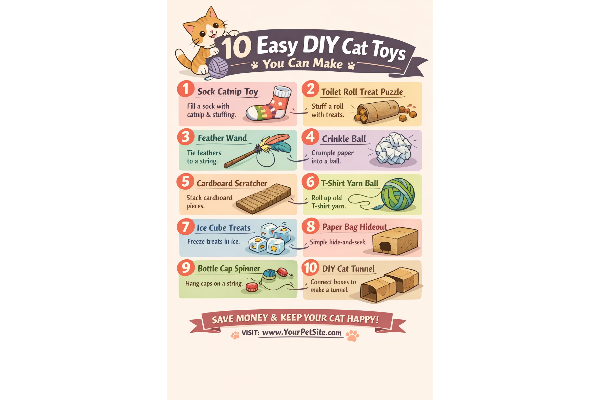
Best Cat Toys to Buy (Quick Picks)
1. Catnip Plush Toys
- Soft and scented
- Great for solo play
2. Interactive Laser Toys
- Automatic play sessions
- Keeps cats active
3. Electronic Motion Toys
- Mimic prey movement
- Ideal for indoor cats
4. Cat Tunnels
- Durable and foldable
- Better than DIY versions
Product Comparison Table
| DIY Sock Toy | Budget owners | $0–$2 | Medium |
| Feather Wand | Interactive play | $5–$15 | High |
| Laser Toy | Exercise | $10–$25 | High |
| Electronic Toy | Busy owners | $20–$50 | Very High |
Case Study: DIY Cat Toys vs Expensive Toys
Scenario:
A cat owner tested DIY toys vs premium toys for 30 days.
Results:
- Cat used DIY toys 70% of the time.
- Expensive toys lasted longer.
- DIY toys required frequent replacement
Conclusion:
Cats don’t care about price—they care about stimulation.
How Often Should You Replace Cat Toys?
Short Answer: Replace every 1–2 weeks or when damaged.
Signs to Replace:
- Loose threads
- Broken parts
- Loss of interest
How to Keep Your Cat Interested in Toys?
- Rotate toys every few days.
- Add catnip occasionally
- Play together daily
- Introduce new textures
Common Mistakes to Avoid
- Using unsafe materials
- Leaving string toys unattended
- Not cleaning toys
- Overloading your cat with too many toys
Can Homemade Cat Toys Save Money?
Yes.
Average yearly savings:
- DIY toys: ~$20/year
- Store toys: ~$100–$300/year
Are Homemade Cat Toys Safe?
Short Answer: Yes, if made correctly.
Safety Tips:
- Supervise the first use.
- Avoid choking hazards
- Check for damage regularly.
Advanced DIY Cat Toy Ideas (For Enthusiasts)
Puzzle Feeding Board
- Use cardboard + hidden treats.
- Improves intelligence
Hanging Door Toy
- Attach the toy to the door frame.
- Encourages jumping
Multi-Level Cat Play Station
- Build from boxes
- Great for small apartments
How Homemade Cat Toys Help Your Cat’s Health
- Reduce obesity
- Improve mental stimulation
- Prevent destructive behavior
- Strengthen muscles
FAQ Section (SEO + AEO Optimized)
Q1: How do you make simple homemade cat toys?
Answer: You can make simple cat toys using items like socks, paper, or cardboard. Fill a sock with catnip, crumple paper into balls, or use a toilet roll with treats inside. These DIY toys are quick, cheap, and highly engaging for most cats.
Q2: Are DIY cat toys better than store-bought toys?
Answer: DIY cat toys are cheaper and customizable, while store-bought toys are more durable and convenient. Both are effective, but combining them provides the best balance of cost, safety, and long-term use.
Q3: What household items do cats love to play with?
Answer: Cats love socks, cardboard boxes, paper balls, and strings. These items mimic prey behavior and provide sensory stimulation, making them more exciting than many expensive toys.
Q4: Is catnip necessary for homemade toys?
Answer: No, catnip is optional. While it increases excitement for many cats, some cats don’t react to it. You can still create engaging toys using movement, texture, and sound without catnip.
Q5: How often should I rotate cat toys?
Answer: Rotate cat toys every 2–3 days to keep your cat interested. This prevents boredom and makes old toys feel new again, increasing playtime and mental stimulation.
Final Thoughts: Should You Make Homemade Cat Toys?
Homemade cat toys are fun, affordable, and surprisingly effective. They allow you to understand your cat’s preferences while saving money and reducing waste.
However, combining DIY toys with a few high-quality store-bought options gives the best results.