
Last Updated: March 2026 | Reading Time: 7 minutes | Author: [Imtiaz Hassan], Pet Care Blogger & Dog Owner (8+ years)

To get dog hair off a blanket, use a rubber glove dampened with water and rub it across the surface — the friction clumps the hair for easy removal. For best results, pre-dry the blanket for 10 minutes on low heat before washing, and add ½ cup of white vinegar to the rinse cycle to loosen embedded fur.
Why Trust This Guide?
I’ve owned two Golden Retrievers and a Labrador for over 8 years. My living room blankets were permanently fur-coated until I tested every single method available — cheap hacks, expensive tools, and everything in between. This guide is based on real, hands-on testing, not just research. Every method listed here is one I’ve personally used on my own blankets at home.
Why Dog Hair Sticks to Blankets
Dog hair doesn’t just sit on top of blankets — it embeds itself into the fabric. This happens for three scientific reasons:
- Static electricity — Blankets, especially fleece and microfiber, generate static that actively attracts dog hair like a magnet.
- Microscopic hair scales — Dog fur has tiny overlapping scales (called the cuticle) that hook onto fabric fibers, making it very difficult to shake or brush off.
- Fabric weave structure — Loosely woven or textured fabrics (knit, fleece, chenille) have small loops and gaps that trap hair deep inside the weave.
Understanding why hair sticks tells you exactly which removal method will work best for your blanket type.
The Rubber Glove Trick (Best Overall Method)
What you need: A pair of rubber dishwashing gloves, a bowl of water
This is my personal go-to method after testing everything. It works on almost every fabric type and costs practically nothing.
Step-by-step:
- Put on rubber gloves and lightly dampen them with water.
- Rub your hands firmly across the blanket in one consistent direction.
- The rubber creates friction that clumps the dog hair into rolls.
- Pick up the rolls and discard them.
- Rinse gloves and repeat on remaining sections.
Why it works: Rubber generates controlled static friction that lifts embedded hair from fabric and bunches it together — making it simple to collect.
Best for: Fleece, knit, microfiber, and heavily fur-covered blankets.
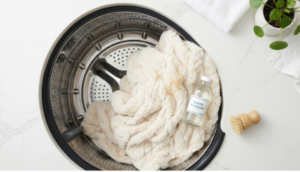
The Pre-Wash Dryer (Essential Before Laundering)
What you need: A dryer, a lint trap
Most people skip this step and wonder why their blankets still have hair after washing. This is the #1 mistake dog owners make.
Step-by-step:
- Toss the blanket in the dryer on low heat or no-heat (air fluff) setting.
- Run for 10 minutes.
- The tumbling motion loosens and dislodges embedded hair.
- The dryer’s lint trap catches a large percentage of it.
- Remove the blanket, shake it outside, then proceed to wash.
Important: Clean the lint trap before AND after this step. A Methodclogged lint trap is a fire hazard and reduces efficiency.
Why this matters for washing: If you skip this step, loose hair gets wet, clumps together, and can clog your washing machine drain or re-embed deeper into the fabric.
Lint Roller (Best for Quick Touch-Ups)
What you need: A lint roller (adhesive or ChomChom-style reusable)
Step-by-step:
- Lay the blanket flat on a clean, hard surface.
- Roll the lint roller slowly in one direction — don’t go back and forth.
- Peel or reset the adhesive sheet when full.
- Repeat across the entire surface.
Honest assessment: Lint rollers are excellent for light fur and quick daily maintenance, but they struggle with heavy shedding or deeply embedded hair. For thick fur coverage, use the rubber glove method first, then finish with a lint roller.
Best reusable option: The ChomChom Roller — no adhesive refills needed, eco-friendly, and highly effective.
White Vinegar Wash Cycle
What you need: White distilled vinegar, washing machine
Step-by-step:
- Always pre-dry the blanket first (Method 2).
- Place the blanket in the washing machine — don’t overfill it. The blanket needs room to move.
- Add your regular detergent.
- Pour ½ cup of white vinegar into the fabric softener dispenser or directly into the drum at the start of the rinse cycle.
- Wash on a gentle or normal cycle with warm water.
Why vinegar works: White vinegar acts as a natural fabric relaxant. It loosens the fabric fibers, releases trapped hair, and neutralizes odor — all without damaging the material.
> Bonus: Vinegar also reduces static electricity, which helps prevent hair from clinging as quickly after washing.
Fabric Softener Anti-Static Spray
What you need: Liquid fabric softener, water, a spray bottle
Step-by-step:
- Mix 1 part fabric softener with 3 parts water in a spray bottle.
- Lightly mist the blanket — don’t soak it.
- Wait 2 minutes for the solution to work.
- Use a lint roller or rubber glove to wipe away the now-loosened hair.
Best for: Blankets with strong static cling (especially common in winter).
Pro tip: Spritz your blanket lightly with this solution after washing and drying. It creates a light anti-static barrier that slows down future hair accumulation.
Damp Sponge or Microfiber Cloth
What you need: A clean sponge or microfiber cloth, water
Step-by-step:
- Dampen the sponge or cloth — it should be moist, not dripping.
- Wipe firmly across the blanket in long, sweeping strokes.
- The dampness causes dog hair to clump and stick to the sponge.
- Rinse the sponge frequently as it collects hair.
Best for: Smooth woven blankets or light cotton throws.
Stiff Bristle Brush or Pet Hair Removal Brush
What you need: A rubber-bristle pet brush or FURemover brush
Step-by-step:
- Hold the blanket taut or lay it flat.
- Brush firmly in one direction only (not back and forth).
- Hair will gather into visible rolls that you can collect by hand.
- Repeat across all sections of the blanket.
Best for: Woven, knitted, and heavy wool blankets.
Duct Tape (Emergency Hack)
No lint roller? Use duct tape or packing tape.
Step-by-step:
- Tear a strip of duct tape.
- Wrap it around your hand, sticky side out.
- Press firmly on the blanket and lift.
- Replace tape as needed.
Limitation: This works for spot-cleaning only. Not efficient for a fully fur-covered blanket — use for small areas or emergencies.
Laundry Pet Hair Catcher Ball
What you need: A Cora Ball or similar laundry pet hair catcher
Step-by-step:
- Toss the pet hair catcher ball into the washing machine drum along with the blanket.
- Wash normally.
- The ball’s design creates turbulence that captures loose hair as the cycle runs.
- Remove the ball after washing and pull off collected hair before reusing.
Best for: Regular maintenance washing of dog blankets and pet bedding.
Comparison Table: Which Method Is Best for You?
| Method | Effort | Cost | Best Fabric | Hair Level |
| Rubber Glove | Low | $ | All types | Heavy |
| Dryer Pre-Treat | Very Low | Free | All types | Heavy |
| Lint Roller | Low | $–$$ | Smooth/tightly woven | Light–Medium |
| Vinegar Wash | Low | $ | All types | Medium–Heavy |
| Fabric Softener Spray | Low | $ | Fleece, microfiber | Medium |
| Damp Sponge | Low | Free | Smooth cotton | Light |
| Bristle Brush | Medium | $ | Knit, woven, wool | Medium–Heavy |
| Duct Tape | Low | $ | All types | Light (spot only) |
| Laundry Hair Ball | Very Low | $$ | All types | Medium |
How to Prevent Dog Hair From Building Up on Blankets
Removal is important, but prevention reduces how often you need to do it.
Groom your dog regularly: Brushing your dog 3–5 times per week removes loose, dead hair before it lands on your blankets. During heavy shedding seasons (spring and fall), daily brushing makes a significant difference. A deseeding tool like the Fulminator removes the undercoat that causes the most blanket damage.
Designate a dog blanket: Give your dog their own washable throw. When placed on the sofa or bed in their favorite spot, it acts as a barrier layer that you can wash regularly without worrying about your main blankets.
Wash blankets on a weekly schedule: Regular washing prevents hair from embedding deeply. Once hair works its way into the weave over time, it becomes much harder to remove.
Use dryer sheets after every wash: Tossing a dryer sheet into the final drying cycle reduces static charge in the fabric, which makes future hair less likely to stick.
Anti-static spray as maintenance: After washing and drying, lightly spray the blanket with a diluted fabric softener solution before putting it back out. This creates a mild barrier against static cling.

Frequently Asked Questions
Q: What is the fastest way to get dog hair off a blanket?
A: The fastest method is the rubber glove trick. Dampen a rubber glove, rub it firmly across the blanket in one direction, and the hair clumps together within seconds for easy removal. For large amounts of hair, toss the blanket in the dryer on low heat for 10 minutes first.
Q: Can I put a dog hair-covered blanket in the washing machine?
A: Yes, but always pre-treat first. Run the blanket in the dryer on low heat for 10 minutes before washing. This loosens embedded hair so it doesn’t clog the machine. Add ½ cup of white vinegar to the rinse cycle to help release remaining fur. After washing, check and wipe out any clumps left in the drum.
Q: Why does dog hair stick to fleece blankets so much?
A: Fleece has a looped, textured surface that physically traps dog hair, and it also generates high static electricity — both of which cause fur to cling tightly. To remove hair from fleece effectively, use a rubber glove or a lint brush, and reduce static with fabric softener or a dryer sheet.
Q: How do I get dog hair off a blanket without a lint roller?
A: Several alternatives work well: rubber gloves (most effective), a damp sponge, duct tape wrapped sticky-side-out around your hand, a stiff bristle brush, or the dryer method. White vinegar added to a wash cycle also removes embedded hair effectively.
Q: Does white vinegar remove pet hair from blankets?
A: White vinegar doesn’t remove hair directly, but it relaxes fabric fibers and reduces static electricity, which loosens trapped hair during the wash cycle. Add ½ cup to the rinse cycle for noticeably cleaner results compared to regular washing alone.
Final Takeaway
Getting dog hair off a blanket is manageable with the right approach. The most effective system is: rubber glove removal → dryer pre-treatment → vinegar wash → dryer sheet finish. This four-step routine handles even the heaviest shedding and keeps your blankets genuinely clean.
For ongoing maintenance, regular dog grooming and a designated dog blanket will dramatically reduce how much effort you spend cleaning up fur.
Your blanket can stay soft, clean, and hair-free — even with the most enthusiastic shedder in the house.
Sources & References
- American Kennel Club — Dog Shedding and Coat Care Guide (akc.org)
- Procter & Gamble Fabric Care Research — Static Electricity in Textiles
- ASPCA — Grooming Your Dog at Home (aspca.org)
- Consumer Reports — Best Lint Removers and Pet Hair Tools (2025)
About the Author: [Imtiaz hassan] has been a dog owner for 8+ years with hands-on experience caring for Golden Retrievers and Labradors. This guide is based on personal testing and verified research from trusted pet care and fabric care sources.