
If that heat is not managed and monitored correctly, you risk thermal throttling, random system crashes, and permanent damage to your expensive hardware. Furthermore, many PC users do not realize their system is overheating until it is too late.
In this comprehensive guide, we will walk you through exactly how to monitor CPU heat using the best free software, how to understand normal versus dangerous temperature ranges, and what actionable steps you can take if your processor is running too hot.
Why Learning How to Monitor CPU Heat is Crucial
You might be wondering why you need to actively check your temperatures if your computer has built-in fans. While modern PCs have safeguards, they are not foolproof. Understanding how to monitor CPU heat provides three massive benefits for your system.
BEST APP TO CHECK PC TEMPRETURE CLICK HERE
Preventing Thermal Throttling
Firstly, when a CPU gets too hot (usually approaching 90°C), it initiates a self-preservation protocol called “thermal throttling.” Consequently, the processor intentionally slows down its clock speed to generate less heat. If your games are suddenly lagging or your software is freezing, thermal throttling is often the culprit. By monitoring your temperatures, you can identify this bottleneck.
Extending Hardware Lifespan
Secondly, extreme heat degrades silicon over time. Running a processor at 85°C constantly will significantly shorten its lifespan compared to running it at a comfortable 65°C. Therefore, keeping an eye on your heat levels is an investment in the longevity of your hardware.
Diagnosing Hardware Failures
Finally, a sudden spike in CPU temperature is the clearest indicator of a hardware issue. It usually means a fan has died, your liquid cooler pump has failed, or your thermal paste has completely dried out. [Insert Internal Link Here: Link to a related article on your site, e.g., “How to apply thermal paste” or “Best PC cases for airflow”]
Normal vs. Dangerous PC Temperatures: How to Monitor CPU Heat What to Look For
Before we dive into the software, you need a baseline. When you learn how to monitor CPU heat, you need to know what numbers are actually safe. While exact tolerances vary between Intel and AMD processors, these general rules apply to almost all modern desktop CPUs:
-
Under 40°C (Idle): This is excellent. Your PC is doing basic tasks like web browsing or resting.
-
40°C to 65°C (Light Load): Perfectly normal for standard office work, watching YouTube, or light multitasking.
-
65°C to 80°C (Heavy Load): This is the sweet spot for heavy gaming, video rendering, and intensive tasks. Your cooling system is working as intended.
-
80°C to 90°C (Warning Zone): Your system is running very hot. While most modern CPUs can handle this briefly, you should not sustain these temperatures for long periods.
-
Over 90°C (Danger Zone): At this stage, your CPU is likely thermal throttling to prevent a fire. If it hits 100°C to 105°C, your PC will usually force an automatic emergency shutdown.
The Best Software for How to Monitor CPU Heat
The easiest way to check your temperatures is by using third-party diagnostic software. Windows does not have a comprehensive, built-in temperature overlay, so downloading a trusted utility is required. Here are the top three free tools for the job.
1. HWMonitor (Top Pick for Detailed Data)
CPUID’s HWMonitor is arguably the most popular hardware monitoring program in the world. It is lightweight, free, and provides an incredible amount of data.
When you open HWMonitor, scroll down to the section with your processor’s name (e.g., Intel Core i7 or AMD Ryzen 7). Under the “Temperatures” tree, you will see the current, minimum, and maximum heat levels for every individual core in your processor, as well as the overall “Package” temperature.
2. Core Temp (Best for Simplicity)
If HWMonitor looks too complicated, Core Temp is the perfect alternative. It does one thing and does it perfectly: it shows your CPU temperature. Moreover, it places a tiny, unobtrusive temperature gauge right in your Windows taskbar (system tray). This allows you to see exactly how to monitor CPU heat at a glance without having to open a large application window.
3. MSI Afterburner (Best for Gamers)
If you want to know how to monitor CPU heat while you are playing a video game, MSI Afterburner is the industry standard. [Insert External Link Here: Link to the official MSI Afterburner download page].
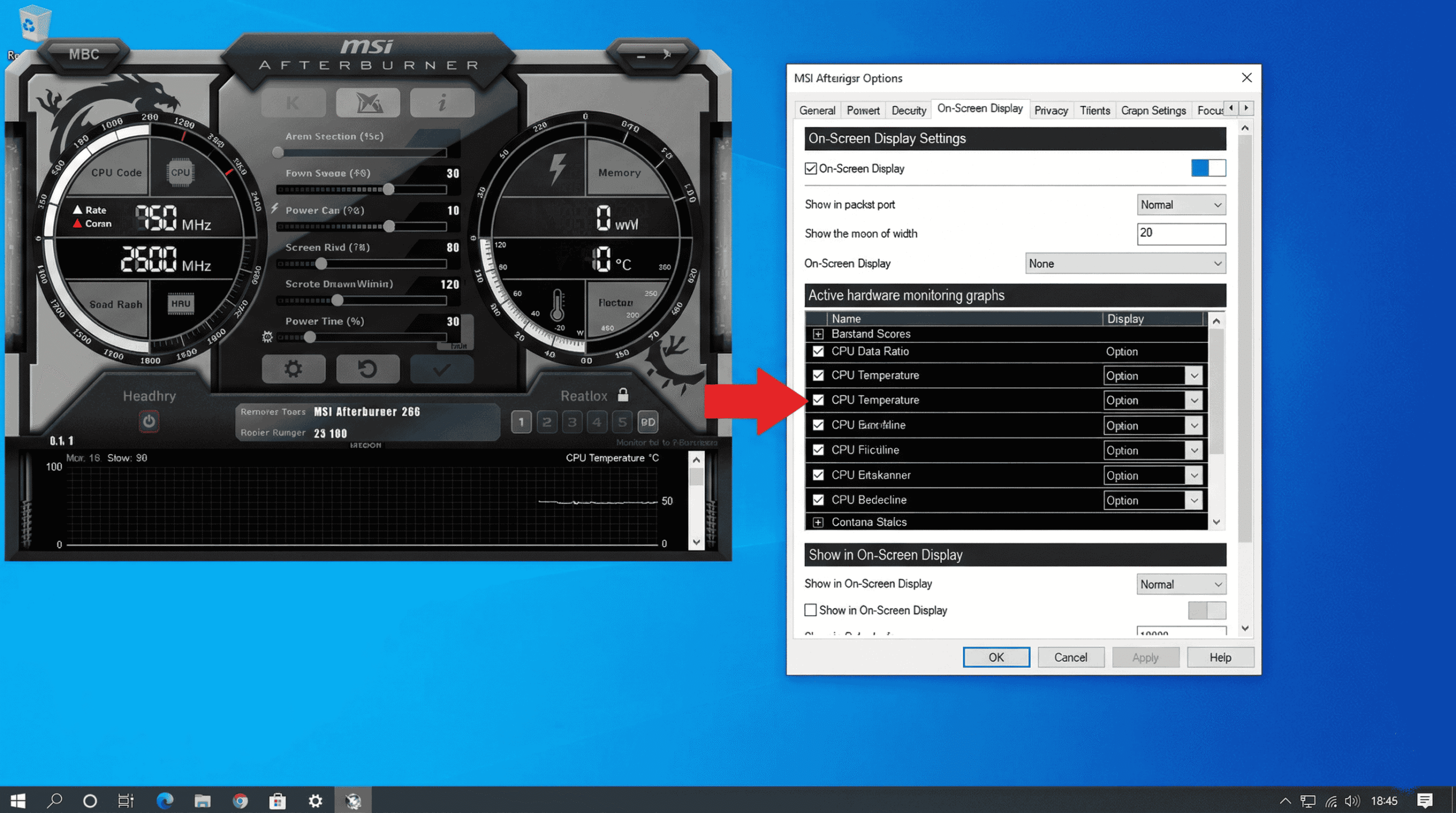
While it is famous for overclocking graphics cards, it includes an amazing feature called the “On-Screen Display” (OSD) via RivaTuner. This overlay places your CPU temperature, GPU temperature, and frame rate in the corner of your screen while you are gaming, allowing you to monitor heat under heavy loads in real-time.
How to Monitor CPU Heat Using the BIOS/UEFI
If you do not want to install third-party software, or if you suspect your PC is overheating before Windows even boots up, you can check your temperatures in the BIOS.
-
Restart your computer.
-
As the system boots up (before the Windows logo appears), rapidly press your motherboard’s BIOS key. This is usually Delete, F2, F10, or F12.
-
Once inside the BIOS/UEFI screen, navigate to the Hardware Monitor, H/W Monitor, or PC Health Status tab.
-
Here, you will see the raw CPU temperature reading directly from the motherboard’s sensors.
Keep in mind that BIOS temperatures represent an “idle” state, as no background applications or heavy loads are running.
Step-by-Step: How to Monitor CPU Heat While Gaming
Gamers put more stress on their processors than almost anyone else. Therefore, testing your temperatures under a gaming load is the most accurate way to gauge your cooling system’s health.
-
Download and Install Core Temp or HWMonitor.
-
Open the Software: Leave the application running in the background. Take note of the current “Idle” temperature.
-
Launch a Demanding Game: Open a visually intensive game and play it normally for at least 15 to 20 minutes. This gives the PC time to reach its maximum thermal load.
-
Alt-Tab and Check: Minimize the game and look at the “Maximum” column in your monitoring software.
-
Analyze the Data: If your maximum temperature stayed under 80°C, your system is perfectly healthy. If it breached 90°C, you have a cooling problem that needs to be addressed.
Solutions: What to Do If Your CPU is Too Hot
If you have learned how to monitor CPU heat and discovered that your processor is baking, do not panic. Overheating is a common issue with several straightforward fixes.
Clean Your PC’s Airflow Pathways
Dust is the enemy of electronics. Over time, dust bunnies clog up your intake fans, exhaust grilles, and the metal fins of your CPU heatsink. Consequently, fresh air cannot get in, and hot air cannot escape. Turn off your PC, unplug it, take it outside, and use a can of compressed air to thoroughly blow out all the dust.
Reapply Thermal Paste
Thermal paste is the conductive compound that sits directly between your CPU and the metal cooler. Its job is to transfer heat efficiently. However, after two to three years, this paste dries out, turns chalky, and loses its conductivity. Removing your cooler, wiping away the old crusty paste with isopropyl alcohol, and applying a pea-sized drop of fresh, high-quality thermal paste can drop your temperatures by 10°C to 15°C instantly.
Upgrade Your CPU Cooler
If you are still using the stock cooler that came free in the box with your processor, you are severely limiting your thermal headroom. Upgrading to a robust aftermarket air cooler (like those from Noctua or be quiet!) or an All-in-One (AIO) liquid cooler will drastically reduce your CPU heat and allow for higher performance.
[Insert Image 3: A person carefully applying a small, pea-sized drop of grey thermal paste onto the center of a clean, silver CPU chip installed in a motherboard. | Alt Text: Applying thermal paste to fix overheating after learning how to monitor CPU heat]
Conclusion
Your computer’s processor is a massive investment, and heat is its biggest threat. By learning exactly how to monitor CPU heat, you empower yourself to catch small issues before they turn into catastrophic hardware failures.
Whether you choose the detailed readouts of HWMonitor, the simplicity of Core Temp, or the real-time gaming overlay of MSI Afterburner, keeping an eye on those numbers ensures your PC runs faster, quieter, and longer. Remember to check your temperatures once a month, keep your fans free of dust, and never ignore a sudden spike in heat.
If you want to look for more product please CLICK HERE