
As a dedicated dog owner, you know that your pet’s health involves more than just a shiny coat and a wagging tail. One of the most critical, yet often neglected, areas of canine hygiene is ear care. Understanding how to clean dog ears at home naturally is essential for preventing painful infections, costly vet visits, and long-term hearing issues.
In this exhaustive guide, we will explore the safest natural dog ear cleaner recipes, identify the symptoms of dog ear mites, and provide a step-by-step roadmap to maintaining your dog’s ear health using simple, non-toxic ingredients found in your kitchen.
1. Understanding the Canine Ear: Why “Natural” is Superior
The canine ear canal is fundamentally different from a human’s. While our ear canal is a straight shot to the eardrum, a dog’s ear is “L-shaped.” This vertical-to-horizontal bend is a perfect breeding ground for bacteria, yeast, and parasites because it traps moisture and debris deep inside.
The Hidden Dangers of Commercial Cleaners
Many store-bought cleaners contain:
- Isopropyl Alcohol: This can be incredibly drying, leading to micro-cracks in the skin that invite infection.
- Artificial Fragrances: These are often used to mask odors but can trigger severe allergic reactions.
- Parabens and Sulfates: Used as preservatives, these chemicals can disrupt a dog’s hormonal balance over time.
By learning how to clean dog ears with vinegar or other botanical oils, you avoid these toxins while effectively balancing the ear’s delicate pH levels.
2. Identifying Common Ear Problems
A. Symptoms of Dog Ear Mites
Ear mites are tiny parasites that feed on earwax and oils. They are highly contagious between pets.
- The “Coffee Ground” Appearance: If the ear is filled with dark, crumbly, reddish-brown debris, it is a primary sign of mites.
- Constant Scratching: Mites cause intense itching. You may notice your dog scratching their ears frantically or rubbing them against the carpet.
- Head Tilting: Your dog may hold their head at an odd angle to alleviate the discomfort of moving parasites.
B. Signs of Yeast Infection in Dog Ears
Yeast thrives in the warm, moist environment of an “L-shaped” canal.
- The Signature Smell: A yeasty infection often smells like corn chips, old sourdough bread, or sweet rot.
- Discharge: Look for a greasy, brownish-yellow or greyish substance.
- Inflammation: The inner flap (pinna) will look bright red and feel warm to the touch. This is a clear sign of a yeast infection in a dog’s ears.
3. Top Natural Ingredients for Your DIY Cleaner
To be effective, a natural dog ear cleaner recipe must be gentle yet powerful enough to break down lipids (fats) in the wax.
1. Organic Apple Cider Vinegar (ACV)
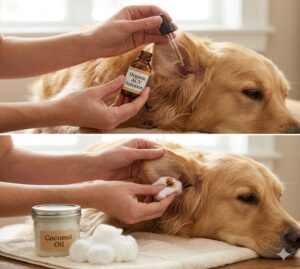
ACV is a powerhouse. It contains acetic acid, which kills yeast and bacteria by altering the pH of the ear environment.
- Safety Note: Always dilute it! Never use straight ACV, as it is too acidic.
- Preparation: Mix 50% ACV with 50% distilled or filtered water.
2. Virgin Coconut Oil
Coconut oil is rich in lauric acid, which possesses natural anti-fungal and anti-bacterial properties. It is the best dog ear infection home remedy for dogs with dry, “crusty” ears.
3. Green Tea
Believe it or not, cooled green tea is a fantastic, gentle antiseptic. It contains polyphenols that soothe inflammation. It’s perfect for maintenance cleaning in dogs with very sensitive skin.
Step 1: Preparation and Calmness
Gather your natural dog ear cleaner recipe, a handful of clean cotton balls, and a soft towel. Choose a time when your dog is relaxed—perhaps after a long walk. Have high-value treats ready to build a positive association.
Step 2: Application
Gently pull the ear flap (pinna) upward to straighten the vertical canal. Pour a small amount of the solution into the ear. Crucial: Do not let the tip of the bottle touch the ear, as this can transfer bacteria back into the bottle.
Step 3: The Deep Base Massage
Massage the base of the ear (the cartilage area near the jaw) for 30–60 seconds. You should hear a “squelching” or “squishy” sound. This indicates the solution is breaking down the wax deep inside.
Step 4: The Shake
Step back! Your dog will instinctively shake their head. This “head shake” uses centrifugal force to bring the loosened debris from the deep horizontal canal to the outer vertical canal, where you can reach it.
Step 5: The Wipe-Away
Use a clean cotton ball to wipe away the visible debris. Only wipe the parts of the ear you can see. Never use Q-tips inside the canal; they can easily rupture the eardrum.
4. How to clean dog ears at home naturally. The Professional Step-by-Step Cleaning Process
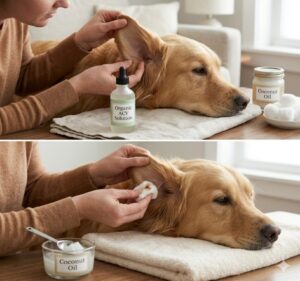
Execution is everything. If performed incorrectly, you could push debris deeper into the horizontal canal, causing an impaction.
Step 1: Preparation and Calmness
Gather your natural dog ear cleaner recipe, a handful of clean cotton balls, and a soft towel. Choose a time when your dog is relaxed—perhaps after a long walk. Have high-value treats ready to build a positive association.
Step 2: Application
Gently pull the ear flap (pinna) upward to straighten the vertical canal. Pour a small amount of the solution into the ear. Crucial: Do not let the tip of the bottle touch the ear, as this can transfer bacteria back into the bottle.
5. Preventing Recurring Infections: A Holistic Approach
Learning how to clean dog ears at home naturally is only half the battle. You must address the root causes of the buildup.
- Dry Ears After Water Activities: Moisture is the enemy. Whether it’s a bath or a swim in the lake, always use a dry cloth to dab the entrance of the canal.
- Dietary Adjustments: Many chronic ear issues are actually secondary symptoms of food allergies. If your dog has recurring signs of yeast infection in the ears, consider switching to a limited-ingredient diet. High-sugar carbohydrates in kibble often “feed” the yeast in the body.
- Hair Plucking: Some breeds, like Poodles or Schnauzers, grow hair inside the canal. This traps wax and prevents airflow. Discuss with your groomer about keeping this area clear.
6. When to Stop: The Limits of Home Care
- Hematoma: The ear flap is swollen like a pillow (caused by ruptured blood vessels from excessive shaking).
- Loss of Balance: If your dog is walking in circles or stumbling, the infection may have reached the inner ear.
- Severe Pain: If your dog yips or snaps when you touch their ear.
- Blood: If there is blood or pus coming from the canal.
7. The Science of pH Balance and Microbial Flora
Understanding how to clean dog ears with vinegar requires a basic grasp of ear chemistry. A healthy dog’s ear canal maintains a slightly acidic pH (between 5.5 and 7.2). This acidity acts as a natural “acid mantle” that inhibits the overgrowth of opportunistic pathogens.
When a dog swims or lives in a humid environment, moisture gets trapped in the L-shaped canal, causing the pH to become more alkaline. An alkaline environment is an open invitation for yeast (Malassezia) and bacteria (Staphylococcus). By using a natural dog ear cleaner recipe containing diluted Apple Cider Vinegar, you are manually restoring that acidic barrier. This “reset” makes it impossible for yeast to colonize, which is why it is considered the gold standard dog ear infection home remedy.
8. Breed-Specific Ear Care: Floppy vs. Upright Ears
Not all ears are created equal, and your cleaning schedule should reflect your dog’s genetics.
- The “Heavy-Flap” Breeds (Cocker Spaniels, Basset Hounds, Labradors): These breeds are the most susceptible to signs of yeast infection in dog ears. Their heavy ear flaps act like a lid, trapping heat and moisture inside. For these dogs, a weekly inspection is mandatory.
- The “Hairy-Canal” Breeds (Poodles, Schnauzers, Shih Tzus): These dogs grow hair inside the ear canal itself. This hair catches wax and debris, creating a “plug.” While some experts debate plucking, keeping the hair trimmed short helps air circulate.
- The “Open-Air” Breeds (German Shepherds, French Bulldogs): These dogs have “prick ears” that stay upright. While they have great airflow, they are “dust magnets.” They rarely get yeast infections but often suffer from environmental allergies and debris buildup.
9. Holistic Supplements and Internal Ear Support

True ear health starts from the inside. If you are constantly searching for a dog ear infection home remedy, the problem might be systemic.
- Omega-3 Fatty Acids: High-quality fish oil reduces skin inflammation. Since the ear canal is lined with skin, Omega-3s make the lining less reactive to allergens.
- Quercetin: Known as “Nature’s Benadryl,” this supplement helps suppress the histamine response that causes red, itchy ears in the first place.
- Probiotics: Supplementing with Lactobacillus acidophilus helps compete with yeast in the gut. Believe it or not, a healthy gut biome significantly reduces the frequency of signs of yeast infection in dog ears.
10. Navigating the Horizontal Canal: The “Squish” Technique
The biggest mistake owners make is only cleaning the part of the ear they can see. The dog’s ear canal goes down (vertical) and then takes a sharp 90-degree turn inward (horizontal) toward the brain. To effectively use your natural dog ear cleaner recipe, you must fill the canal until you see liquid at the top. Then, you must perform the “Deep Base Massage.” Place your thumb and forefinger at the base of the ear (you will feel the hard cartilage of the tube) and massage vigorously. This “squishy” action creates hydraulic pressure that forces the liquid into the horizontal canal, loosening the deep-seated symptoms of dog ear mites or wax that a simple wipe would miss.
11. Desensitization: Training for a Lifetime of Easy Cleaning
Many dogs develop “ear phobia” because owners only touch their ears when they are already in pain. To master how to clean dog ears at home naturally, you must practice “Cooperative Care.”
- Touch and Treat: Daily, touch your dog’s ears gently and give a treat. Do not clean them; just touch.
- The Bottle Introduction: Let them sniff the cleaning bottle and treat.
- The Cotton Ball Rub: Rub a dry cotton ball on the ear flap and treat.
- The Final Step: Only when they are comfortable with the above should you introduce the liquid. This prevents the “chase” around the living room and makes the process a bonding experience rather than a battle.
12. Seasonal and Environmental Adjustments
Your ear care routine should change with the calendar.
- Spring/Fall Allergy Seasons: During high pollen counts, ears become inflamed. You may need to clean more frequently (every 4–5 days) to wash out allergens before they cause an infection.
- Summer Humidity: High heat and humidity are the primary drivers of yeast. If you live in a tropical or humid climate, use a natural dog ear cleaner recipe that includes a drying agent like Witch Hazel.
- Winter Dryness: In winter, indoor heating can dry out the skin in the ears, causing itching that owners mistake for an infection. In this case, a few drops of warm Virgin Coconut Oil can provide instant relief without the need for acidic cleaners.
Frequently Asked Questions (FAQ)
Q1. Can I use rubbing alcohol to clean my dog’s ears?
Ans: Absolutely not. Alcohol is too harsh and will cause extreme pain if the ear is already irritated or has micro-cuts. Stick to a diluted natural dog ear cleaner recipe.
Q2. My dog’s ears smell like “Fritos” or corn chips. What is it?
Ans: This is a classic sign of a mild yeast overgrowth. While common, it needs to be treated with a pH-balancing wash (like the vinegar mix) to prevent it from turning into a full infection.
Q3. How often should I clean my dog’s ears?
Ans: For a healthy dog with upright ears, once a month is usually enough. For dogs with floppy ears (like Basset Hounds or Labradors), once a week or bi-weekly is recommended to prevent moisture buildup.
Q4. Are ear mites visible to the naked eye?
Ans: Usually, they are not. They are microscopic. However, you can see the results of their presence—the dark, coffee-ground-like debris known as “mite frass.”
Q5. Can I use hydrogen peroxide?
Ans: Most modern vets discourage this. Hydrogen peroxide is mostly water; while it bubbles and lifts wax, the leftover water in the ear can actually encourage bacterial growth if not dried perfectly.
Final Thoughts
Mastering how to clean dog ears at home naturally is a rewarding skill that strengthens the bond between you and your pet. By using simple ingredients like Apple Cider Vinegar, Coconut Oil, and Green Tea, you provide a chemical-free environment for your dog to thrive.
Regular monitoring and a gentle touch will keep those tails wagging and those ears healthy for years to come. Remember, if you are ever in doubt, consult your veterinarian to ensure your pet’s safety.