
The Best Fabrics for Yoga Clothing: A Beginner’s Complete Guide
Yoga is more than just movement — it’s a mindful practice that demands clothing which moves with you, not against you. For beginners, the right fabric can make the difference between feeling comfortable and confident on the mat or constantly adjusting, sweating uncomfortably, or dealing with irritation. This guide breaks down everything you need to know about the best fabrics for yoga clothing, especially if you’re just starting out. We’ll cover key properties, top recommendations, comparisons, care tips, and shopping advice — all tailored for new yogis.
Why Fabric Choice Matters for Yoga Beginners
When you’re new to yoga, every pose feels unfamiliar. Your focus should stay on breath and alignment, not on whether your leggings are riding up or your top is clinging with sweat. The ideal yoga fabric offers four core benefits: breathability to prevent overheating, moisture-wicking to keep you dry, four-way stretch for full range of motion, and softness to avoid skin chafing.
Beginners often practice in varied environments — home, studio, or park — and may not yet know their preferred style (gentle Hatha vs. sweaty Vinyasa). A good fabric adapts across sessions. Poor choices, like heavy cotton that holds moisture, can leave you feeling sticky and distracted, while overly rigid synthetics restrict movement. Investing early in the right fabrics builds confidence and encourages consistency.
Essential Properties to Look for in Yoga Fabrics
Before diving into specific materials, understand what makes a fabric “yoga-ready”:
- Breathability: Allows air circulation so you stay cool during Sun Salutations.
- Moisture-wicking: Draws sweat away from the skin and evaporates it quickly.
- Stretch and Recovery: Four-way stretch (horizontal and vertical) with excellent shape retention after repeated bends and twists.
- Softness and Anti-Chafing: Flatlock seams and smooth texture prevent irritation during floor work or hip openers.
- Quick-Drying: Essential if you practice hot yoga or live in humid climates.
- Odor Resistance: Many modern fabrics use silver-ion or natural treatments to stay fresh longer.
- Durability: Withstands frequent washing without pilling or losing elasticity.
Beginners should prioritize these over trendy prints or ultra-compression. Look for labels mentioning “performance blend,” “moisture-wicking,” or “4-way stretch.”
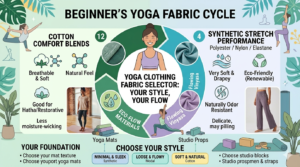
Natural Fabrics: Timeless Comfort for Gentle Practice
Cotton Pure cotton feels incredibly soft against the skin and is budget-friendly. It’s highly breathable and absorbent, making it suitable for gentle, low-sweat styles like restorative or Iyengar yoga. However, cotton soaks up moisture and holds it, becoming heavy and clingy during any cardio or hot sessions. For beginners doing 30-minute home flows, a lightweight cotton-blend tank is fine, but avoid 100% cotton leggings.
Bamboo Bamboo viscose or rayon is a game-changer for beginners. It’s naturally hypoallergenic, ultra-soft (often softer than cotton), and has excellent moisture-wicking and anti-bacterial properties. Bamboo regulates temperature well, keeping you cool in summer and warm in cooler studios. It’s also eco-friendly, requiring less water and pesticides than conventional cotton. Many beginner-friendly brands offer bamboo tops and leggings that feel like a second skin. Downside: slightly less stretch than synthetics unless blended with spandex.
.
Synthetic Fabrics: Performance-Driven Choices for Everyday Yoga
Polyester The most common base in yoga wear — and often the best starter fabric. Polyester is lightweight, quick-drying, and extremely durable. When blended with spandex (usually 5-15%), it delivers superior four-way stretch and shape retention. Moisture-wicking versions pull sweat away instantly, ideal for Vinyasa, Power, or hot yoga. Beginners benefit from its affordability and longevity; a good polyester-spandex pair can last years with proper care. Look for recycled polyester for a greener option.
Nylon Similar to polyester but often smoother and more abrasion-resistant. Nylon blends feel silky and glide easily during floor poses. It’s excellent for compression-style leggings that stay put during inversions or warrior flows. Many high-performance yoga pants use nylon-spandex for a buttery-soft hand feel.
Spandex / Elastane / Lycra Not used alone, but the secret ingredient in almost every great yoga legging (usually 10-20% content). It provides the stretch that lets you move freely in splits, backbends, or binds. Higher spandex percentages mean better recovery — your clothes snap back into shape after every downward dog.
Blends The sweet spot for beginners is often polyester-nylon-spandex or polyester-bamboo-spandex. These combine the best traits: wicking + softness + stretch. Popular examples include 80% polyester / 20% spandex leggings that cost under $30 yet perform like premium gear.
Synthetics dominate active yoga because they handle sweat and movement better than naturals alone.
Eco-Friendly and Innovative Fabrics for Conscious Beginners
Sustainability matters to many new yogis. Look for:
- Recycled Polyester (from plastic bottles): Same performance, lower environmental impact.
- Organic Cotton: Grown without harmful chemicals — softer and safer for sensitive skin.
- Hemp Blends: Naturally antimicrobial and UV-protective, though less stretchy.
- Merino Wool Blends: Surprisingly good for yoga — temperature-regulating and odor-resistant, though rarer and pricier for hot climates.
Brands using OEKO-TEX or GOTS certifications ensure fabrics are free from harmful chemicals, which is reassuring for skin-contact clothing.
Fabric Recommendations by Yoga Style
- Gentle / Restorative Yoga: Bamboo, modal, or lightweight cotton — maximum softness, minimal wicking needed.
- Vinyasa / Flow: Polyester-spandex or nylon blends — sweat management and stretch are key.
- Hot Yoga / Bikram: High-wicking synthetics with quick-dry tech; avoid cotton entirely.
- Yin or Meditation: Ultra-soft bamboo or Tencel for long holds on the floor.
- Outdoor / Park Yoga: Breathable bamboo or treated polyester with UPF protection.
Start with one versatile pair of mid-rise polyester-spandex leggings and a moisture-wicking tank. Expand your wardrobe as you discover your style.
How to Care for Your Yoga Clothing to Make It Last
Proper care extends the life of even the best fabrics:
- Wash in cold water on gentle cycle.
- Turn garments inside out to protect prints and reduce pilling.
- Avoid fabric softener — it coats fibers and reduces wicking.
- Air-dry when possible; low-heat tumble dry only if necessary.
- For odor-prone synthetics, add white vinegar or baking soda occasionally.
- Store folded, not crumpled, to maintain elasticity.
With good care, beginner-friendly leggings can survive 100+ washes.
Shopping Tips for Beginners on a Budget
- Start with 2-3 versatile pieces rather than a full wardrobe.
- Check reviews for “true to size,” “doesn’t pill,” and “holds shape.”
- Look for sales at brands like Decathlon, Old Navy Active, or Amazon basics — excellent entry-level performance fabrics.
- Test stretch by pulling the fabric in-store; it should return to shape instantly.
- Prioritize dark colors or patterns to hide sweat marks initially.
Common Mistakes to Avoid
- Choosing 100% cotton for sweaty classes.
- Ignoring seam quality (chafing ruins practice).
- Buying based on looks alone without checking stretch percentage.
- Overlooking label care instructions.
Conclusion
For yoga beginners, the best fabrics balance comfort, performance, and value. Polyester-spandex blends offer the most reliable all-rounder, while bamboo and modal provide luxurious softness with eco-credentials. Experiment gradually — your body and practice will tell you what feels best. The right fabric removes distractions, letting you focus on growth, breath, and presence on the mat.
(Word count: 1,478)
FAQ: Best Fabrics for Yoga Clothing – Beginners’ Questions Answered
1. What is the single best fabric for beginner yoga clothing? A polyester-spandex blend (typically 80-85% polyester, 15-20% spandex) is the top recommendation for most beginners. It offers excellent stretch, moisture-wicking, quick-drying, and durability at an affordable price.
2. Is cotton good for yoga? Only for very gentle, low-sweat sessions. Pure cotton absorbs moisture and stays wet, which can feel uncomfortable. Opt for cotton blends or switch to bamboo for better performance.
3. Which fabric is best for hot yoga? High-performance polyester or nylon blends designed with advanced wicking technology. Avoid cotton and heavy natural fibers completely.
4. Are bamboo fabrics worth the extra cost for beginners? Yes — they are exceptionally soft, breathable, and naturally odor-resistant. Great investment if you have sensitive skin or prefer an eco-friendly option.
5. How much spandex should yoga clothes have? 10-20% is ideal for most leggings and tops. This percentage gives full mobility without feeling too compressive for beginners.
6. Do synthetic fabrics smell after workouts? They can retain odor more than naturals, but many now include antimicrobial treatments. Proper washing (cold water, no softener) and occasional vinegar soaks keep them fresh.
7. What’s the most sustainable fabric choice? Recycled polyester, organic cotton, Tencel, or bamboo. Look for certifications like GOTS or OEKO-TEX.