Your washing machine works hard, but it also needs regular cleaning. Over time, dirt, leftover soap, and mold can build up inside. When that happens, clothes may smell musty, washes may not come out as clean, and the machine can wear out faster.In this guide, we explain why washing machine cleaning matters and how to sanitize a Washing Machine with Bleach. We also share what cleaners work well, how to clean a washing machine step by step, and simple habits that keep the machine fresh between deep cleans.
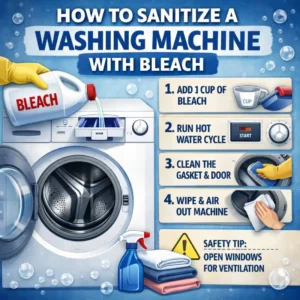
Why Does Your Washing Machine Need Sanitizing?
Before we dive into the how-to, let’s discuss why this matters. Many people assume a machine that washes clothes must clean itself in the process. Unfortunately, that’s not how it works.
Here’s what’s actually living inside your washer:
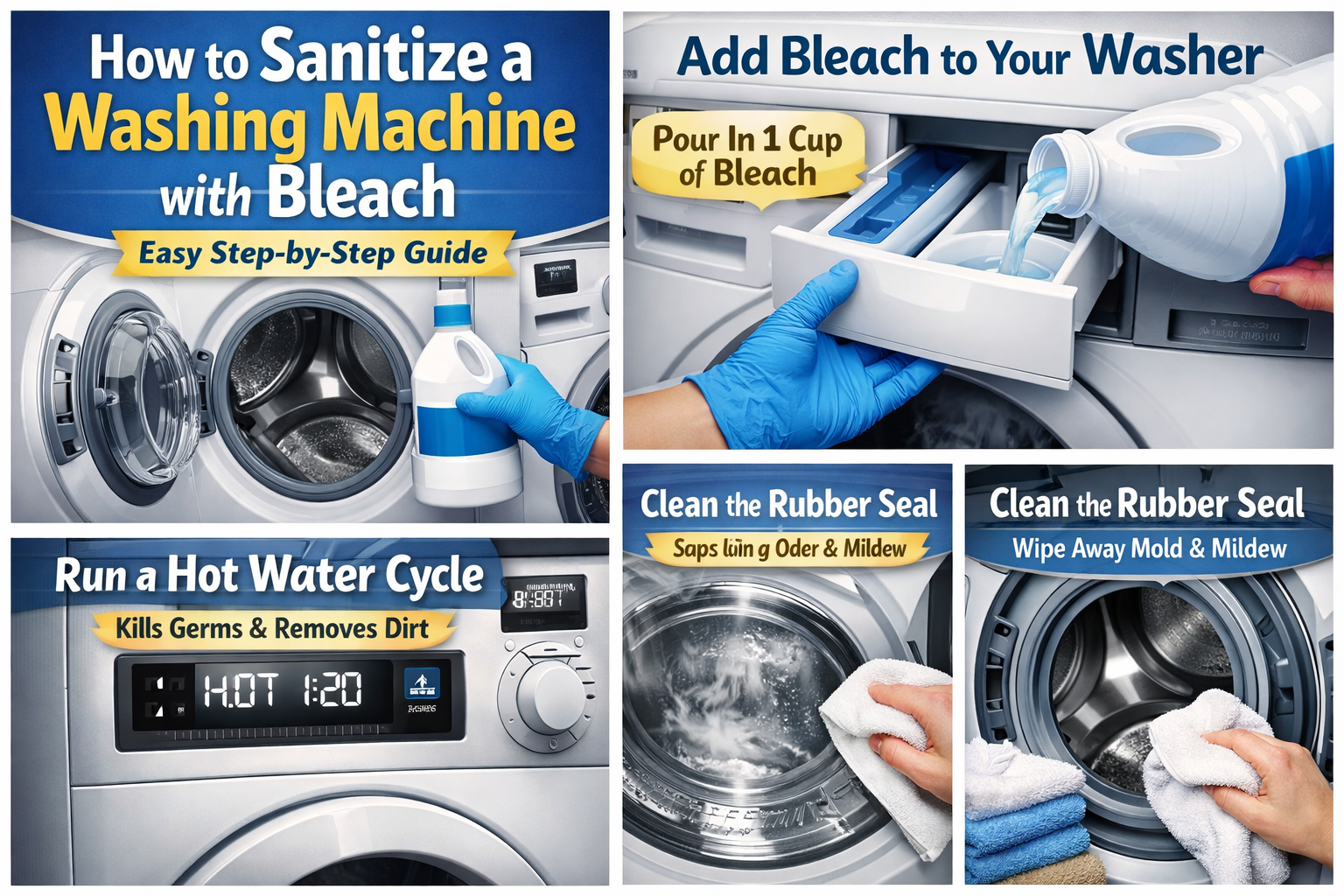
• Mold and mildew, especially in front-loaders, where moisture gets trapped behind the rubber door seal.
Detergent residue and warm water create a prime breeding ground for bacteria.
• Soap scum and limescale clog the drum and hoses over time.
• Fabric softener buildup. It smells nice at first, but it eventually turns rancid.
All of this leads to clothes that smell worse after washing than before. Regular sanitizing with bleach kills 99.9% of bacteria and mold spores, keeping your machine and your clothes genuinely clean.
What You’ll Need Before You Start
Gather these items before you begin:
- Liquid chlorine bleach (regular, not color-safe or splash-less)
- Rubber gloves
- Old microfiber cloths or sponges
- Small brush or old toothbrush (for tight spots)
- A measuring cup
- Good ventilation (open a window or turn on a fan)
Important safety note:
Never mix bleach with vinegar, ammonia, or other cleaning products. Mixing bleach with these substances creates toxic fumes that are dangerous to breathe. Use bleach alone.
Why You Should Clean Your Washing Machine
Your washing machine cleans your clothes every day. But it also collects dirt, soap, and bacteria inside. Over time, this buildup creates problems.
You may notice:
- Bad smell from the drum
- Clothes are not smelling fresh.
- Mold growing inside
- Poor washing results
Regular washing machine deep cleaning helps prevent these problems. It keeps your machine working well and your clothes clean.
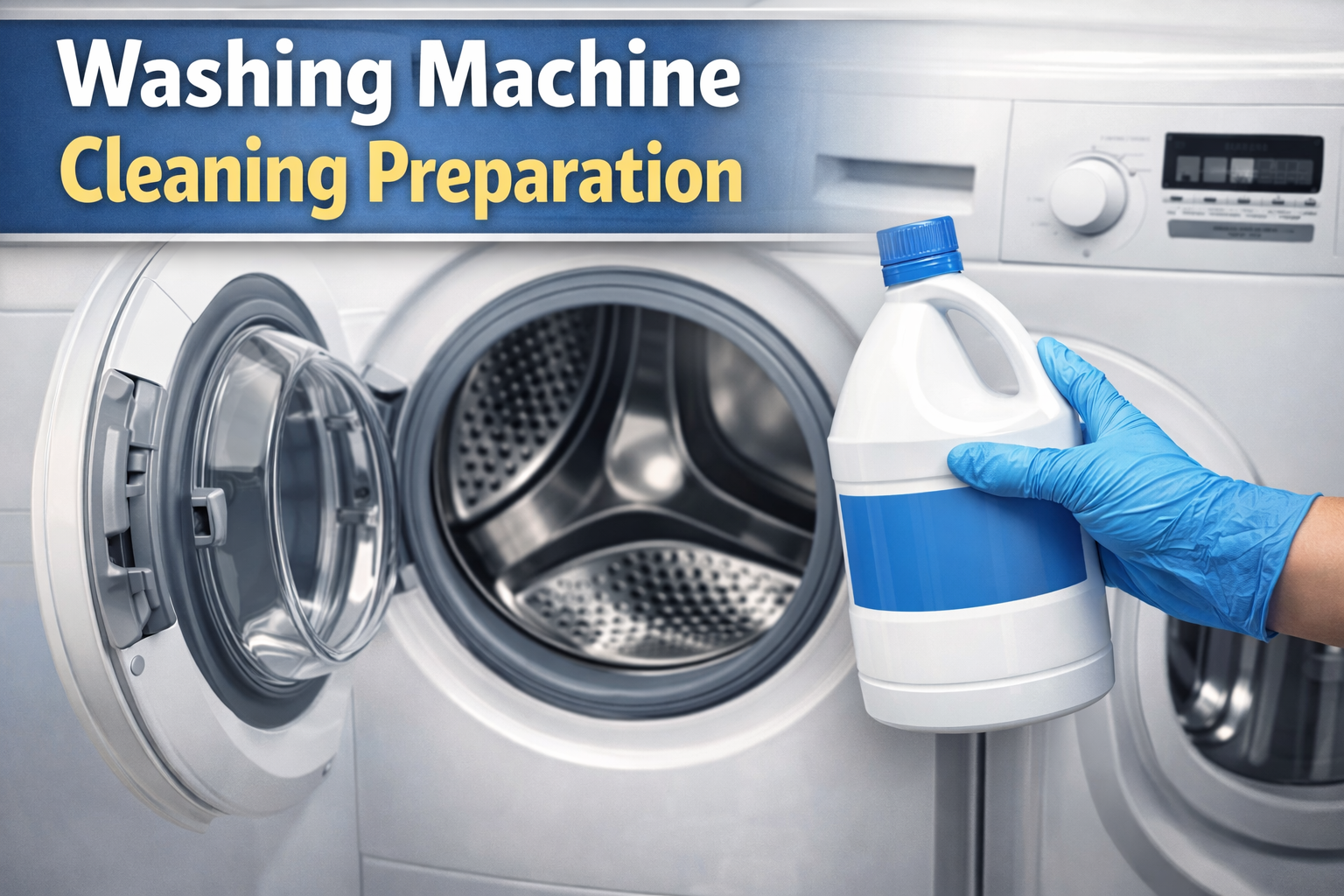
What Happens Inside a Dirty Washer
When you wash clothes, small dirt particles stay inside the drum. Soap residue also sticks to the inner parts.
Moisture inside the machine creates a perfect place for bacteria and mold to grow. This is why many people face the problem of a washing machine that smells bad.
If you do not clean it, the dirt builds up and affects washing performance. That is why regular cleaning is important.
Why Use Bleach for Washing Machine Deep Cleaning
Bleach is a powerful cleaner. It is one of the best ways to clean a washing machine because it kills germs and removes tough dirt.
Benefits of using bleach:
- Kills bacteria and viruses
- Removes mold and mildew
- Breaks down detergent residue
- Eliminates unpleasant odors
- Cleans hidden internal parts
- Provides fast and powerful disinfection
Because of its effectiveness, bleach is widely recommended for deep cleaning washing machines. Bleach works faster than most natural cleaners. That is why it is used for washing machine deep cleaning.
Safety Tips Before Using Bleach
Bleach is strong, so follow these safety steps:
- Wear gloves
- Do not mix bleach with vinegar.
- Keep windows open
- Avoid skin contact
- Store safely
These steps will help you clean safely and effectively.
How Often Should You Clean Your Washing Machine
Cleaning depends on usage:
- Monthly → Normal use
- Every 2 weeks → Heavy use
- Weekly → Very dirty clothes
Regular cleaning is part of good washing machine maintenance tips.
Signs Your Washing Machine Needs Cleaning
Look for these signs:
- Bad smell
- Mold spots
- Dirty drum
- Clothes smell bad
- Slow washing
These signs mean you need to clean your washer soon.
Common Mistakes to Avoid
Avoid these errors to ensure safe and effective cleaning:
-
- Using too much bleach
- Skipping the rinse cycle
- Mixing bleach with other cleaners
- Ignoring the rubber seal
- Using color-safe bleach
- Failing to ventilate the area
- Experimenting with chemical combinations
These mistakes reduce cleaning results.
Extra Tips for Sanitizing a Washing Machine with Bleach
Good habits keep your washer clean longer:
- Leave the door open
- Dry the seal
- Use the correct detergent.
- Avoid overloading
- Clean the drawer weekly.
These are simple but effective washing machine maintenance tips.
Best Time to Sanitize a Washing Machine with Bleach
Cleaning at the right time helps achieve better results.
Best times include:
- After washing dirty clothes
- When smell appears
- Before big laundry day
- End of the week
This keeps your washer fresh all the time.
Bleach vs. Other Cleaning Methods
| Cleaner |
Benefits |
Best Use |
| Bleach |
Powerful disinfectant, kills germs |
Deep cleaning |
| Vinegar |
Natural deodorizer |
Removing odors |
| Baking Soda |
Mild cleaner |
Light maintenance |
For thorough sanitization, bleach remains the most effective option. For deep cleaning, bleach is the best.
Does Bleach Damage Washing Machines?
Bleach is safe when used correctly. However, problems may occur if:
- Too much bleach is used
- Rinse cycles are skipped
- Cleaning is performed too frequently
Always follow manufacturer recommendations for best results. Use the right amount your washer will stay safe.
How to Sanitize a Top-Load Washing Machine with Bleach
Top-load machines are a bit more forgiving because they don’t have a rubber door gasket where mold loves to hide. Here’s how to clean them properly:
Step 1: Set the machine to the right cycle
Start by setting your top-load washer to the largest load size, the hottest water temperature, and the longest wash cycle available. Hot water helps activate the bleach and ensures it reaches every corner of the drum.
Step 2: Add bleach to the drum
Once the machine fills up with water, add 1 cup (about 240 ml) of liquid chlorine bleach directly into the drum — not the detergent dispenser. Let the machine agitate for a minute or two so the bleach mixes fully with the water.
Step 3: Let it soak
Pause the cycle and let the bleach water sit in the drum for at least 30 minutes. This soaking time is what really does the sanitizing work — it gives the bleach enough time to kill bacteria, mold spores, and any other nasties hiding in there.
Step 4: Complete the wash cycle
After soaking, restart and let the full cycle finish. This will drain all the bleach water and rinse the drum.
Step 5: Run a rinse cycle
Run one more empty rinse cycle, no bleach, no detergent. This clears any remaining bleach traces from the drum so it won’t transfer onto your next load of laundry.
Step 6: Wipe down the lid and drum
With a damp cloth lightly dampened with a diluted bleach solution (1 tablespoon bleach to 1 cup water), wipe down the inside of the lid, the rim of the drum, and any accessible parts of the agitator. Let it air dry with the lid open.
How to Sanitize a Front-Load Washing Machine with Bleach
Front-load washers are more energy efficient. But they’re notorious for developing mold around the rubber door. That gasket traps moisture, lint, and grime and it needs special attention.
Step 1: Clean the rubber door gasket first
Put on your rubber gloves. Mix 1 tablespoon of liquid bleach with 1 quart (about 1 liter) of water. Use a cloth or sponge to wipe down the entire rubber gasket, including the inner folds where mold hides. Use an old toothbrush to scrub stubborn spots. Wipe away any residue with a clean, damp cloth.
Step 2: Add bleach to the bleach dispenser
Pour 1/2 cup (about 120 ml) of liquid chlorine bleach into the bleach dispenser drawer — not the drum directly. Using the dispenser ensures bleach is released at the right time during the wash cycle.
Step 3: Run a hot, empty wash cycle
Select the hottest water setting and the longest wash cycle (some machines have a dedicated ‘Clean Washer’ or ‘Drum Clean’ cycle — use that if available). Start the machine and let it run completely empty.
Step 4: Run an extra rinse cycle
Just like with top-loaders, run an extra rinse cycle to flush out any remaining bleach.
Step 5: Wipe down and leave the door open
After the cycle, wipe down the drum, the door glass, and the gasket again with a dry cloth. Leave the door open for a few hours so moisture can fully evaporate. This step alone will prevent mold from coming back quickly.
How to Keep Your Washing Machine Smelling Fresh
If you want a fresh washer all the time:
- Leave the door open after washing.
- Dry the drum
- Use hot water once a week.
- Avoid wet clothes sitting inside. These habits act as a natural washing machine, a bad-smelling solution.
.
Tips to Keep Your Washing Machine Fresher, Longer
Sanitize washing machine with bleach is a great reset. These simple habits will keep your machine clean between deep cleans:
• Leave the door or lid open after every wash. Airflow prevents moisture buildup and mold growth.
• Remove laundry promptly. Wet clothes sitting in the drum for hours is a recipe for mildew.
• Use the right amount of detergent. More is not better — excess detergent creates more residue that builds up inside the machine.
• Use HE detergent for HE machines. Regular detergent produces too many suds in HE washers, which leaves behind residue.
• Wipe the gasket dry after each load (front-loaders). Just a 30-second wipe makes a huge difference.
• Run a hot wash cycle regularly. Even without bleach, hot water helps dissolve residue and reduce bacteria.
Precautions Using Bleach in Your Washer
- First and foremost, don’t mix bleach with vinegar or baking soda. This combination produces harmful chemical reactions and toxic fumes.
- Additionally, don’t use color-safe bleach. It does not sanitize effectively; always use regular chlorine bleach.
- Furthermore, avoid experimenting with chemical mixtures. Doing so can reduce effectiveness and create safety hazards.
- Moreover, don’t use excessive bleach. Overuse can damage rubber seals and internal components.
- Finally, don’t ignore ventilation. Always clean in a well-ventilated area to avoid inhaling strong fumes.
Frequently Asked Questions
How much bleach should I use?
Use 1 cup (240 ml) for top-loaders and ½ cup (120 ml) for front-loaders.
Can I use bleach in any washing machine?
Most machines allow bleach, but always check the manufacturer’s manual.
How often should I sanitize the washing machine with bleach?
Once a month is ideal, or more frequently for heavy use.
Is bleach safe for HE washers?
Yes. Use ½ cup and run an extra rinse cycle.
What if my washer still smells after cleaning?
Clean the drain hose, filter, and gasket. If the odor persists, consult a technician.
Can bleach damage the washer?
No, provided it is used correctly and in the recommended amount.
Final Thoughts
Learners keeping a washing machine sanitize with Bleach is one of the easiest home maintenance tasks you can do and one of the most impactful. It takes an hour, costs nothing, and makes your laundry fresh. It makes keeping your washing machine hygienic. You have a top-loader or a front-loader; the process is simple and easy. Use the correct amount of bleach. Allow it to soak and run a rinse cycle. After cleaning, keep the door open to let the machine dry properly. Repeat this process once a month to prevent mold, bacteria, and unpleasant odors. Regular maintenance keeps your washing machine clean, improves performance, and extends its lifespan. Stay consistent to ensure your washer smells better, works efficiently, and lasts longer.
A clean machine makes cleaner clothes.