
You stare at your kitchen sink again. Water pools slowly around the drain. A faint sour smell rises every time you rinse dishes. You know the feeling. Clogs creep up on every busy household, but you do not need expensive plumbers or toxic chemicals to fix them. The best way to clean kitchen sink drain naturally at home uses ingredients you already own. It works gently, costs almost nothing, and keeps your pipes healthy for years.
This method matters more than you might think. Kitchen sink drains handle grease, food scraps, soap residue, and bacteria every single day. Over time these build up into stubborn blockages. Chemical drain cleaners eat through the gunk fast, yet they also corrode pipes, harm septic systems, and pollute waterways. Natural cleaning avoids all that damage while delivering real results. You save money, protect your family’s health, and help the environment at the same time. Moreover, once you learn the best way to clean kitchen sink drain naturally, you prevent future problems instead of fighting the same clog month after month.
In the next sections you will discover exactly why clogs form, which natural ingredients break them down, and the precise step-by-step process that thousands of homeowners use successfully. You will also find maintenance tips, common mistakes to avoid, and answers to every question you might have. By the end you will feel confident tackling your sink drain with nothing more than baking soda, vinegar, and hot water. Let’s begin.

Why Regular Cleaning Matters for Your Kitchen Sink Drain
Your kitchen sink drain works harder than any other fixture in the house. Every meal, every dish, every drop of rinse water passes through it. Without regular care the pipe walls collect a sticky film that traps more debris. This film eventually hardens and narrows the flow. You notice slower draining first, then standing water, and finally that rotten-egg odor.
The best way to clean kitchen sink drain naturally stops this cycle early. You remove the buildup before it becomes a full blockage. You also eliminate odor-causing bacteria that thrive in dark, moist pipes. Studies from environmental agencies show that natural cleaners reduce household chemical runoff into local water systems. Therefore, you protect both your home plumbing and the planet.
Real-world examples prove the point. Families who clean their drains monthly with natural methods report drains that stay clear for years. One busy parent in a city apartment shared how her sink used to clog weekly until she switched to the baking-soda-and-vinegar routine. Now she spends less than five minutes a month and has never called a plumber. You can achieve the same results.
Moreover, natural cleaning preserves expensive fixtures. Harsh chemicals pit stainless steel and weaken older pipes. Gentle ingredients leave surfaces untouched. You extend the life of your entire plumbing system while keeping your kitchen safe for kids and pets.
Common Causes of Kitchen Sink Drain Clogs
Understanding why clogs happen helps you apply the best way to clean kitchen sink drain naturally more effectively. Grease tops the list. Cooking oils and fats solidify as they cool inside pipes. They act like glue, catching rice grains, vegetable peels, and coffee grounds. Even tiny amounts add up fast.
Food particles create the next problem. Pasta, rice, and potato peels swell when wet. They form dense mats that block water flow. Many people scrape plates straight into the sink, thinking the garbage disposal will handle everything. In reality the disposal grinds some items into fine paste that sticks to pipe walls.
Biofilm and bacteria complete the trio. Organic matter feeds microscopic organisms that produce slime. This slime traps odors and speeds up buildup. Hard water minerals add scale that makes everything worse. Together these factors turn a smooth pipe into a narrow, smelly tunnel.
However, you can reverse the damage. The best way to clean kitchen sink drain naturally targets all three causes at once. It dissolves grease, flushes particles, and kills odor bacteria without toxic residue. You address the root problem instead of masking symptoms.
The Science Behind Natural Drain Cleaning Ingredients
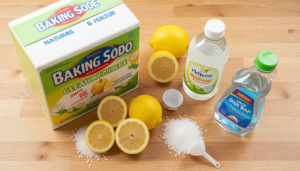
Baking soda and vinegar create the magic reaction you see in countless tutorials. Baking soda is sodium bicarbonate, a mild base. Vinegar contains acetic acid. When they meet they produce carbon dioxide gas, water, and sodium acetate. The fizzing bubbles agitate stuck debris and loosen the clog. Boiling water that follows melts grease and flushes everything away.
Salt adds gentle abrasion. It scrubs pipe walls without scratching them. Lemon juice supplies citric acid that cuts through mineral scale and leaves a fresh scent. A drop of dish soap emulsifies remaining grease so water carries it out easily.
These ingredients work together safely. They break down organic matter through mild chemical and mechanical action. Unlike caustic lye in commercial cleaners, they do not eat through pipes or release harmful fumes. Environmental experts at the EPA note that greener cleaners reduce risks to aquatic life and indoor air quality. Therefore, you clean effectively while staying eco-friendly.
Real homeowners notice the difference immediately. After one treatment the drain smells fresh and water flows faster. Repeated monthly treatments keep pipes clear without effort. The best way to clean kitchen sink drain naturally relies on simple chemistry you can trust.
Step-by-Step Guide: The Best Way to Clean Kitchen Sink Drain Naturally at Home
Preparation Before You Start
Follow these steps exactly for reliable results. You need one cup baking soda, one cup white vinegar, a kettle of boiling water, and optionally a lemon or dish soap. The entire process takes less than fifteen minutes.
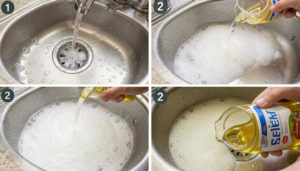
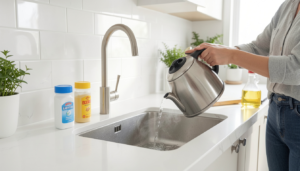
First, remove the sink strainer and clear visible debris. Pour a full kettle of boiling water straight down the drain. This melts surface grease and prepares the pipe. Wait thirty seconds.
The Core Baking Soda and Vinegar Reaction
Next, pour one cup of baking soda directly into the drain. Use a funnel if your opening is small. Let it sit for one minute so the powder reaches deep into the pipe.
Now add one cup of white vinegar slowly. You will hear immediate fizzing. Cover the drain tightly with a plug or wet cloth to trap the pressure. Let the mixture work for ten to fifteen minutes. The bubbles push against the clog and break it apart.
Final Flush and Testing the Drain
After the wait, remove the cover and pour another kettle of boiling water. Run hot tap water for two full minutes to flush everything out. For extra power, squeeze half a lemon down the drain and follow with one more cup of hot water.
Test the drain by running water. It should flow freely. If it still drains slowly, repeat the entire process. Most minor clogs clear on the first try. Stubborn ones need a second round.
This is the best way to clean kitchen sink drain naturally because every step builds on the last. Boiling water preps the grease. Baking soda and vinegar create mechanical action. Final flush clears the debris. You see instant improvement and long-term prevention.
For sinks with garbage disposals, run the disposal for five seconds after adding baking soda. This distributes the powder evenly. Never use vinegar in the disposal while it runs—add it after you turn the unit off.
Double-basin sinks need treatment in both sides. Start with the side that drains slower. The solution travels through the shared pipe and cleans both.
Alternative Natural Techniques for Tougher Clogs
Sometimes one round is not enough. Try the salt-boosting version. Mix half a cup baking soda with half a cup table salt. Pour the dry mix down the drain first, then add one cup vinegar. The salt crystals provide extra scrubbing power.
Enzyme-based natural cleaners offer another powerful option. These contain live bacteria and enzymes that literally eat organic waste. You buy them as powders or liquids from eco-stores. Pour according to package directions and let them work overnight. They continue cleaning for days without any harsh smell.
A simple dish-soap method works wonders on grease. Squirt a generous amount of liquid dish soap down the drain followed by several kettles of the hottest tap water you can safely run. The soap breaks grease into tiny droplets that wash away easily.
Mechanical help stays natural too. Use a sink plunger with a good seal. Fill the sink with a few inches of water and plunge firmly but slowly ten to fifteen times. The pressure dislodges clogs without chemicals.
These alternatives give you choices. Choose the salt method for heavy grease, enzymes for ongoing maintenance, or plunging for immediate mechanical relief. All support the best way to clean kitchen sink drain naturally.
Maintenance Tips to Prevent Future Clogs
Daily and Weekly Habits That Make a Difference
Prevention beats cure every time. Install a mesh strainer in your sink and empty it after every meal. Scrape plates into the trash or compost bin before washing. Never pour grease, oil, or fat down the drain—cool it in a jar and toss it in the garbage.
Run hot water for thirty seconds after every use. This melts stray grease before it sticks. Once a week pour a kettle of boiling water down the drain as quick maintenance.
Monthly Routine for Long-Term Success
Schedule a full natural cleaning every month. Mark it on your calendar. Consistency keeps pipes clear and odor-free. Families who follow this routine rarely face emergencies.
For septic systems the best way to clean kitchen sink drain naturally is especially important. Enzyme cleaners and baking-soda methods add beneficial bacteria instead of killing them. You protect the entire system.
Small habits make a big difference. Run cold water when using the garbage disposal. Avoid fibrous vegetables and coffee grounds. These simple changes reduce strain on your pipes dramatically.
Read our complete guide to natural bathroom cleaning for more eco-tips
Common Mistakes to Avoid When Cleaning Your Kitchen Sink Drain Naturally
Many people rush the process and wonder why it fails. Never skip the boiling water flush at the beginning or end. It carries the loosened debris away. Skipping it leaves gunk behind.
Do not use cold water after the reaction. Hot water keeps grease liquid so it flushes out. Cold water can harden it again and create worse clogs.
Avoid overusing vinegar on older copper or brass pipes. Occasional use stays safe, but daily treatments may cause minor corrosion over decades. Stick to monthly routines.
Never combine baking soda and vinegar in a bowl first and then pour the mixture. The reaction happens too soon and loses power inside the pipe. Always add them separately.
Finally, do not ignore slow drains. Treat them early before they become full blockages. The best way to clean kitchen sink drain naturally works best on minor buildup.
Learn more about greener household products from the EPA
How to unclog a toilet naturally without a plumber
When to Call a Professional Plumber
Natural methods solve most everyday clogs. However, if water backs up into other fixtures or you smell sewage, stop DIY efforts. These signs point to deeper main-line issues.
Repeated clogs after treatment also need expert attention. A plumber can video-inspect pipes and remove hardened buildup safely. You avoid bigger damage later.
FAQ: Your Questions About the Best Way to Clean Kitchen Sink Drain Naturally Answered
1. What exactly is the best way to clean kitchen sink drain naturally at home? The best way to clean kitchen sink drain naturally at home combines boiling water, baking soda, and vinegar in a precise sequence. You start with boiling water to melt grease. Then you add baking soda followed by vinegar to create fizzing pressure that loosens debris. A final hot-water flush clears everything. This method uses zero toxic chemicals yet delivers powerful results for most household clogs. Homeowners love it because it costs pennies and works within fifteen minutes.
2. How often should I perform the best way to clean kitchen sink drain naturally? Perform the full treatment once a month for best results. Busy kitchens with daily cooking may benefit from a quick hot-water flush weekly. Monthly deep cleaning keeps buildup from forming in the first place. You will notice fresher smells and faster draining within the first two treatments. Consistency turns a chore into simple habit.
3. Does baking soda and vinegar really work for every kitchen sink drain clog? Baking soda and vinegar work excellently for minor to moderate clogs caused by grease and food. The fizzing action agitates debris while hot water flushes it away. Very old or completely solid blockages may need a second round or mechanical help like plunging. For heavy grease, add salt to the mix for extra scrubbing. Most people see clear improvement after one or two tries.
4. Can I use lemon juice instead of vinegar in the best way to clean kitchen sink drain? Yes, lemon juice works as a gentle substitute. Its citric acid cuts mineral scale and leaves a pleasant citrus scent. Use the juice of two fresh lemons in place of one cup vinegar. Combine with baking soda exactly the same way. Many prefer lemon for its natural antibacterial properties and fresh aroma that lingers in the kitchen.
5. Is the best way to clean kitchen sink drain naturally safe for septic systems? Absolutely safe and actually beneficial. Baking soda and vinegar introduce no harsh chemicals that kill helpful bacteria in your septic tank. Enzyme cleaners add even more good microbes. You protect the entire system while clearing your kitchen drain. Septic owners report fewer pumping needs when they switch to natural routines.
6. What should I do if the drain still smells after cleaning? Persistent odor usually means deeper biofilm remains. Repeat the treatment and let it sit longer—up to thirty minutes. Follow with a half-cup baking soda sprinkled down the drain and left overnight. For ongoing freshness, drop a few drops of essential oil (tea tree or lemon) mixed with baking soda weekly. The smell disappears within days.
7. Are there any natural commercial products that support the best way to clean kitchen sink drain? Yes. Look for enzyme-based drain cleaners that use live bacteria. They continue working for weeks after application. Brands that list only natural ingredients pair perfectly with your homemade routine. Use them monthly for extra protection in high-use kitchens.
8. How does the best way to clean kitchen sink drain naturally compare to chemical cleaners? Natural methods win on safety, cost, and pipe health. Chemicals work faster on severe clogs but damage pipes over time and harm the environment. Natural cleaning takes slightly longer yet prevents future problems and keeps your home toxin-free. You save money and avoid fumes. Most homeowners switch permanently after one successful natural treatment.
Conclusion
You now know the best way to clean kitchen sink drain naturally at home from start to finish. You understand the causes, the science, the exact steps, and the habits that keep clogs away forever. Natural cleaning protects your pipes, your wallet, your family, and the planet. No more harsh smells or surprise plumber bills.
Take action today. Gather your baking soda and vinegar, follow the step-by-step guide, and watch your sink transform. Share your results with family and friends. Once you experience free-flowing drains and fresh air in your kitchen, you will never go back to chemical cleaners.
Your kitchen deserves to work smoothly every single day. Start with the best way to clean kitchen sink drain naturally right now. Your future self and your plumbing will thank you.