
The Pet Owner’s Manual to Blanket Hygiene and Odor Control. If you share your home with a dog, you already know that certain smells come with the territory. But there is a difference between a home that smells lived-in and one that hits you the moment you walk through the door. More often than not, the source of that persistent pet odor is not your dog itself — it is the blanket they sleep on every single day.
Dog blankets absorb everything. Saliva, skin oils, dander, mud, bacteria, and shed fur all accumulate in the fabric over time, creating layers of odor that grow stronger with every passing week. Regular washing helps, but if you are not approaching blanket hygiene the right way, you may find that the smell keeps coming back — or never fully goes away in the first place.
This manual covers everything a pet owner needs to know about blanket hygiene and odor control. From understanding where the smell actually comes from, to building a cleaning routine that keeps it permanently under control, this is the complete guide to a fresher, healthier home for both you and your dog.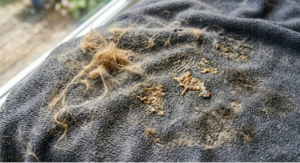
Where Does Pet Blanket Odor Actually Come From?
Before you can effectively eliminate the smell, it helps to understand exactly what is causing it. Pet blanket odor is not a single thing — it is a combination of several different sources that layer on top of each other over time.
Natural Body Oils and Dander
Dogs produce natural oils through their skin that keep their coat healthy and moisturized these oils transfer onto every surface your dog regularly contacts — including their blanket. Over time, these oils oxidize and develop a rancid, musty smell that is difficult to remove without targeted treatment. Dog dander — tiny flakes of dead skin — also accumulates in blanket fibers continuously. Dander itself is largely odorless, but it provides an ideal food source for the bacteria that cause smell.
Bacteria
This is the primary driver of pet blanket odor. Bacteria thrive in the warm, moist environment created by a dog’s body heat and saliva. They feed on the oils, dander, and organic material trapped in the fabric and produce waste compounds that smell strongly and unpleasantly. The longer a blanket goes without washing, the larger the bacterial population becomes — and the stronger the odor gets.
Saliva
Dogs lick their blankets far more than most owners realize. Saliva contains proteins and bacteria from the mouth that, once dried into the fabric, create their own distinct and persistent odor. Spots where your dog habitually rests their head or chews tend to develop the worst smell over time.
Moisture and Mildew
Any time a dog comes inside wet — after rain, a bath, or playing in water — their blanket absorbs that moisture. If the blanket does not dry quickly and completely, mildew begins to develop inside the fabric fibers. Mildew has a sharp, musty odor that is notably different from general pet smell and can be more difficult to fully eliminate.
Anal Gland Secretions
This is one that many pet owners overlook. Dogs have anal glands that occasionally release a strongly scented secretion — sometimes when they are excited, anxious, or simply when they sit down and scoot. This secretion has a very distinct, pungent odor that can be absorbed by the blanket and is one of the most stubborn smells to remove.
The Foundation: Building a Proper Hygiene Routine
Good blanket hygiene is not about reacting to smell after it develops — it is about building a consistent routine that prevents odor from accumulating in the first place. Here is how to structure that routine effectively.
Set a Regular Washing Schedule
Consistency is the most important factor in odor control. The moment you stop washing on a regular schedule, bacterial populations begin growing again and the smell returns quickly.
Use this schedule as a starting point and adjust based on your dog’s specific habits:
- Low shedding, indoor dog with limited outdoor activity — Wash every 2 weeks
- Average dog with regular outdoor activity — Wash once a week
- Heavy shedder or dog that frequently gets wet — Wash every 4 to 5 days
- Dog with skin conditions or excessive drooling — Wash every 2 to 3 days
- After any accident, illness, or unusual odor — Wash immediately
Do not wait until the blanket smells bad to wash it. By the time the odor is noticeable to you, bacterial growth is already well advanced. Washing on schedule keeps bacteria at low levels so the smell never gets a c
hence to develop.
Use the Right Detergent Every Time
The detergent you choose makes a significant difference in how effectively odor is eliminated — not just masked.
- Enzymatic detergents are the gold standard for pet blanket hygiene. These detergents contain biological enzymes that break down the organic compounds — proteins, oils, saliva, urine — that cause odor at a molecular level. Regular detergents clean the surface but leave odor-causing organic material behind. Enzymatic formulas eliminate it entirely.
- Fragrance-free formulas are strongly preferred for pet blankets. Heavily scented detergents may smell clean to you, but the chemical fragrance compounds sit on top of the fabric rather than eliminating the underlying odor. Dogs also find strong artificial scents uncomfortable and may avoid blankets washed with heavily perfumed detergents.
- Avoid fabric softeners completely for pet blankets. Fabric softener leaves a waxy coating on fabric fibers that traps odor-causing bacteria and reduces the blanket’s ability to rinse clean over time. White vinegar in the rinse cycle is a far better alternative for softness.
Deep Odor Elimination: Methods that actually work
For blankets that already have a strong, established odor, a standard wash cycle alone is often not enough. These targeted methods address the different types of odor at their source.
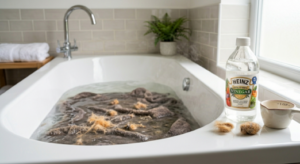
White Vinegar Soak
White vinegar is one of the most effective natural odor eliminators available, and it is completely safe for both fabric and your pet.
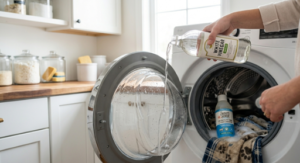
How to do it: Fill a large sink, bucket, or bathtub with cool water and add one to two cups of plain white vinegar. Submerge the blanket fully and allow it to soak for 30 to 60 minutes before washing. The acetic acid in the vinegar neutralizes alkaline odor compounds — including bacteria waste and body oils — that water alone cannot break down.
After soaking, wash the blanket as normal. You do not need to rinse out the vinegar before washing — it will be fully removed during the wash cycle. The vinegar smell itself disappears completely as the blanket dries.
For ongoing maintenance rather than deep treatment, simply add half a cup of white vinegar to the fabric softener dispenser before each wash cycle.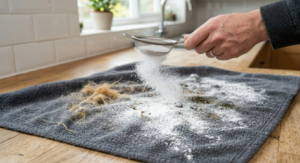
Baking Soda Treatment
Baking soda is an alkaline compound that neutralizes acidic odor molecules — the opposite chemistry from vinegar, which means the two tackle different types of smell. Using both in combination covers a broader spectrum of odor compounds than either one alone.
Dry treatment method: Sprinkle a generous layer of baking soda directly over the entire surface of the dry blanket. Work it gently into the fabric with your hands. Allow it to sit for at least 30 minutes — ideally several hours or overnight for strong odors. Then shake or vacuum off the baking soda before washing.
In-wash method: Add half a cup of baking soda directly to the washing machine drum along with your regular detergent. Do not put it in the detergent dispenser — adding it directly to the drum ensures it contacts the fabric throughout the entire wash cycle for maximum effectiveness.
Enzymatic Odor Neutralizer Spray
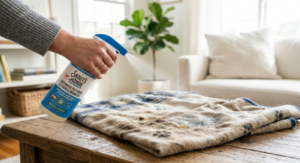
For odor that is concentrated in a specific area — a patch where your dog habitually drools, or a spot where an accident occurred — an enzymatic spray applied directly to that area before washing is highly effective.
Spray the product generously onto the affected area, work it in gently with your fingers or a soft brush, and allow it to sit for the time specified on the product instructions — usually 10 to 15 minutes. The enzymes break down the organic material causing the odor before the blanket goes into the wash.
Well-regarded enzymatic sprays for pet odors include Nature’s Miracle, Rocco and Roxie, and Angry Orange. All are safe for use on pet blankets and fabrics.
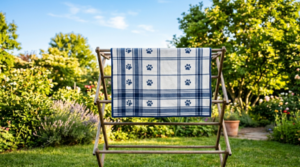
Sunlight Drying
Direct sunlight is a powerful and completely free odor eliminator. Ultraviolet light kills bacteria and breaks down many of the organic compounds that cause pet smell. Drying a freshly washed blanket in direct sunlight for several hours consistently produces a noticeably fresher result than machine drying alone.
Make sunlight drying part of your regular routine whenever the weather allows. Even a few hours of direct sun exposure makes a meaningful difference in odor control over time.
Tackling Specific Problem Odors
Different types of pet odor require slightly different approaches. Here is how to handle the most common ones.
Urine Odor
Urine odor is caused by uric acid crystals that bond to fabric fibers. Standard detergents dissolve most of the urine but leave the uric acid crystals behind — which is why a blanket can smell fine when dry but the odor returns as soon as it gets damp again.
The only way to fully eliminate urine odor is with an enzymatic cleaner that specifically breaks down uric acid. Soak the affected area in an enzymatic spray or solution before washing. Wash in cold water — hot water sets uric acid crystals into the fabric permanently. After washing, dry completely in sunlight if possible.
Wet Dog Smell
The classic wet dog smell comes from bacteria and yeast that live naturally on your dog’s skin. When the coat gets wet, water releases volatile compounds produced by these microorganisms, creating that distinctive odor.
To address it on blankets, wash with an enzymatic detergent, add white vinegar to the rinse cycle, and dry the blanket as quickly and thoroughly as possible. Slow drying allows the bacterial compounds to intensify as the fabric dries. If possible, dry in sunlight rather than a dryer for the best result.
Anal Gland Odor
This is one of the most pungent and persistent pet odors. The secretion from anal glands contains compounds called thiols — the same family of compounds that gives skunk spray its notoriety, though at much lower concentration.
For blankets affected by anal gland odor, pre-soak in a white vinegar solution for at least 60 minutes before washing. Wash with an enzymatic detergent on a warm cycle. Add baking soda to the wash drum. Rinse twice. Dry in direct sunlight if at all possible. For very severe cases, a second full wash cycle immediately after the first may be necessary.
Mildew Smell
Mildew in a pet blanket means fungal growth has established itself in the fabric. This requires a more aggressive approach than bacterial odor.
Add one cup of white vinegar directly to the wash drum. Use hot water if the blanket’s care label permits it — heat kills mildew spores more effectively than cold. Wash on a full cycle, then add another half cup of baking soda to a second wash cycle if the smell persists. Dry completely in direct sunlight. If the mildew smell remains after two full wash cycles, the blanket may need to be discarded — advanced mildew growth can permanently damage fabric fibers.
Between-Wash Maintenance: Keeping the Blanket Fresh Daily
A good washing routine handles the deep cleaning, but what happens between washes matters just as much for ongoing odor control.
Daily Airing
The simplest and most overlooked step. Every morning, take your dog’s blanket and give it a firm shake outdoors. Then leave it in a location with good air circulation — near an open window, on a porch, or briefly outdoors — for 20 to 30 minutes. Regular airing prevents moisture and bacteria from building up between washes and keeps the blanket smelling noticeably fresher day to day.
Baking Soda Refresh Spray
Between washes, a simple baking soda spray can neutralize surface-level odor quickly. Mix one tablespoon of baking soda with two cups of water in a spray bottle. Shake well and lightly mist the surface of the blanket. Allow it to air dry before your dog uses it again. This is not a substitute for washing, but it is an effective way to extend freshness between wash cycles.
Pet-Safe Fabric Refresher
Several commercial fabric refreshers are formulated specifically for pet bedding and are safe for use between washes. Look for products that neutralize odor rather than simply masking it with fragrance — the label should say something like “odor eliminator” or “enzymatic formula” rather than just “fresh scent.”
Use a Removable Blanket Cover
A thin, washable cover placed over the weighted or primary blanket takes the daily brunt of fur, saliva, and dirt. The cover can be removed and washed with regular laundry every few days — quickly and easily — while the main blanket only needs a full wash every week or two. This is the single most practical long-term strategy for managing blanket hygiene with minimal effort.
Hygiene Beyond the Blanket: Addressing the Full Picture
Effective odor control does not stop at the blanket. If the surrounding environment is not addressed, odors will cycle back into the blanket no matter how frequently you wash it.
Clean the Dog’s Sleeping Area Regularly
The floor, bed frame, crate, or furniture where your dog sleeps accumulates the same oils, dander, and bacteria as the blanket. Wipe down hard surfaces with a diluted white vinegar solution weekly. For upholstered furniture, use an enzymatic spray and allow it to dry fully before your dog returns to the area.
Wash Your Dog on a Regular Schedule
A clean dog produces significantly less blanket odor than an unwashed one. Regular bathing removes the accumulated skin oils and bacteria that transfer to the blanket with every contact. For most dogs, a bath every two to four weeks is appropriate — though this varies by breed and coat type. Consult your veterinarian if you are unsure about the right bathing frequency for your specific dog.
Keep Your Washing Machine Clean
A washing machine that is not regularly cleaned can actually make pet odor worse — bacteria and mildew that build up in the drum and seal transfer back onto the blanket during the wash cycle. Run an empty hot wash cycle with one cup of white vinegar or a washing machine cleaning tablet once a month. Wipe down the door seal after every pet laundry load — pet hair and moisture accumulate there quickly.
Maintain Good Indoor Air Circulation
Good airflow is one of the most underrated tools in pet odor control. Open windows regularly, run an air purifier with a HEPA filter in areas where your dog spends the most time, and avoid trapping pet bedding in closed, poorly ventilated spaces. Fresh air prevents the stale buildup that intensifies pet odor over time.
Choosing the Right Blanket Material for Better Hygiene
Not all blanket fabrics are equally easy to keep clean and odor-free. If you are in the market for a new pet blanket, the material you choose makes a significant practical difference.
- Microfiber — Excellent choice. Tightly woven fibers resist pet hair penetration, dry quickly, and release odors well during washing. Easy to maintain and widely available.
- Fleece — Popular and comfortable for dogs, but the soft, open texture attracts and holds pet hair aggressively. Requires more thorough pre-wash hair removal. Tends to retain odor more than tighter weaves.
- Cotton canvas or denim — Durable, easy to clean, and does not hold hair as badly as fleece. Takes longer to dry but holds up very well to frequent washing.
- Sherpa — Very soft and dogs love it, but it is the most difficult material to de-hair and tends to trap odor deep in the texture. Requires the most maintenance of any common blanket material.
- Waterproof-lined blankets — Excellent for dogs prone to accidents or that come inside wet frequently. The waterproof layer prevents moisture from penetrating to the filling. Requires careful washing to preserve the coating.
Frequently Asked Questions
Why does my dog’s blanket smell bad even right after washing? This usually means one of three things: the odor source was not fully addressed before washing, the blanket did not dry completely and mildew has begun to develop, or your washing machine itself has built-up bacteria or mildew that is transferring back to the blanket. Try an enzymatic detergent with a white vinegar rinse, make sure the blanket dries completely, and run a cleaning cycle on your washing machine.
Is it safe to use essential oils to freshen my dog’s blanket? No — most essential oils are toxic to dogs, including lavender, tea tree, eucalyptus, and citrus oils. Even diluted concentrations applied to a blanket can cause skin irritation or respiratory distress in sensitive dogs. Stick to pet-safe options like white vinegar, baking soda, or specifically formulated pet fabric refreshers.
How do I get dog smell out of a blanket that has been stored unwashed? Soak the blanket in a white vinegar and water solution for 60 minutes, then wash with an enzymatic detergent and add baking soda directly to the drum. Run an extra rinse cycle and dry completely in direct sunlight. For extremely strong odors, a second full wash cycle immediately after the first may be necessary.
Can I use bleach to disinfect my dog’s blanket? Bleach is an effective disinfectant but should be used with great caution on pet blankets. It can damage colored fabrics, weaken fibers with repeated use, and leave residue that irritates dog skin. If you need to disinfect, a pet-safe laundry sanitizer added to the rinse cycle is a safer and equally effective alternative. Reserve bleach for white cotton blankets only, and rinse extremely thoroughly.
My dog refuses to use their blanket after I wash it. What should I do? Dogs are highly sensitive to smell and sometimes reject a blanket after washing because it no longer carries their familiar scent. Switch to a fragrance-free, unscented detergent and skip the fabric softener entirely. You can also place a worn item of your clothing near the blanket after washing to restore familiar scent quickly, or simply allow the blanket to air in the home for a day before returning it to your dog.
Final Thoughts
Blanket hygiene and odor control are not complicated — but they do require consistency and the right approach. Understanding where pet odor actually comes from allows you to target it at the source rather than simply masking it. Building a regular washing schedule, using the right cleaning products, and maintaining the blanket between washes creates a system that keeps odor permanently under control rather than endlessly chasing it away.
Your dog deserves a clean, fresh sleeping space — and you deserve a home that smells like a home. With the tools and techniques in this manual, both are entirely achievable.
Core Hygiene Checklist:
- Wash on a consistent schedule — do not wait for smell to appear
- Use enzymatic detergent for every pet blanket wash
- Add white vinegar to every rinse cycle
- Add baking soda directly to the drum for extra odor fighting
- Always dry completely — dampness is the enemy of odor control
- Air the blanket daily between washes
- Clean your washing machine monthly
- Use a removable cover to reduce full wash frequency
- Address the full environment — not just the blanket