
Choosing the best frying pan for beginners –
- means balancing cooking style with pan features. Key factors include the pan material and coating, size, handle design, and stove compatibility.
- For example, a 10-inch nonstick skillet is often a good starter pan because it’s easy to use and clean
- In this guide, we explain each choice: stainless steel for durability, cast iron for heat retention, nonstick/ceramic for easy cooking, and carbon steel for versatility. We also cover ideal sizes, handle/lid options, using pans on gas/electric/induction stoves, care tips, and budget ranges. A pros/cons table compares the main pan types, and a quick Buying Checklist ensures you consider everything before you buy.
Materials & Coatings
Frying pans come in several materials, each with pros and cons
. Understand them to match your cooking habits:
Stainless Steel (no nonstick coating): Durable and heats well. It’s non-reactive (won’t impart flavors) and often dishwasher-safe
. Great for high-heat searing (steaks, browning) and deglazing sauces. However, food can stick if not preheated properly or oiled (requires cooking technique)
.
Cast Iron (Seasoned): Excellent heat retention – once hot, it stays hot. It develops a natural nonstick patina with seasoning. Ideal for deep searing, frying, and one-pan meals. 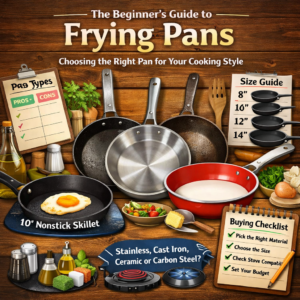
.
Enameled Cast Iron: Cast iron with a porcelain coating. It still holds heat well but has a smooth, rustproof surface. No seasoning needed. It’s good for acidic foods (tomato sauces) and even heat distribution. But it’s heavier and more expensive, and the enamel can chip if mishandled
.
Nonstick (PTFE-coated): Pans with a Teflon/PTFE coating. They release food easily, so you can cook with little or no oil (great for eggs, pancakes, fish)
. Cleanup is simple – usually only a sponge and warm water needed. The trade-offs are durability and heat limits: nonstick coatings wear over time, and they should be used on low to medium heat and with non-metal utensils to avoid scratching
. They are best for beginners because they minimize sticking issues.
Ceramic-Coated: Similar to nonstick but with a ceramic (often mineral-based) coating. It’s PFAS-free and generally oven-safe. It also offers easy release and low-fat cooking
. However, ceramic coatings tend to lose nonstick performance faster than PTFE and can be damaged by extreme heat or abrasive cleaning
. Good for gentle cooking (vegetables, pancakes).
Carbon Steel: Like cast iron but thinner and lighter. It heats up quickly and can become naturally nonstick after seasoning
. Carbon steel is very responsive to heat changes, making it great for stir-frying or pan-frying where quick temperature shifts are needed. It must be seasoned like cast iron and kept dry to avoid rust
. It’s a favorite for professional kitchens (flipping omelets, paellas).
Material/Coating Pros Cons
Stainless Steel Durable, high-heat safe, non-reactive, even heating (often with aluminum core)
Food can stick if not preheated or oiled; less forgiving for beginners
Cast Iron (seasoned) Excellent heat retention, naturally nonstick (when seasoned), virtually indestructible
Very heavy; slow to heat; needs seasoning and rust prevention
Enameled Cast Iron No seasoning needed; even heating; safe for acidic foods Heavy; enamel can chip; slower to heat
Nonstick (PTFE) Effortless food release; easy cleanup; little to no oil needed
Coating can scratch or peel; not for high heat; limited lifespan
Ceramic-Coated Natural, PFAS-free coating; smooth release; oven-safe Coating wears faster than PTFE; avoid high heat & rough scrubbing
Carbon Steel Fast heating; becomes naturally nonstick; lightweight vs cast iron
Must season and dry carefully; reactive to acidic foods; may rust
Frying Pan Sizes
Pan size affects how much you can cook at once and how evenly it heats. Common sizes are 8″, 10″, 12″, and 14″ (diagonal). As a rule of thumb
:
8-inch: Best for 1–2 servings (single omelet or egg). Very compact and easy to handle.
10-inch: Versatile everyday pan (about 2–3 servings). A great all-around choice, not too big or small. In fact, many sources say a 10-inch skillet is an ideal beginner’s pan, since it works for most tasks without crowding the stove
.
12-inch: Good for family meals or larger portions. Use it to cook multiple items at once (e.g., sautéing veggies while leaving space for protein). Cast iron skillets often start at this size for steaks or pancakes.
14-inch: For large families or entertaining. Useful for big breakfasts or stir-fries for a crowd. Requires a spacious stove.
If you only buy one pan as a beginner, many experts recommend a 10–12-inch size. It’s big enough to sear a couple of chicken breasts or a side of fish, yet still manageable
. Below is a simple size guide:
Size Best For
8-inch Single eggs, omelettes, small meals
10-inch Everyday meals (2–3 servings)
12-inch Family-sized dishes (4+ servings)
14-inch Large meals or entertaining (5+ servings)
Handle Types and Lids
Handles: Look for a sturdy handle that feels comfortable. Many quality pans have stainless steel handles securely riveted (or welded) to the body. A hollow or rubber-coated handle can stay cooler on the stove. Avoid flimsy plastic handles unless you only cook at low temperatures; they can melt or break. For oven use, stainless or silicone-wrapped handles are best since they tolerate higher heat
.
Lids: Lids are useful for steaming, simmering, and controlling splatter. Glass lids are popular because they let you see the food without lifting the lid
. A lid helps trap heat and moisture – for example, covering a pan of rice or vegetables cooks faster and more evenly
. Some frying pans come with matching lids; others don’t, but you can buy universal lids that fit. If you plan to make soups or braised dishes in your skillet, consider getting a lid.
Heat Sources (Gas, Electric, Induction)
Your stovetop type affects pan choice. Gas stoves work with nearly any pan material; the flame heats the pan directly. Electric coils/glass tops also work with most pans, but very flat-bottomed pans heat most evenly. For induction cooktops, the pan must have a magnetic base. To test, see if a magnet sticks firmly to the pan bottom. Materials that work on induction include magnetic stainless steel, cast iron, or aluminum pans with a built-in steel plate
. If using induction, check the manufacturer label or use the magnet test. Induction heats faster and more precisely, but requires compatible cookware.
Maintenance & Care
Proper care extends a pan’s life. General tips: Handwash pans with warm water and mild soap; avoid harsh cleaners or metal scouring pads, which can damage surfaces
. Let pans cool before washing to prevent warping
. Nonstick/ceramic pans usually should be washed gently; even if labeled dishwasher-safe, handwashing is gentler. Dry pans immediately to avoid rust (especially cast iron or carbon steel).
Cleaning: Soak any stuck-on food in warm soapy water before scrubbing gently
. Avoid oven cleaners or bleach.
Seasoning Cast Iron/Carbon Steel: These pans need an initial seasoning and periodic re-oiling. As a rule, apply a thin layer of high-smoke-point oil (canola, flaxseed) to a clean pan and bake it upside-down at 400°F for an hour
. Repeat if food starts sticking.
Prevent Sticking: Always preheat stainless steel or cast iron pans before adding oil
. In nonstick or ceramic pans, cooking with a little oil or butter helps maintain the coating
. Avoid overheating nonstick pans to preserve the coating.
Longevity: Expect a ceramic pan to last ~1–3 years with daily use, whereas a good stainless steel pan can last 5–10+ years
. Replace pans that warp, have peeling coating, or show persistent food sticking.
Safety Considerations
Use pans carefully to stay safe. Always use an appropriately sized burner flame (flame should not extend beyond the pan edges). Use oven mitts or pot holders when a pan’s handle is hot. If your pan has a glass lid, ensure it’s tempered and avoid rapid temperature changes (GreenPan notes tempered glass lids won’t shatter from heat
). Don’t leave an empty nonstick pan on a hot stove; overheating can degrade the coating and release fumes
. When cooking with oil, never leave the pan unattended (hot oil can smoke or catch fire). Finally, avoid using metal utensils on coated pans to prevent scratches and potential ingestion of coating particles.
Budget & Price Range
Frying pan prices vary widely. As a rough guide: Budget ($) pans (<$30) are often thinner aluminum or basic nonstick skillets. Mid-range ($$) pans ($30–$100) include good cast iron skillets and solid stainless steel or ceramic pans. Premium ($$$) cookware (>$100) covers high-end brands (multi-ply stainless steel like All-Clad, professional-quality carbon steel, etc.). A beginner can start with an affordable nonstick or cast iron. Remember: very cheap nonstick coatings may wear out quickly, so balancing cost and quality is key. Consider how often you cook: if daily, investing a bit more in a durable pan pays off.
Pros/Cons Comparison Table
A quick reference to compare pan types:
Pan Type Pros Cons
Stainless Steel Durable; works at high heat; non-reactive
Can stick if not preheated; requires oil or technique
Cast Iron Superior heat retention; naturally nonstick (seasoned)
Very heavy; slow to heat; needs seasoning and careful drying
Enameled Cast Iron No seasoning; even heating; oven-safe Heavy; expensive; enamel can chip
Nonstick (PTFE) Effortless release; easy cleanup
Fragile coating; no high-heat use; not metal-utensil friendly
Ceramic-Coated PFAS-free nonstick; easy to clean
Coating wears sooner; lower heat tolerance
Carbon Steel Heats fast; becomes naturally nonstick
Needs seasoning; rusts if not dried; reactive with acid
Buying Checklist
Before purchasing, use this checklist:
Feature Checklist Item
Cooking Needs Determine what and how much you cook (e.g. eggs, stir-fries, family meals).
Pan Material Match material to your style: nonstick for easy cooking, stainless for versatility, etc.
Size Choose a pan (8″–14″) based on servings and stove space. For a first pan, a 10″ is ideal.
Handle Ensure a sturdy, comfortable handle (riveted or welded); check for cool-touch or oven-safe.
Lid Decide if you need a lid (good for simmering/steaming). Glass lids let you monitor food.
Stove Compatibility If you have induction, confirm pan is magnetic (stainless or iron). Otherwise, most pans work on gas/electric.
Weight & Balance Heavier pans heat evenly but are harder to lift; pick a weight you can handle comfortably.
Maintenance Be realistic: nonstick pans are low-maintenance; cast iron/steel need seasoning and care.
Budget Set a price range; balance cost with expected pan lifespan and performance.
2026-04-01
Assess cooking habitsand needs (dishes,frequency)
2026-04-15
Research materials(stainless, nonstick,cast iron, etc.)
2026-05-01
Check stovecompatibility(induction? gas?electric?)
2026-05-15
Compare features(size, handlecomfort, lids)
2026-06-01
Set budget andshortlist favoritemodels
2026-06-10
Read reviews/askfriends forrecommendations
2026-06-20
Purchase chosenfrying pan and startcooking
Frying Pan Buying Timeline
Show code
Internal Linking Suggestions
Anchor: cookware maintenance tips – link to a page on caring for cookware and cleaning pans.
Anchor: induction stovetop cookware – link to a guide on choosing cookware for induction ranges.
Anchor: cookware buying guide – link to a general kitchenware purchasing guide or related post.
FAQ
Q: What frying pan is easiest for beginners to use?
A: A nonstick skillet (around 10″) is often recommended for beginners. Its PTFE or ceramic coating makes cooking eggs and pancakes simple, reducing sticking and cleanup
.
Q: What size frying pan should a beginner buy first?
A: A 10-inch frying pan is a versatile all-purpose size. It’s large enough for most meal portions (2–3 servings) but still manageable on standard stove burners
.
Q: Can I use any frying pan on an induction cooktop?
A: No. Only pans with a magnetic base (iron or certain stainless steel) work on induction. Use a magnet test: if a magnet sticks firmly to the pan’s bottom, it will heat on an induction hob
.
Q: How do I care for a nonstick or cast iron pan?
A: For nonstick pans, wash gently with soapy water, avoid high heat, and use wooden or silicone utensils. For cast iron, handwash with minimal soap, dry immediately, and rub with oil to maintain its seasoning
.
Q: When should I replace my frying pan?
A: Replace a pan if its cooking surface is warped or heavily scratched, or if nonstick coatings are peeling. For example, ceramic pans often last 1–3 years; stainless steel can last a decade if well cared for
.