
7 Proven Ways to Remove Dog Hair from Blankets If you own a dog, you already know the struggle. No matter how many times you wash a blanket, the fur seems to find a way back — clinging stubbornly to every fiber, surviving wash cycles, and somehow multiplying overnight. Dog hair on blankets is one of the most common frustrations pet owners face, and a regular washing routine alone is rarely enough to solve it. The good news? There are proven, practical methods that actually work — whether you are dealing with light shedding from a small breed or a full-on fur explosion from a husky or golden retriever. In this guide, you will discover 7 effective ways to remove dog hair from blankets, along with tips to stop the buildup from coming back so fast.
Why Is Dog Hair So Hard to Remove from Blankets?
Before diving into the solutions, it helps to understand why dog hair clings to blankets so stubbornly in the first place. Dog hair has a slightly rough, scale-like surface structure that acts like tiny hooks. When fur comes into contact with fabric — especially soft, textured materials like fleece, Sherpa, or knit — those microscopic scales catch on the fibers and hold tight. The longer the hair sits, the deeper it works its way into the weave. Heat and moisture make things even worse. When you toss a fur-covered blanket directly into a washing machine, the water causes the hair to clump together and mat even further into the fabric. This is why so many people find that their blanket comes out of the wash still covered in hair — or worse, with hair now tightly packed into the seams and corners. Knowing this makes the solution clear: the key is to remove as much hair as possible before the blanket gets wet.
7 Proven Ways to Remove Dog Hair from Blankets
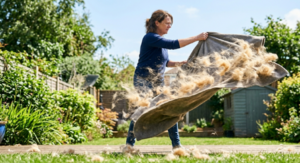
Remove Dog Hair from Blankets Method 1: Shake It Out Outdoors
This is the simplest first step and should always be done before any other method. Take the blanket outside and give it a firm, vigorous shake. Hold it from one end and snap it sharply several times — this dislodges loose surface hair before it has a chance to get embedded further.
Best for: Light to moderate fur coverage Works well with: All blanket types Pro tip: Do this in an open space away from your car or patio furniture to avoid fur landing somewhere else you will have to clean later.
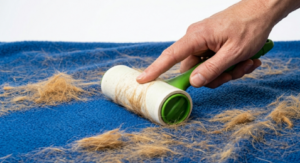
Remove Dog Hair from Blankets Method 2: Use a Lint Roller
A lint roller is one of the most accessible and effective tools for removing dog hair from blankets. The sticky surface grips fur instantly, pulling it off the fabric with each pass.
How to use it effectively:
- Work in small sections rather than rolling the entire blanket at once
- Use slow, firm strokes rather than fast, light ones — slow strokes pick up more hair
- Tear off used sheets regularly so you are always working with a fresh sticky surface
- Pay extra attention to corners, edges, and seams where hair tends to collect
Best for: Quick cleanups and surface-level fur Works well with: Fleece, cotton, and lightweight blankets Pro tip: Keep a lint roller near your dog’s favorite spot for a quick daily touch-up between full cleanings.
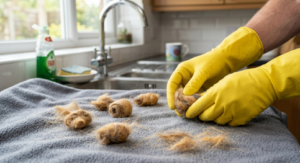
Remove Dog Hair from Blankets Method 3: Rubber Gloves — A Surprisingly Powerful Tool
This method is one of the most underrated tricks for removing pet hair, and it works remarkably well. Put on a pair of rubber dishwashing gloves, slightly dampen them with water, and run your hands firmly over the surface of the blanket. The rubber creates static friction that pulls hair off the fabric and rolls it into easy-to-grab clumps.
How to use it effectively:
- Work in one direction rather than back and forth for cleaner clumps
- Rinse the gloves under water when they get too covered in hair, then continue
- Use a circular motion in stubborn areas to loosen deeply embedded fur
Best for: Moderate to heavy fur coverage Works well with: Fleece, knit, and textured blankets Pro tip: This method is also excellent for furniture and car seats — the same rubber friction principle applies to any fabric surface.
Method 4: Dry Rubber Brush or Pet Hair Removal Brush
Specialized pet hair removal brushes — often called fur zappers or pet brushes — are designed specifically for this problem. They feature fine rubber bristles or a velvet-like surface that grabs hair efficiently without damaging fabric.
How to use it effectively:
- Brush in one consistent direction to gather hair into rows
- Then brush perpendicular to collect the gathered rows into clumps
- Shake or rinse the brush clean between passes
Best for: Heavy fur buildup on thick blankets Works well with: Sherpa, fleece, and heavy-knit blankets Pro tip: The ChomChom Roller and FURemover Brush are two of the most highly rated options among pet owners. Both are reusable and require no sticky refills.
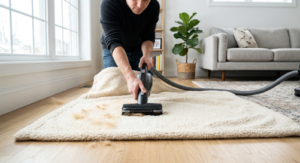
Method 5: Vacuum Cleaner with Upholstery Attachment
A vacuum cleaner with the right attachment is one of the most thorough methods for removing embedded dog hair from blankets — especially thick or heavy ones where surface tools cannot reach deep into the fibers.
How to use it effectively:
- Lay the blanket flat on the floor or a large table
- Use a slow, overlapping pass pattern to ensure full coverage
- The upholstery or pet hair attachment creates a tighter suction area that pulls hair out more effectively than a standard floor head
- Go over the blanket twice — once in each direction — for the best result
Best for: Deeply embedded fur in thick blankets Works well with: Heavy blankets, sherpa, and wool-blend fabrics Pro tip: If your vacuum has a rubber-edged pet tool, that is the most effective attachment to use. The rubber edge creates extra friction that loosens hair from deep in the weave.
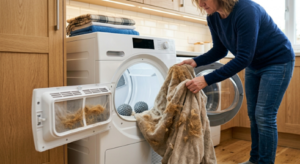
Method 6: Dryer Trick Before Washing
This is one of the most effective techniques that most people never think to try. Before washing the blanket, put it in the dryer on a no-heat or low-heat air-only cycle for 10 minutes with one or two dryer balls.
Here is why it works: the tumbling motion loosens embedded hair and pulls it away from the fabric fibers. The dryer’s lint trap then catches the loose hair before it can mat further into the blanket during a wet wash cycle. When the dryer cycle is done, clean out the lint trap, shake the blanket out, and then put it in the washing machine.
Best for: Any level of fur coverage, especially before machine washing Works well with: All machine-safe blanket types Pro tip: Add a half-sheet of dryer sheet (unscented, if your dog has sensitive skin) to reduce static during the dryer cycle — static is what causes hair to cling back to the fabric after tumbling.
Method 7: White Vinegar in the Wash Cycle
Once you have removed as much hair as possible using the methods above, white vinegar in the washing machine can help release the remaining stubborn strands during the wash itself.
Add half a cup of white vinegar to the fabric softener dispenser before starting the wash cycle. Vinegar acts as a natural fabric relaxer — it loosens fabric fibers slightly, which helps release any hair that is still clinging. It also neutralizes odors and leaves the blanket feeling softer without using chemical fabric softeners.
Best for: Finishing off stubborn remaining hair after pre-treatment Works well with: All washable blanket types Pro tip: After the wash cycle ends, shake the blanket vigorously before putting it in the dryer. Any loosened hair that did not drain away will shake off at this point, reducing what ends up back in the dryer.
The Best Order to Use These Methods
For maximum effectiveness, combine several of these methods in the right sequence:
- Shake the blanket outdoors to remove loose surface hair
- Use a lint roller, rubber gloves, or pet brush to remove the bulk of remaining fur
- Run it through a no-heat dryer cycle for 10 minutes with dryer balls to loosen embedded hair
- Clean the lint trap, then shake the blanket again
- Machine wash with half a cup of white vinegar added to the cycle
- Dry fully on low heat with dryer balls
- Clean your washing machine drum after each pet blanket load
Following this sequence will remove significantly more hair than any single method alone.
How to Prevent Dog Hair from Building Up So Quickly
Removing dog hair is important, but reducing how fast it accumulates in the first place will save you a lot of effort in the long run.
Brush your dog regularly: The hair that gets brushed out during a grooming session is hair that never ends up on the blanket. For heavy shedders, brushing every 2 to 3 days makes a noticeable difference. During peak shedding seasons, daily brushing is ideal.
Use a blanket designed to resist pet hair: Some blankets are made from tightly woven, smooth fabrics that do not hold onto hair the way fleece or sherpa does. Microfiber and ripstop nylon blankets are noticeably easier to de-hair than soft textured options.
Wash the blanket on a regular schedule: The longer hair sits in fabric, the more deeply it embeds. Washing on a consistent weekly or biweekly schedule prevents the kind of deep buildup that requires intensive removal efforts.
Cover your dog’s favorite spot: Place an easily washable cover or towel over the area of the sofa or bed where your dog sleeps most often. This sacrificial layer catches much of the shed hair before it reaches the blanket underneath.
Which Method Works Best for Different Blanket Types?
Not every removal method suits every type of blanket fabric. Here is a quick guide:
- Fleece blankets — Lint roller, rubber gloves, and pet brush all work well. Avoid abrasive tools that can pill the surface.
- Sherpa or fuzzy blankets — Vacuum with upholstery attachment and the dryer trick are most effective. Surface tools tend to snag on the texture.
- Cotton blankets — Most methods work well. The rubber glove technique is especially effective on cotton weave.
- Knit blankets — Use a soft pet brush or lint roller. Avoid rubber gloves or stiff brushes that can catch on the open weave and stretch the fabric.
- Waterproof blankets — Shake and lint roller are safest. Avoid stiff brushes that can scratch or damage the waterproof coating.

Frequently Asked Questions
Why does my dog’s blanket still have hair after washing? This happens because wet hair clumps and mats deeper into fabric fibers during a wash cycle. The solution is to always remove as much hair as possible before washing — shake, lint roll, or use the pre-dryer trick first. Adding white vinegar to the rinse cycle also helps release remaining strands.
What is the fastest way to remove dog hair from a blanket? The rubber glove method is the fastest for moderate fur coverage. Dampen rubber dishwashing gloves, run your hands firmly over the blanket, and the hair will roll off into clumps within seconds. For heavier buildup, combine this with a pre-wash dryer cycle for the fastest complete result.
Can I use dryer sheets to remove dog hair? Dryer sheets reduce static, which helps prevent hair from clinging back to the fabric after tumbling. They do not actively remove hair on their own, but they are a useful addition to the dryer cycle as a finishing step. Use unscented sheets if your dog has sensitive skin or allergies.
Does cold or hot water remove dog hair better in the wash? Always use cold or warm water for blankets. Hot water causes hair to mat and sets it deeper into the fabric rather than rinsing it away. Cold water keeps fibers relaxed and allows hair to release more easily during the cycle.
Is there a washing machine setting that removes dog hair better? Yes — use a gentle or delicate cycle and always select the extra rinse option if your machine has it. The extra rinse cycle flushes more loose hair down the drain before the spin cycle finishes. Avoid heavy-duty or fast spin cycles, which can tangle hair further into the fabric.
Final Thoughts
Dog hair on blankets does not have to be a permanent, losing battle. With the right combination of tools and techniques — and the correct order in which to use them — you can get even the most fur-covered blanket looking clean and fresh again.
The most important thing to remember is this: always remove as much hair as possible before the blanket gets wet. Once water is involved, hair becomes significantly harder to remove. Use the dryer trick, the rubber glove method, or a good lint roller first, then follow up with a proper wash cycle enhanced with white vinegar.
Build a consistent routine, brush your dog regularly, and consider switching to a hair-resistant blanket material if fur management is an ongoing struggle. Small, consistent habits make far more difference than any single deep-clean session.
Quick Method Recap:
- Shake outdoors — always first
- Lint roller — fast and easy for surface fur
- Rubber gloves — great for moderate buildup
- Pet hair brush — best for thick, textured blankets
- Vacuum with upholstery attachment — for deeply embedded fur
- Pre-wash dryer cycle — the most underrated trick
- White vinegar in the wash — removes stragglers and odor