
You walk into a coffee shop. The menu says “espresso,” “drip coffee,” “Americano,” “cold brew.”Sound familiar?
If you’ve ever stared at a café menu wondering what exactly separates espresso from regular coffee, you’re not alone. Millions of Americans drink coffee every single day — yet most couldn’t explain the difference between the two if their morning cup depended on it.
Here’s the truth: espresso and coffee are not as different as you think — but the differences that do exist matter enormously. They affect taste, strength, caffeine content, preparation, and even your health outcomes.
In this guide, you’ll get a complete, no-fluff breakdown of everything that separates a shot of espresso from your everyday cup of coffee. Whether you’re a beginner stepping into the world of specialty coffee or someone looking to make smarter choices at your local café, this article is written for you.
Let’s start from the very beginning.
What Is Coffee? (The Basics You Need to Know)
Before we compare, let’s define what we’re actually talking about.
Coffee is a brewed beverage made from roasted coffee beans — the seeds of the Coffea plant, primarily Coffea arabica and Coffea canephora (robusta). These beans are harvested, processed, roasted, ground, and then brewed with water to produce the drink billions of people consume every day.
The term “coffee” is actually an umbrella word. It covers dozens of brewing methods:
- Drip/filter coffee(the standard American home method)
- French press
- Pour-over
- Cold brew
- AeroPress
- Moka pot
- And yes — espresso
That’s right. Espresso is technically a type of coffee. But it’s a very specific method with very specific rules — and that’s where the differences begin.
What Is Espresso? (More Than Just a “Strong Coffee”)
Espresso is a concentrated coffee brewing method that forces hot water through finely-ground, tightly-packed coffee at high pressure — typically 9 bars of pressure — in a very short time (20–30 seconds).
The result is a small, 1–2 oz shot of intensely flavored coffee with a signature golden-brown crema on top — that rich, foamy layer formed by emulsified oils and CO₂.
The word espresso comes from Italian, meaning “pressed out” or “express” — referring to the speed of extraction and the pressure-based process.
Espresso is the base for many beloved drinks, including:
- Cappuccino
- Latte
- Macchiato
- Flat white
- Americano
- Cortado
Without understanding espresso, you can’t fully understand most specialty coffee drinks on the market today.
Espresso vs. Coffee: The 7 Key Differences
Now for the core comparison. Let’s break it down across seven critical factors.
-
Brewing Method

This is the most fundamental difference between espresso and drip coffee.
Drip Coffee: Water slowly passes through medium-ground coffee, usually by gravity, over 4–8 minutes. The result is a large volume of milder-flavored liquid.
Espresso: Pressurized hot water (around 200°F / 93°C) is forced through finely-ground, compacted coffee in 20–30 seconds. The result is a small, highly concentrated shot.
The pressure (9 bars, which is 9x atmospheric pressure) is what makes espresso espresso. Without pressure, you don’t have espresso — you have something else entirely.
-
Grind Size

The grind is one of the most overlooked variables in coffee brewing.
| Brew Method | Grind Size |
| Cold Brew | Extra Coarse |
| French Press | Coarse |
| Drip Coffee | Medium |
| AeroPress | Medium-Fine |
| Espresso | Fine |
| Turkish Coffee | Extra Fine |
Espresso requires a very fine grind — almost powder-like — to slow the water enough for proper extraction under pressure. Using the wrong grind size for espresso will produce either a sour, under-extracted shot or a bitter, over-extracted one.
-
Coffee-to-Water Ratio

This is where “strength” starts to make more sense.
- Drip Coffee:Typically uses a 1:15 to 1:18 ratio of coffee to water (e.g., 15g of coffee to 225g of water)
- Espresso:Uses a 1:2 ratio (e.g., 18g of coffee to 36g of water)
Espresso uses dramatically less water per gram of coffee, which is why it tastes so concentrated. But this also means the volume of a serving is vastly different — a cup of drip coffee is 8–12 oz, while an espresso shot is only 1–2 oz.
-
Caffeine Content — The Biggest Misconception

Here’s where most people get it completely wrong.
Common myth: “Espresso has way more caffeine than coffee.”
The truth: It depends entirely on how you measure it.
| Measurement | Espresso (1 oz) | Drip Coffee (8 oz) |
| Per ounce | ~63 mg caffeine | ~12–15 mg caffeine |
| Per serving | ~63–75 mg | ~95–150 mg |
Source: USDA FoodData Central; National Coffee Association
Per ounce, espresso is more caffeinated. But a standard shot of espresso has less total caffeine than a full mug of drip coffee. The confusion comes from comparing volume to concentration.
Practical takeaway: If you’re sensitive to caffeine, a double espresso (doppio) may hit harder than a small drip coffee — but a large 16 oz drip coffee contains significantly more total caffeine.
-
Flavor Profile
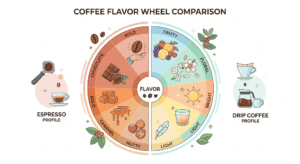
Taste is where espresso and drip coffee feel like completely different worlds.
Drip Coffee Flavor:
- Lighter, more transparent flavor
- Can be fruity, floral, or nutty depending on origin
- Lower bitterness (when brewed correctly)
- A clean, water-forward taste
Espresso Flavor:
- Bold, concentrated, and complex
- Rich body and mouthfeel
- Naturally sweeter due to fast extraction
- Can have notes of dark chocolate, caramel, nuts, or citrus
- Finished by the crema, which adds a creamy texture
A high-quality espresso from a single-origin Ethiopian bean tastes nothing like a standard grocery store drip coffee. Specialty espresso can be bright, fruity, and almost wine-like — challenging the “dark and bitter” stereotype completely.
-
Equipment Required
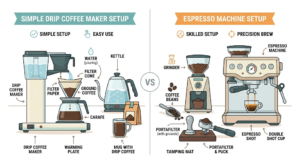
Brewing espresso requires specific, often expensive equipment.
For drip coffee, you need:
- A drip coffee maker or pour-over setup
- A medium-grind coffee
- A paper or metal filter
- Hot water
For espresso, you need:
- An espresso machine (capable of 9 bars of pressure)
- A burr grinder (blade grinders won’t produce fine enough, consistent grounds)
- A tamper
- Properly measured and freshly roasted coffee
Entry-level espresso machines start around $200–$400 for home use (e.g., Breville Bambino). Professional café machines can cost $10,000–$20,000+.
This equipment barrier is one of the main reasons espresso is more commonly purchased at cafés than made at home.
-
Roast Level — Does It Actually Matter?
There’s a persistent myth that espresso requires a “dark roast.” This is not accurate.
The truth:
- Espresso can be made with any roast level — light, medium, or dark
- Traditionally, espresso blends used darker roasts to produce a bold, less acidic result
- In modern specialty coffee, light-roast single-origin espresso is increasingly popular and prized
- The roast affects flavor but does not define whether something is “espresso” or “coffee”
What defines espresso is the brewing method — not the roast.
Espresso vs. Coffee: Head-to-Head Comparison Table
| Factor | Drip Coffee | Espresso |
| Brew Time | 4–8 minutes | 20–30 seconds |
| Water Pressure | Gravity | 9 bars |
| Grind Size | Medium | Fine |
| Serving Size | 8–12 oz | 1–2 oz |
| Caffeine (per serve) | 95–150 mg | 63–75 mg |
| Flavor | Light, clean | Bold, concentrated |
| Crema | None | Yes |
| Equipment Cost | $20–$200 | $200–$20,000+ |
| Best Used For | Long, casual sipping | Quick shot or milk drinks |
Common Myths About Espresso and Coffee (Debunked)
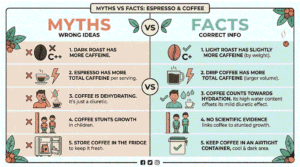
Let’s address the misinformation that confuses even regular coffee drinkers.
Myth #1: “Espresso is just really strong coffee.” Not quite. Espresso is a brewing method that happens to produce concentrated coffee. You can make weak espresso if extracted incorrectly.
Myth #2: “Espresso has more caffeine than coffee.” Per serving, this is usually false. A full mug of drip coffee typically has more total caffeine.
Myth #3: “Espresso must use dark roasted beans.” False. Any roast level can be used. Specialty shops frequently use light roasts.
Myth #4: “Espresso is bad for your stomach.” Some research suggests espresso may actually be gentler on digestion because of its shorter brew time. However, individual responses to coffee vary.
Myth #5: “More crema means better espresso.” Not always. Crema is an indicator of freshness and extraction, but an extremely thick crema can indicate over-extraction. Quality matters more than quantity.
When to Choose Espresso vs. Coffee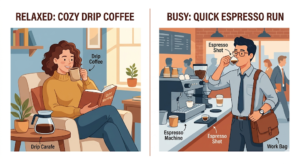
Here’s a simple guide to help you decide:
Choose drip coffee if you:
- Prefer sipping a large, warm beverage slowly
- Are watching your caffeine intake carefully
- Want a more budget-friendly home setup
- Enjoy exploring single-origin flavor nuances in a cleaner cup
Choose espresso if you:
- Want a quick, concentrated shot of energy
- Love milk-based drinks like lattes or cappuccinos
- Enjoy a richer, thicker mouthfeel
- Are a serious home coffee enthusiast ready to invest in equipment
Expert Tips for Getting the Most From Each
Drip Coffee Tips:
- Use filtered water— water quality directly affects flavor
- Grind fresh— pre-ground coffee loses aroma within 15–30 minutes
- Keep your ratio consistent— 1g coffee per 15–17g water is the sweet spot
- Clean your machine— mineral buildup affects taste significantly
- Brew between 195–205°F— too hot burns the coffee; too cool under-extracts it
Espresso Tips:
- Dial in your grind first— this is the single biggest variable
- Tamp with consistent pressure— approximately 30 lbs of force
- Aim for a 25–30 second extraction— shorter is sour, longer is bitter
- Use fresh beans— ideally roasted within the last 2–4 weeks
- Purge your machine— always flush the group head before pulling a shot
The Rise of Specialty Coffee Culture in America
According to the National Coffee Association’s 2024 National Coffee Data Trends report, past-day specialty coffee consumption among American adults has reached an all-time high, with espresso-based drinks driving a significant portion of that growth.
The shift toward specialty coffee has educated American consumers dramatically. Cold brew, nitro coffee, single-origin pour-overs, and crafted espresso drinks are no longer niche — they’re mainstream.
Understanding the difference between espresso and coffee isn’t just trivia anymore. It’s foundational knowledge for navigating modern café culture, making smarter buying decisions, and getting more enjoyment out of every cup.
Key Takeaways
- Espresso is a brewing method, not a type of bean or roast
- Drip coffee uses gravity; espresso uses 9 bars of pressure
- Per serving, drip coffee usually has more total caffeine
- Espresso has a smaller serving size but far more concentration per ounce
- Both drinks use the same raw ingredient — the coffee bean — just processed differently
- The right choice depends entirely on your taste, lifestyle, and equipment
FAQ Section
Q1: Is espresso just strong coffee?
No. Espresso is a specific brewing method that uses pressurized water to extract concentrated coffee. You can brew “strong” drip coffee, but it won’t be espresso unless it’s made under pressure. The process, grind size, and equipment are fundamentally different.
Q2: Which has more caffeine — espresso or coffee?
It depends on serving size. A single espresso shot (1 oz) contains roughly 63 mg of caffeine. A standard 8 oz mug of drip coffee contains approximately 95–150 mg. Per ounce, espresso wins. Per serving, drip coffee typically contains more total caffeine.
Q3: Can I make espresso with regular coffee grounds?
Technically, but you shouldn’t. Regular drip coffee uses a medium grind, which is too coarse for espresso. You’ll get weak, watery results. Espresso requires a fine grind for proper extraction under pressure.
Q4: Why does espresso have crema and coffee doesn’t?
Crema forms when hot pressurized water emulsifies the natural oils and CO₂ gases in freshly roasted coffee. Because drip coffee lacks the pressure component, it cannot create crema. Crema is unique to espresso extraction.
Q5: Is espresso healthier than regular coffee?
Both have similar health profiles. Research (including studies from the European Journal of Nutrition) suggests moderate coffee consumption — whether espresso or drip — is associated with benefits like improved cognitive function and reduced risk of type 2 diabetes. Espresso’s shorter brew time may produce slightly different compounds, but neither is definitively “healthier” for most people.
Q6: What is an Americano, and how does it relate to espresso?
An Americano is made by diluting one or two shots of espresso with hot water, typically bringing the volume up to 6–8 oz. It tastes similar to drip coffee in strength but has the unique flavor profile and crema of espresso. It was reportedly created for American soldiers in Italy during WWII who found straight espresso too intense.
Q7: Do I need an expensive machine to make espresso at home?
Not necessarily. Entry-level espresso machines like the Breville Bambino ($250) or DeLonghi Stilosa ($130) can produce decent espresso. Moreover, a quality burr grinder ($100–$200) is equally important. Plan to invest at least $300–$500 total for a reliable home espresso setup.
Conclusion
Espresso and coffee come from the same bean, but they are worlds apart in preparation, taste, and experience.
Here’s the simplest way to remember it: Coffee is the category. Espresso is one very specific, pressure-driven method within that category — also one that produces a concentrated, crema-topped shot used as the backbone of most specialty café drinks.
Whether you prefer a slow, contemplative mug of pour-over or a quick, punchy double shot before work, understanding what you’re drinking makes every cup more intentional and more enjoyable.
The best coffee isn’t the most expensive one or the most complex one — because it’s the one you understand well enough to appreciate.
Now go brew something great.